

A retail nameplate has to do more than match the shop interior: it must remain legible, withstand Mumbai’s humidity and monsoon exposure, and suit the amount of cleaning the premises receives. By comparing appearance, ageing, maintenance, fabrication and installation, you can specify the material and finish that fit your location instead of choosing from a photograph alone.
Key takeaways
- Choose stainless steel for consistent colour and lower routine upkeep.
- Choose brass when warm tone and visible patina support the brand.
- Specify brushed, satin or mirror finish instead of only naming a metal.
- Measure viewing distance before setting lettering height and plate size.
Stainless steel versus brass: compare the finish, not just the colour
Stainless steel usually gives a Mumbai retail sign the better balance of appearance, brand character and upkeep: it looks precise, holds a consistent colour, and avoids routine polishing. Choose brass when a warmer, more tactile identity matters and visible ageing is part of the design rather than a defect.
For anyone comparing stainless steel nameplates or brass nameplates for retail businesses in Mumbai, judge the complete finish, not the base colour.
| Factor | Stainless steel | Brass |
|---|---|---|
| Appearance | Cool silver tone; brushed grain looks architectural and controlled | Warm gold tone; polished, satin or aged finishes feel more traditional and luxurious |
| Humidity and salt | Resists tarnish better, but chloride deposits can stain neglected surfaces | Darkens and develops oxide or patina faster in humid, coastal air |
| Fingerprints and scratches | Fingerprints show on polished faces; directional brushing disguises minor marks when the grain is consistent | Polished faces show marks; changing patina can mask small scratches |
| Upkeep | Clean with a soft cloth and mild detergent; never scrub across the grain | Polish for a bright finish, or leave it to age; clear lacquer reduces change but creates a recoating decision |
| Brand message | Modern, technical and dependable | Heritage, craft-led and premium |
A brushed stainless face suits a busy entrance, especially where staff cannot polish the sign weekly. Brass works better for a boutique, jewellery store or heritage-led interior when the brief accepts patina; specify natural ageing, clear coating or deliberate antique treatment, then approve a physical sample.
Monsoon rain, dust and harsh storefront chemicals make an unprotected brass “new gold” finish difficult to keep uniform.
Match the material to the retail setting and Mumbai exposure
Choose 304 stainless steel for most sheltered indoor retail applications; choose 316 when salt, chlorides or frequent wet cleaning raise the exposure. For retail metal nameplates in Mumbai, the grade matters more than a generic “stainless steel” description. A quotation should identify the grade under ASTM A240/A240M.
| Setting | Suitable choice | Reason and caution |
|---|---|---|
| Indoor counters | 304 stainless steel or brass | 304 handles normal indoor humidity; brass suits a warmer, premium look but tarnishes with handling. |
| Mall storefronts | Brushed 304 stainless steel | Predictable colour and easy cleaning; keep the grain running consistently across every replacement plate. |
| Outdoor façades | 316 stainless steel | Better resistance to monsoon moisture and urban deposits; 304 suits sheltered façades away from salt spray. |
| Coastal locations | 316 stainless steel | Salt deposits can cause tea staining even on corrosion-resistant steel. Rinse with clean water and avoid chloride cleaners. |
| Food premises | 304 or 316 stainless steel | Use 316 near salty vapour, wash-downs or aggressive cleaners; specify a smooth, cleanable face and sealed fixing points. |
| Luxury boutiques and jewellery stores | Brass or brushed 304 stainless steel | Brass adds visual warmth and develops a visible patina; stainless keeps a cooler, more controlled appearance. |
| High-traffic entrances | Brushed 304 or 316 stainless steel | Satin grain disguises minor marks better than mirror polish, while consistent grain reduces obvious scratches and fingerprints. |
For stainless steel shop nameplates in Mumbai, select 316 at exposed coastal entrances and 304 for protected interiors. Brass is the wrong choice where an unchanged colour is essential or polishing is impractical; it is strongest when planned ageing supports the brand.
Understand brass patina, stainless finishes and what you are buying
A colour name cannot tell you what you are buying. Ask for the base metal, thickness and finish, then inspect a physical sample: solid brass shows brass through a cut edge and drilled hole, while brass-plated steel or aluminium can reveal a different-coloured substrate where edges, corners or scratches wear through.
A magnet can help identify steel beneath plating, but it is not proof.
| Option | What you are buying | What to expect |
|---|---|---|
| Solid brass | Brass throughout the specified thickness | Warm gold tone; fingerprints, moisture and air gradually create tarnish or patina |
| Brass-plated metal | Thin brass layer over steel or aluminium | Lower material use, but edge damage and abrasion can expose the base metal |
| Brushed stainless steel | Stainless substrate with directional linear abrasion | Predictable colour retention; grain must run consistently across every unit |
| Mirror-polished stainless steel | Highly reflective smooth surface | Strong contrast, but fingerprints and fine scratches show quickly |
| Bead-blasted stainless steel | Uniform, low-glare textured surface | Hides reflections; roughness can hold dust and cleaning residue |
Choose the ageing result in writing: natural patina, deliberately aged brass, or a stable clear-coated finish. “Antique brass” is not a universal colour standard, so approve a physical sample rather than a screen image. Clear coating still needs care; fingerprints, UV, moisture, cleaning abrasion and damaged edges can produce patchy gloss loss.
For brass retail signage in Mumbai, test the sample with the actual cleaning routine before rollout. Select satin or brushed stainless steel when staff cannot polish regularly; reserve mirror finishes for locations that accept frequent wiping and visible fingerprints. For stainless, record the grain direction and replacement finish.
Specify lettering, size and mounting for pavement-level readability
A pavement-level plate needs a wide, high-contrast face and lettering that remains legible after dust, rain and cleaning. Start with 300 × 100 mm for a short shop name; use 450 × 150 mm when pedestrians will read it from 3–5 metres.
1. Specify 1.5 mm stainless steel or 2 mm brass. Use a 6–10 mm corner radius to remove sharp snagging points, and deburr or fold the edges rather than leaving a raw cut edge.
2. Set the capital letter height at 25–35 mm for a plate read at walking distance. Keep the name to one or two lines, with generous spacing; compressed lettering becomes an unreadable dark strip.
3. Demand strong contrast: black-filled letters on brushed silver, or light letters on a dark face. For brushed stainless steel, run the grain horizontally across every unit, including replacements.
4. Choose laser engraving with a durable black infill, chemical etching with enamel fill, or UV printing with a specified protective clear coat. Unfilled engraving on brushed metal often disappears in low light.
5. Fix outdoor plates with concealed threaded studs and nuts, or security screws into plugs suited to the wall. Do not rely on adhesive alone on painted façades; monsoon moisture and heat can lift the bond.
The quotation should state the stainless grade, nominal thickness, finish, edge treatment, lettering process, coating, substrate and approved physical sample. For stainless steel shop nameplates in mumbai and other humid locations, specify cleaning restrictions as well. Retail metal nameplates in mumbai need a fixing detail that keeps water from sitting behind the plate.
Turn the design into a production-ready nameplate specification
A quotation is comparable only when it fixes the product, not just the material. For stainless steel nameplates or brass nameplates for retail businesses in Mumbai, attach final artwork and specify every surface, edge, coating and fixing detail.
- Artwork: vector PDF or AI file, exact text, logo proportions, dimensions, bleed, hole positions, corner radius, letter height, font, colours and grain direction.
- Fabrication: metal grade, nominal thickness, plate size, cut method, edge treatment, raised or recessed lettering, and whether the lettering is etched, engraved, screen-printed or digitally printed.
- Finish: brushed, mirror or satin face; brass natural, clear-coated or patinated; coating brand or system, gloss level and resistance to cleaning chemicals.
- Proofing: a dimensioned drawing, colour or patina reference, and one approved physical sample before production. “Antique brass” alone is not a reproducible specification.
- Installation: adhesive type, stud or screw fixing, hole diameter and spacing, substrate, surface preparation, sealant, installer responsibility and removal or replacement method.
| Quotation detail | Stainless steel | Brass |
|---|---|---|
| Face specification | State grade, such as ASTM A240/A240M 304 or 316, thickness and grain direction | State solid brass or plated metal, thickness, patina and clear-coat requirement |
| Maintenance result | Define fingerprint, scratch and coating expectations | Define tarnish, polishing restrictions and acceptable ageing |
| Mumbai exposure | State indoor, monsoon-facing or coastal location | State whether salt, rain and cleaning chemicals are acceptable |
For brass retail signage in Mumbai, an approved sample matters more than a screen colour. Shreeniwas Signs Pvt Ltd can use this schedule to identify omissions before the supplier prices the job.
Related product
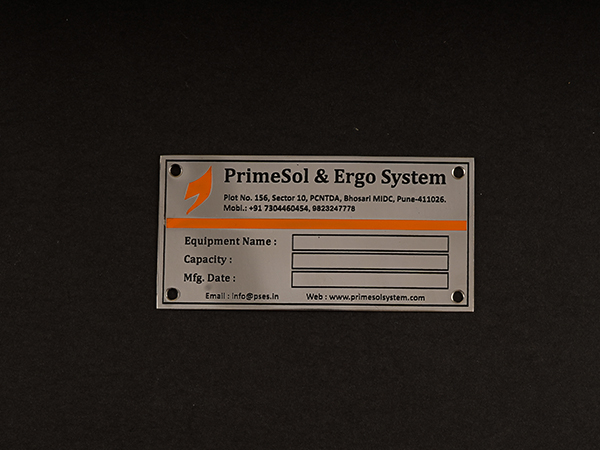 | Metal Labels In the most testing conditions, particularly overwhelming modern situations, where heat, moisture and erosion are available, Stainless Steel... View product → |
Frequently asked questions
Which is better for Mumbai retail businesses: stainless steel or brass nameplates?
Stainless steel suits shops that need a precise, consistent appearance with less routine polishing. Brass suits brands that want a warmer, more tactile identity and accept visible ageing.
How do Mumbai weather and exposure affect a retail metal nameplate?
Review rain, humidity, salt-laden air and the sign’s proximity to roads or the coast. Select the metal, finish and cleaning plan around that exposure rather than colour alone.
What is the difference between brushed, satin and mirror stainless steel finishes?
Brushed and satin finishes reduce distracting reflections and help hide handling marks. Mirror stainless steel creates a bright reflective surface but shows fingerprints and scratches more clearly.
What should a production-ready retail nameplate specification include?
State the metal grade, thickness, finish, lettering method, artwork, dimensions, corner treatment, hole or adhesive layout, mounting surface and viewing distance.