
A molded graphic can resist routine abrasion and still become difficult to read when haze, scratches, chemical attack, residue, or poor contrast develops. By the end, you will know how to design the graphic, clean and inspect the finished panel, compare IMD with replaceable nameplate options, and specify tests that reflect actual service in Mumbai.
Key takeaways
- Use high-contrast graphics with adequate symbol size and spacing.
- Specify cleaner chemistry, wiping method, and scratch limits before production.
- Inspect gloss, haze, distortion, and legibility after cleaning and abrasion tests.
- Choose IMD when integrated durability outweighs simpler overlays or metal plates.
What in-mold decoration protects—and what still becomes unclear
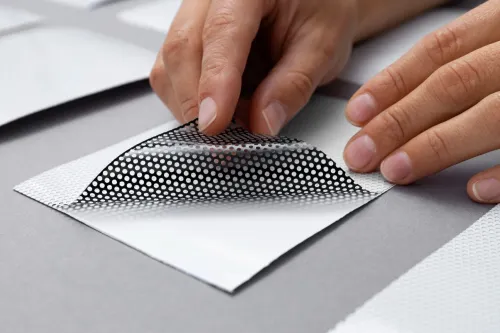
In-mold decoration places the printed graphic behind a film or beneath a molded clear resin surface, so normal wiping does not directly abrade the ink. That protection does not make the panel maintenance-free: the exposed face can still scratch, haze, lose gloss, or become visually distorted.
- Surface scratches appear as fine lines caused by grit, dry wiping, tools, or abrasive cloths.
- Chemical whitening looks like a milky haze after incompatible solvents, alkaline cleaners, or disinfectants attack the face.
- Gloss loss creates dull patches when chemicals, abrasion, or uneven texture changes the surface reflection.
- Ink wear appears as faded or missing characters, especially where print edges were exposed or poorly protected.
- Delamination shows as lifting, bubbles, or cloudy separation between film, ink, clearcoat, and resin.
- Trapped air creates round bubbles or voids beneath the film; trapped dirt creates similar spots with a visible particle.
- Sink marks are shallow depressions from uneven cooling or thick molded sections that distort the graphic.
- Resin flow lines are streaks or bands caused by filling flow, gates, weld lines, or local gloss variation.
- Dirt buildup forms removable fingerprints, oil film, coolant residue, or dust that obscures otherwise sound printing.
For in mold decoration for control panel nameplates in Mumbai, identify the defect before changing the artwork or cleaner. Request samples using production film, ink, clearcoat, resin, texture, and molding conditions; a flat plaque cannot reveal forming stretch, insert movement, bubbles, or final flow marks.
Design the graphic for viewing, wiping, and molding
Make the graphic readable at the actual viewing distance, not only on a flat drawing. Use strong contrast, character height suited to the operator’s position, a non-glare texture, and protected print layers. Round corners, leave clear spacing around selector switches, separate labels from indicator lights, and reserve room for film movement, shrinkage, and molding tolerances.
1. Specify reverse-side mirror printing so the ink sits behind the film or molded clear resin. Confirm that the design survives film stretching, insert movement, shrinkage, knit lines, bubbles, resin flow, and surface texture without making letters appear broken or blurred.
2. Request molded samples made with the production film, ink, resin, clearcoat, texture, and molding conditions. A flat plaque or digital print can hide registration errors, insert wrinkles, stretched text, local gloss changes, trapped air, and flow marks that appear only in the finished panel.
3. Inspect markings from the operator’s viewing distance and under the intended lighting. Check selector-switch clearance, indicator-light separation, edge registration, corner fill, character weight, and contrast after molding—not just before it.
For in-mold decoration applications in Mumbai, include monsoon humidity and coastal salt-bearing dust in the review. Salt or detergent residue around switches and seams can create contamination or leakage risks even when the nameplate remains legible. Confirm the molded face, not merely the artwork, can be wiped clean without haze or scratches.
Clean the molded face without creating haze or scratches
A practical way to maintain control panel nameplates in Mumbai is to remove contamination without dragging grit across the molded face. Oil mist, coolant, fingerprints, dust, condensation, UV exposure, salt-bearing dust, and detergent residue can reduce clarity or leave conductive deposits near switches, connectors, seams, and vents.
- Remove loose dust with a clean, soft, lint-free cloth or low-pressure air. Do not dry-wipe accumulated grit.
- Wipe with clean water containing a diluted neutral detergent approved for the face material.
- Rinse with clean water so detergent and salt residue do not remain.
- Dry with a clean lint-free cloth before droplets evaporate on the surface.
Dry grit wiping can create fine scratches, even on a hard-coated face. Do not use razor blades, metal scrapers, abrasive pads, scouring powder, steam, or high-pressure jets directly on the decorated area.
Do not use acetone, thinner, benzene, ammonia, concentrated bleach, or an unvalidated alcohol or disinfectant product. The actual face—polycarbonate film, polyester film, acrylic, or molded polycarbonate/ABS—determines chemical approval; an agent that cleans steel can craze, haze, embrittle, or soften polymer. Validate the cleaner against the resin, hardcoat, ink, concentration, contact time, and temperature.
A nameplate is not an enclosure seal. If protection against water or dust is required, test the complete enclosure, gasket, adhesive seams, cable entries, and controls; cleaning or sealing the nameplate cannot establish an IP rating.
Choose IMD against overlays, decals, and metal nameplates
IMD is the practical choice when one molded part must carry a high-touch graphic at production volume, with no label edge to lift and no separate assembly step. It is a poor fit for prototypes, frequently revised layouts, low-volume builds, repair work, or panels that need field-replaceable labels.
| Option | Heat, wear and chemicals | Outdoor use, replacement and volume |
|---|---|---|
| In-mold decoration | Good integration and abrasion resistance when the film, ink and resin are validated together; face chemistry still limits solvents | Suits repeated production and permanent graphics; replacement usually means changing the molded part |
| Polycarbonate overlay | Strong clarity and impact resistance; replaceable, but exposed edges and adhesive can fail under heat, chemicals or abrasion | Suits medium volume, revised layouts and service replacement |
| Vinyl decal | Low-cost and quick to change; weakest choice for heat, abrasion, solvent contact and edge lifting | Suits prototypes, temporary markings and low-volume repairs |
| Aluminium | Handles heat, outdoor exposure and moderate abrasion; coating and adhesive determine chemical life | Suits separate, replaceable nameplates and low-to-medium volumes |
| Stainless steel | Best for severe abrasion, heat and cleaning; heavier, costlier and less suited to fine integrated interfaces | Suits harsh environments and durable separate plates |
| Metalphoto | High-resolution anodized aluminium with strong outdoor and abrasion performance; not a molded, flush interface | Suits permanent metal labels and medium-to-high repeat orders |
For high-touch or outdoor panels, specify replacement by results: maximum haze or gloss change, readable contrast, no cracking, crazing or delamination, and registration within the agreed limit after cleaning, abrasion, chemical, humidity and UV cycles.
Shreeniwas Signs Pvt Ltd can compare that molded construction with a replaceable overlay or metal nameplate against the panel’s actual conditions.
Related products
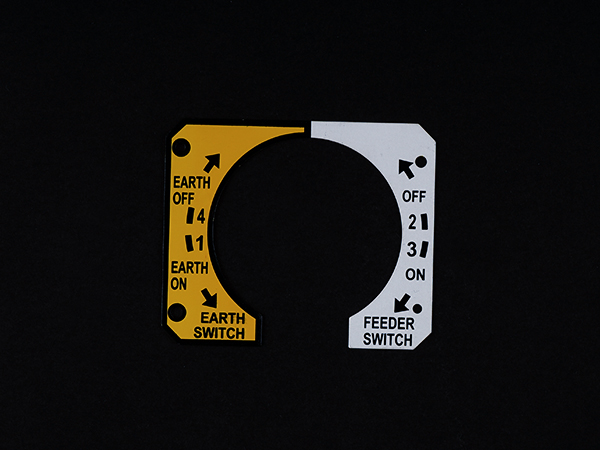 | Metal Labels A Control Panel Nameplate a flat, regularly vertical, region mounted on machine where control or observing instruments information are shown They are... View product → |
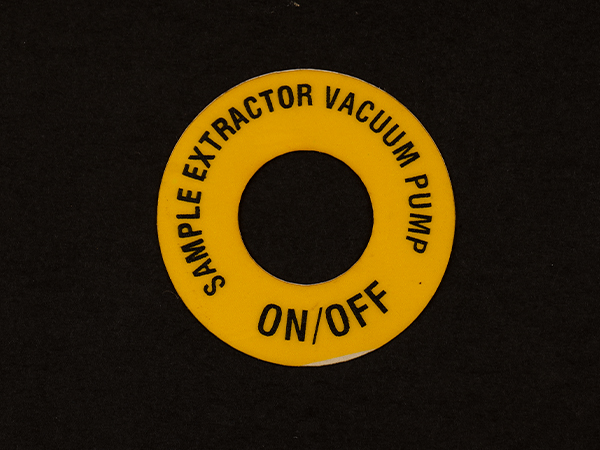 | Plastic Labels PVC & Polycarbonate Stickers are often used in various industries. View product → |
Write a production and validation brief that proves clarity
Before approving production, document the conditions that determine whether the graphic remains readable. For in mold decoration applications in Mumbai, provide:
- Panel resin, molding temperature and pressure, operating temperature, cleaning agents, concentrations, contact time, wiping force, cleaning-cycle count, UV and moisture exposure, label dimensions, bend radius, hole locations, viewing distance, and print orientation.
- Production-color molded parts, not laboratory-colored samples, for visual inspection under controlled lighting. Record contrast, legibility, haze, gloss change, color change, adhesion, abrasion, cracking, crazing, delamination, and print registration.
- A replacement criterion: define the maximum haze, gloss or color change, minimum contrast, permitted registration error, and zero-tolerance defects such as cracking, crazing, delamination, and unacceptable adhesion loss.
Use these methods where the construction permits them:
| Test | Reference | Record |
|---|---|---|
| Haze | ASTM D1003 | Initial and post-exposure haze |
| Gloss | ASTM D523 | Gloss change at the agreed angle |
| Abrasion | ASTM D4060 | Cycles and appearance endpoint |
| Adhesion | ASTM D3359 or ISO 2409 | Classification and edge lifting |
| UV | ISO 4892-2 or ISO 4892-3 | Color, haze, gloss, cracking, and contrast change |
Repeat the customer’s real cleaning cycles; a single spot test misses micro-scratching, ink bleed, edge lift, and chemical crazing. To maintain control panel nameplates in Mumbai, state the endpoint after cleaning, abrasion, chemical, humidity, and UV exposure rather than claiming “durable.”
Frequently asked questions
What does in-mold decoration protect on a control panel nameplate?
It places the printed graphic behind a film or beneath clear molded resin, protecting the ink from direct wiping abrasion. The exposed face can still scratch, haze, lose gloss, or distort the graphic.
How should you clean an in-mold decorated control panel nameplate?
Use the cleaner, cloth type, pressure, temperature, and wipe count specified in the production brief. Test the complete cleaning method for haze, scratches, gloss change, and legibility before approval.
When is in-mold decoration preferable to an overlay, decal, or metal nameplate?
Choose IMD when you need an integrated molded surface, durable graphics, and resistance to routine handling. Compare it with overlays, decals, and metal plates when replacement speed, low tooling effort, texture, or extreme mechanical exposure matters more.
What should a production and validation brief include for IMD nameplates?
Specify artwork dimensions, viewing distance, contrast, film and resin details, surface finish, cleaning chemicals, wiping conditions, abrasion limits, inspection lighting, and acceptance criteria for clarity.