
The choice is not simply between plastic and metal. You are choosing between a graphic formed into a moulded part and a separate identification plate that can be fitted, changed or replaced after production. By comparing process, data requirements, finish, attachment and exposure conditions, you can select the option that remains readable and practical throughout the product’s service life.
Key takeaways
- Choose IMD for repeated plastic housings with stable artwork.
- Use aluminium nameplates when serial data or artwork changes frequently.
- Specify the surface, marking method and attachment before approving artwork.
- Test the complete marking system in its actual operating environment.
How IMD and aluminium nameplates become part of a product
An IMD graphic becomes part of a plastic housing during injection moulding. A printed film is positioned inside the mould, formed to the mould’s curve, and bonded to the molten plastic as the part is injected. The graphic sits within the finished component’s surface rather than on a separately attached plate.
An aluminium identification plate is manufactured independently, then fixed to the product with adhesive, rivets, screws or another mounting method. It can be added after assembly, replaced in the field and produced with changing serial data. That physical difference drives the manufacturing choice.
| Option | Physical result | Manufacturing requirement | Typical fit |
|---|---|---|---|
| IMD | Printed film integrated into the plastic surface | Injection mould, formed film, accurate registration and moulding trials | High-volume plastic housings with repeated graphics or curved surfaces |
| Aluminium nameplate | Separate metal plate attached to the product | Anodizing, screen printing, photo-anodizing, etching, embossing or laser marking, followed by mounting | Metal equipment, retrofit work, lower volumes and variable identification |
Do not confuse IMD with in-mold labelling (IML). IMD normally uses a printed, formed film as the visible surface; IML places a pre-printed label into the mould and encapsulates or bonds it to the moulding.
For in mold decoration or aluminium nameplates for product identification in Mumbai, and for in mold decoration for product labels in Mumbai, confirm the required process before approving tooling.
A safety or regulatory marking may require a durable, permanently affixed and separately legible label. A decorative IMD graphic does not automatically meet that requirement.
Choose IMD for repeated plastic housings, not changing serial data
Choose IMD when the same identification design appears on a high-volume plastic housing and you want it formed into the part, not applied afterwards. It suits fixed logos, ratings and controls on curved surfaces, resists peeling and tampering, and removes a separate label-application step. The trade-off is tooling, film registration and production trials.
| Option | Best fit | Main advantage | Main limitation |
|---|---|---|---|
| IMD | Repeated plastic housings | Integrated graphics and no application step | Poor fit for changing serial data |
| Aluminium nameplate | Metal equipment, retrofit or low/medium volume | Variable marking and replacement after installation | Requires separate mounting |
| Polyester or polycarbonate label | Low-profile adhesive identification | Flexible colours, barcodes and serials | Durability depends on the face film, ink, overlaminate and adhesive |
Choose aluminium when every unit needs a different serial number, QR code or barcode, or when you may replace the identification after installation.
A buyer comparing in mold decoration for product labels in mumbai with aluminium should specify whether variable data is printed before moulding or added later; forming can reduce barcode contrast or distort its module size.
For safety-critical or regulated equipment, confirm the marking rule before choosing either option. A decorative IMD graphic may not satisfy a requirement for a durable, permanently affixed and separately legible equipment rating, warning symbol or traceability mark.
Compare tooling, order volume, artwork changes and replacement effort
For a buyer comparing in mold decoration or aluminium nameplates for product identification in Mumbai, the main cost question is repeat volume. IMD spreads mould, film-forming, registration and injection-trial costs across many identical plastic housings; aluminium shifts more cost toward each plate and its marking process.
| Option | Tooling and setup | Artwork and order volume | Replacement effort |
|---|---|---|---|
| IMD | Requires an injection mould, formed printed film, accurate registration and process trials. | Best for large runs with fixed graphics; a changed design needs new film and requalification. Serial-by-serial variation is inefficient. | Damage usually means replacing the plastic housing, not just the graphic. |
| Aluminium nameplate | Laser marking reduces tooling dependence; screen printing, photo-anodizing, etching or embossing need process-specific setup. | Suits low or medium quantities, short runs and changing serial data. Ask for samples on the exact alloy and finish. | Remove and replace the plate using its adhesive, screws or rivets, if the mounting surface remains sound. |
For aluminium nameplates for equipment identification, the marking method controls both setup cost and service life. Laser marking supports variable data, while screen printing offers colour flexibility but adds ink and clearcoat compatibility concerns. An anodized or etched plate can be more practical than IMD when equipment is already installed.
Budget the attachment system, not only the plate. A replacement nameplate must match the original dimensions, adhesive or fasteners, and required legibility; for safety-critical equipment, confirm the complete plate-and-attachment construction against the applicable marking rule, including UL 969 where relevant.
Specify the surface, marking method and attachment before approving artwork
Approve the artwork only after fixing the substrate, surface finish, marking process and attachment method. A graphic that looks sharp on a flat proof can lose contrast on a formed film, disappear under a clearcoat, or lift when an adhesive meets oil, heat or cleaning solvent.
| Option | Marking and surface | Attachment and best use |
|---|---|---|
| IMD film | Printed film formed into plastic; specify post-forming barcode contrast, viewing angle and module size | Moulded into high-volume housings; no separate label step, but variable data needs pre-printing or a later operation |
| Anodized aluminium | Anodizing protects the oxide layer; photo-anodizing gives durable image contrast | Pressure-sensitive adhesive for smooth panels, or rivets and screws for rough, hot or contaminated surfaces |
| Screen-printed aluminium | Ink and clearcoat provide colour flexibility; cleaning-chemical compatibility controls life | Adhesive or mechanical fixing where colour coding matters more than maximum abrasion resistance |
| Laser-marked aluminium | Contrast depends on alloy, anodic layer, wavelength, power and focus | Useful for serialised short runs; demand samples on the actual alloy and finish |
Specify edge radius, hole locations, adhesive grade, surface preparation and allowable panel curvature. Keep critical text and codes away from bends, rivet heads and the plate edge.
For aluminium nameplates for equipment identification, record the cleaning chemicals, temperature range and abrasion risk before choosing the process. Stainless steel, engraved plastic laminates and direct laser marking are aluminium nameplate alternatives in Mumbai, but each solves a different failure mode.
If UL 969 or another marking rule applies, approve the complete plate-and-adhesive system, not the substrate alone.
Test the complete marking system against its actual environment
Approve the finished assembly, not a material sample. Test the actual IMD housing or aluminium plate with its ink, clearcoat, adhesive, fasteners and mounting surface after exposure to the equipment’s real heat, cleaning agents, abrasion and weather.
Build the qualification around these failure checks:
- Heat: cycle the assembled marking across the equipment’s minimum and maximum operating temperatures, then inspect for lifting, cracking, shrinkage, colour change and loss of contrast.
- Chemicals: wipe or immerse samples in the actual oils, fuels, detergents, disinfectants and solvents, including contact time and temperature. A printed surface can fail while the aluminium remains intact.
- Abrasion: rub the marking with the cloth, glove, tool or grit that will contact it. Check both human-readable text and barcode readability.
- Weather: expose outdoor samples to UV, rain, humidity and temperature cycling; inspect edges, fasteners, adhesive and fading.
- Traceability: scan every barcode or QR code after testing, compare the decoded serial with the human-readable number, and verify that no character has become ambiguous.
UL 969 evaluates labels and marking materials as complete systems, so approval of an aluminium substrate alone does not qualify the plate-and-adhesive construction. For safety-critical or regulated equipment, confirm rules for permanent attachment, ratings, warnings, serialisation and separate legibility before choosing IMD.
Shreeniwas Signs Pvt Ltd can help compare aluminium nameplate alternatives in Mumbai, but request samples on the exact alloy, finish and marking process. For aluminium nameplates for equipment identification, record exposure conditions and pass/fail criteria in the purchase specification.
Related products
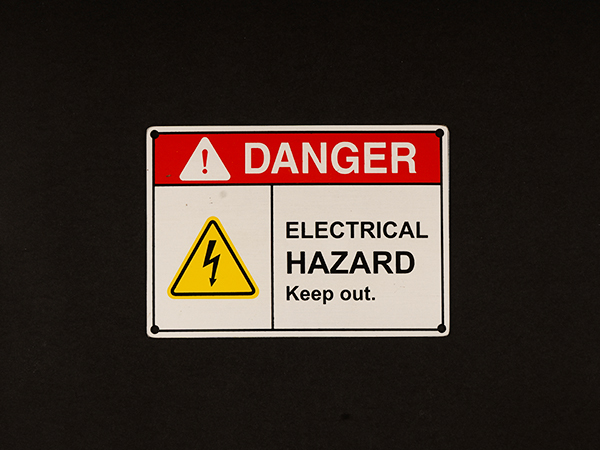 | Metal Labels Aluminum Nameplates are popularly known for their light weight and capacity to oppose corrosion.Its recognizable gleaming white shine offers... View product → |
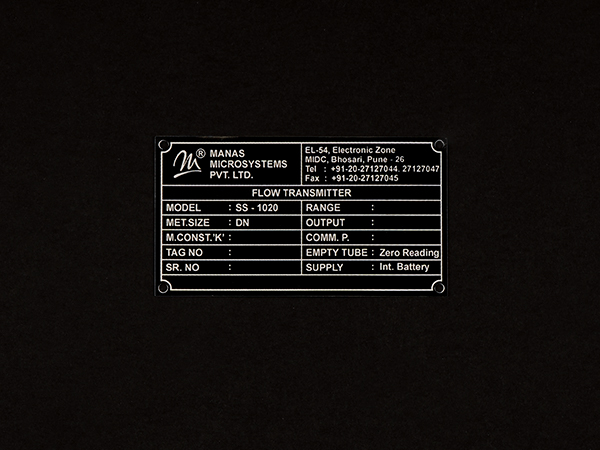 | Metal Labels Machine Specification Nameplate A Machine Specification Nameplate distinguishes and shows an item's name on gadget. View product → |
Frequently asked questions
How does in-mould decoration differ from an aluminium nameplate?
IMD bonds a printed, formed film into a plastic housing during injection moulding. An aluminium nameplate is marked separately and attached to the product afterward.
When should you choose IMD for product identification?
Choose IMD for repeated plastic housings with stable artwork, where the integrated appearance and production volume justify mould and film setup.
Why are aluminium nameplates useful for equipment identification?
Aluminium nameplates suit equipment that needs separately marked identification, including serial numbers, ratings or artwork that can change between orders.
What should you specify before approving artwork?
Specify the product surface, marking method, dimensions, attachment method, variable data requirements and operating environment before approving artwork.
How should you test an IMD graphic or aluminium nameplate?
Test the complete marking system against its actual conditions, including heat, moisture, chemicals, abrasion, sunlight, cleaning and the chosen attachment method.
Related product
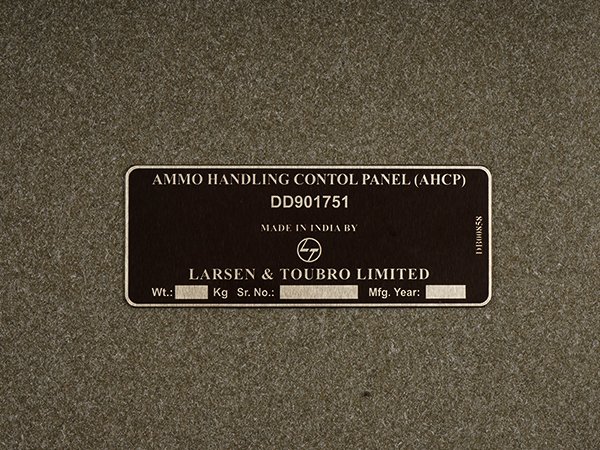 | Metal Labels Metalphoto Metalphoto is a specific kind of photosensitive anodized aluminum that is used to make durable, high-resolution nameplates, labels and control... |