
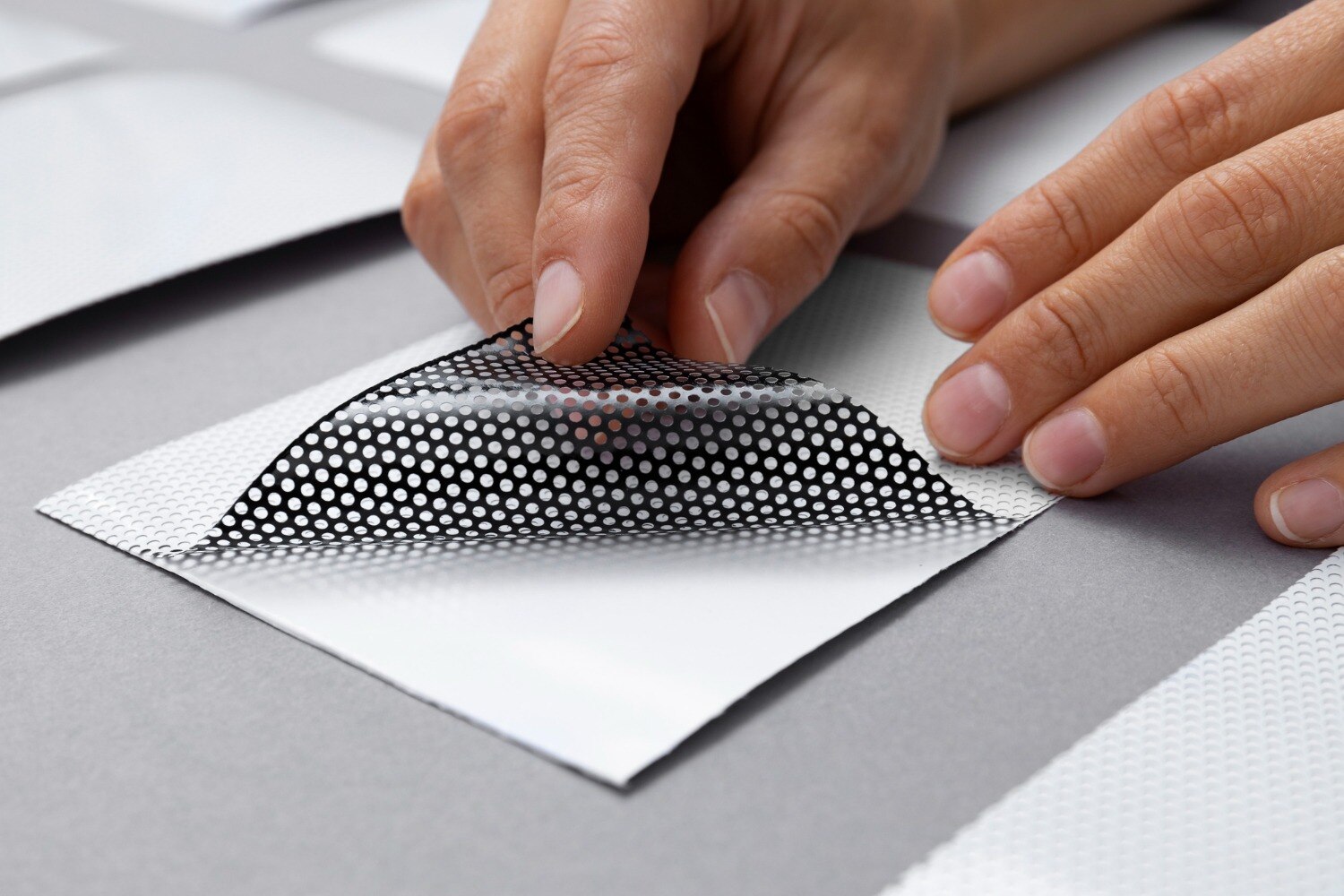
Choosing between a printed polycarbonate label and a metal plate affects legibility, mounting, cleaning, and replacement costs long after the order is placed. Use the material comparison, specification checklist, artwork requirements, and Mumbai ordering steps below to request a product that matches its installation rather than a label that only looks suitable in a quotation.
Key takeaways
- Choose UV-stabilized polycarbonate for sunlight and frequent handling.
- Specify the full sticker construction, including adhesive, finish, and marking.
- Define brass thickness, finish, lettering method, holes, and fixing hardware.
- Send artwork, dimensions, quantity, exposure details, and application surface with your order.
Choose the material by exposure, handling, and appearance
Choose polycarbonate stickers over metal when sunlight, frequent handling, and protected graphics matter; choose brass when visible metal, engraved or etched lettering, and a formal architectural finish matter more than minimum weight. For polycarbonate stickers in Mumbai, specify a UV-stabilized polycarbonate sticker or outdoor-grade face film for direct sunlight.
| Option | What it means | When it applies |
|---|---|---|
| Polycarbonate | Clear or opaque plastic; second-surface printing puts graphics behind the sheet | Sunlight, wiping, scratches, and equipment handling |
| Brass | Engraved or etched metal with polished, satin, brushed, antiqued, or lacquered finish | Formal appearance and architectural presentation |
| Stainless steel | Corrosion-resistant metal with a less decorative appearance | Coastal Mumbai, salt-laden air, or aggressive chemicals |
| Aluminium | Light, rigid metal with lower weight than brass | General equipment identification where metal strength matters |
| Vinyl | Flexible, low-cost printed film | Shorter-term labels, curved surfaces, or frequent redesign |
| Metalphoto | Sealed anodized-aluminium image with dense variable information | High information density matters more than brass appearance |
Specify second-surface printing when the clear sheet must protect graphics from scratches, cleaning, and handling. A hard coat improves abrasion resistance but does not automatically protect the ink or adhesive outdoors.
For brass nameplates in Mumbai, compare lacquered brass with stainless steel rather than assuming brass is safer outside. Salt, chemicals, cut edges, rear surfaces, and mounting hardware can cause corrosion. Base the choice on the substrate, cleaning chemicals, temperature, UV exposure, vibration, and the labour and downtime involved in replacement.
Specify a polycarbonate sticker as a complete label construction
A usable specification treats custom plastic labels as a complete construction, not as a polycarbonate sheet with “standard adhesive.” For polycarbonate stickers in Mumbai, write the following into the drawing and quotation:
- Face film: state the polycarbonate thickness, clear or opaque colour, gloss or matte finish, UV stabilization, and any clear hard coat for abrasion resistance.
- Printing: identify first-surface or second-surface printing. Second-surface printing places graphics behind clear polycarbonate, but a hard coat alone does not make the ink or adhesive suitable for outdoor use.
- Exposure: state the operating temperature range, hours or intensity of direct-UV exposure, cleaning chemicals, oils, solvents, abrasion from wiping or handling, and required service life.
- Adhesive: name the adhesive family or grade for the actual substrate and conditions. Powder-coated metal, textured plastic, low-surface-energy plastic, curved surfaces, high humidity, and temperature extremes can require different adhesives or a primer.
- Compliance: if required, ask whether the complete face film, ink, laminate, adhesive, and substrate construction is covered by UL 969. A claim about raw polycarbonate sheet recognition is not equivalent.
- Geometry: specify the finished size, cut-line corner radii, bleed, and minimum bridges. Avoid sharp internal corners and narrow bridges because they concentrate stress and encourage cracking during installation or service.
Define brass finish, marking method, and mechanical fixing
Specify C26000 cartridge brass or another named grade, the sheet thickness, and the finished width, height, corner radius, and hole pattern. “Brass finish” is incomplete: choose polished, satin, brushed, antiqued, oxidised, or lacquered, then state whether the plate must stay bright brass, develop patina, or receive clear lacquer.
Lacquer slows tarnish but can scratch, craze, or lift at damaged edges.
1. Name the marking process: rotary engraving, chemical etching, photo-etching, screen printing, laser marking, embossing, or debossing. State whether lettering needs a paint-filled recess, tactile depth, or abrasion resistance after repeated wiping. A metal nameplate supplier cannot infer these requirements from the word engraved alone.
2. Select adhesive, screws, rivets, threaded studs, or standoffs from the plate mass, vibration, wall flatness, thermal movement, and the consequence of a falling plate. Adhesive-only mounting is a poor choice for a heavy plate or an uneven wall. Add every hole position and diameter to the dimensioned drawing before artwork approval.
3. For brass nameplates in Mumbai exposed outdoors or near the coast, compare lacquered brass with stainless steel and identify the named coating, including its edge and rear-face coverage. Match the acceptance check to exposure: coating adhesion, abrasion, humidity, salt-spray, or cyclic-corrosion testing.
A visible brass face can look sound while hidden edges or fixings corrode.
Send a Mumbai manufacturer a production-ready order brief
A quote for polycarbonate stickers and brass nameplates in Mumbai is incomplete without the construction, fixing, inspection, and delivery details. Ask the metal nameplate supplier whether it produces both materials, including custom plastic labels, before sending artwork.
1. Identify each part by name, application, quantity, finished width and height, thickness, corner radius, hole positions, mounting method, and substrate. State the operating temperature, UV and chemical exposure, and required delivery location.
Ask Shreeniwas Signs Pvt Ltd whether it covers your Mumbai and nearby industrial area, offers site measurement or installation visits, permits factory pickup, and arranges courier or transport.
2. Send AI, EPS, SVG, or PDF vector artwork with fonts converted to outlines. Attach a dimensioned drawing showing artwork bleed, minimum text height, minimum stroke width, logo colours, barcode symbology and quiet zone, plus Pantone references or an approved physical sample.
Provide serial numbers or other variable data in a locked spreadsheet with one row per label.
3. Request a full-size proof showing the cut line, holes, print side, engraving depth or paint fill, and numbering sequence. Put the adhesive grade, surface finish, protective coating, inspection standard, packaging, and replacement tolerance in the purchase order.
Confirm packing for plates with protruding studs, and require dispatch inspection covering dimensions, holes, marking, finish, quantity, and damage.
Related product
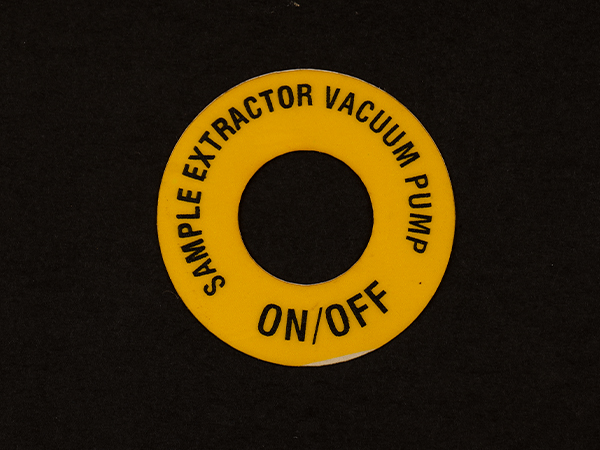 | Plastic Labels PVC & Polycarbonate Stickers are often used in various industries. View product → |
Apply, inspect, and maintain the finished labels correctly
A clean-looking panel can still reject a polycarbonate sticker if oil, mould-release residue, dust, or condensation remains on the surface. Paint and powder coating must be fully cured before application; otherwise trapped solvents weaken the adhesive and create bubbles or lifting.
1. Clean the substrate with a method approved for that material, then let it dry completely. Do not use acetone, aromatic solvents, or aggressive alkaline cleaners on polycarbonate. Mild soap or an approved cleaner applied with a soft cloth is a safer baseline.
2. Confirm the stated minimum application temperature. Peel the liner without touching the adhesive, align one edge, and press outward with a soft squeegee to exclude air. Allow the specified dwell time before water, chemicals, service, or heavy handling. For critical polycarbonate stickers in mumbai, test adhesion on the actual painted or powder-coated surface.
3. Install brass nameplates in mumbai with screws or studs tightened evenly. Isolate incompatible hardware where galvanic corrosion is possible, and seal exposed edges when the specification requires it. Inspect the finish after installation for scratches, tarnish, lifted lacquer, loose fixings, and corrosion at holes or the rear face.
4. Before accepting either product, check dimensions, hole positions, lettering, barcode readability, colour, coating, surface damage, and quantity. Record defects immediately, because a shipment accepted without an inspection record is harder to replace. Clean installed labels with the approved method and soft cloth rather than abrasive pads or untested chemicals.
Frequently asked questions
When should you choose polycarbonate stickers instead of brass nameplates?
Choose polycarbonate when sunlight, frequent handling, low weight, protected graphics, or a conformable label matters. Choose brass when visible metal, engraved or etched lettering, and a formal finish matter more.
What details should a polycarbonate sticker specification include?
Specify the polycarbonate or outdoor-grade face film, thickness, print or marking method, protective finish, adhesive, label dimensions, corner radius, artwork, and service exposure.
How should you specify brass nameplates for production?
Define brass thickness, surface finish, lettering method such as engraving or etching, colour or infill, hole positions, edge treatment, and the mechanical fixing method.
What should you send a Mumbai manufacturer with your order brief?
Send approved artwork, dimensions, quantity, material and finish requirements, application surface, operating environment, fixing details, delivery location, and inspection criteria.