
Retail labels in Mumbai face monsoon moisture, dust, sunlight, repeated cleaning, and constant contact with hands, stock, trolleys, and fixtures. By the end, you will know where polycarbonate is worth specifying, how to choose its construction and adhesive, and how to test the finished label before approving a full retail rollout.
Key takeaways
- Specify film thickness, finish, adhesive and colour together.
- Match the adhesive to the fixture surface and cleaning routine.
- Protect printed artwork from abrasion, chemicals and UV exposure.
- Approve a real-surface sample before ordering full production.
Where Polycarbonate Stickers Earn Their Place in Mumbai Retail
Polycarbonate stickers earn their place where retail branding must survive hands, wiping, merchandise scraping, and trolley or fixture contact. Their durability comes from the complete construction: polycarbonate face film, print system, protective coating, and adhesive—not from the plastic film alone. That is central to the polycarbonate stickers benefits for retail branding in Mumbai.
- Shopfront panels and mall kiosks
- Counters, shelf strips, and POS displays
- Branded bins and checkout equipment
- Delivery vehicles and product packaging
- Appliance displays and product fixtures
Mumbai conditions raise the exposure: monsoon rain, humidity, dust, heat, direct sunlight, and repeated cleaning. A sheltered indoor mall label needs less UV and weather resistance than a sun-facing street-shop graphic or delivery-vehicle label.
Specify each location’s cleaning routine, water exposure, temperature, and sunlight before selecting the construction; “polycarbonate stickers for retail branding in Mumbai” is not one universal specification.
Polycarbonate suits flat or gently curved panels, where its stiffness resists impact and abrasion. It is a poor fit for tight cylinders, sharp corners, rivets, and deeply textured panels because the face film can resist bending, stress the adhesive, and lift at the edges.
Choose flexible vinyl or polyester when close conformity matters more than impact resistance. Transparent areas can preserve glass, painted metal, or illuminated finishes, but they also reveal bubbles, haze, dust, and substrate defects.
How to Specify the Film, Finish, Adhesive, and Colour
Choose the construction by exposure and surface, not by thickness alone. Polycarbonate suits high-touch, wipe-clean, impact-prone graphics where a thin branded label is more practical than a rigid sign. This is the core of polycarbonate stickers durability in Mumbai: the face film, print, coating, and adhesive must work together.
| Material | Strength | Better choice when |
|---|---|---|
| Polycarbonate | Impact resistance and premium clear windows | Flat or gently curved, high-touch surfaces |
| Vinyl or flexible polyester | Conformability | Tight cylinders, sharp corners, rivets, or textured panels |
| PVC or paper | Lower-cost short-term identification | Brief campaigns or dry, low-abrasion use |
| Acrylic sign | Rigid depth and stand-off presence | Freestanding or dimensional branding |
| Aluminium nameplate | Rigid, hard-wearing identification | Equipment plates needing stiffness |
| Metalphoto label | Anodised aluminium permanence | Harsh industrial marking, not flexible retail graphics |
Specify film thickness as a stiffness decision. A thicker film resists bending but does not automatically resist scratches; a hard coat often protects better. Select gloss for colour impact, matte to reduce reflections and fingerprints, or texture to disguise light scuffs.
State opacity precisely: request opaque white beneath colour for solid reproduction, metallic ink or foil for reflective effects, and transparent-window areas when glass, metal, paint, or illumination should show through. Clear film exposes bubbles and substrate defects.
Choose permanent adhesive for painted walls, glass, powder-coated metal, or plastic fixtures after testing; choose removable adhesive for temporary graphics or corrugated board when clean removal matters. Textured surfaces, low-energy plastics, powder-coat residue, condensation, and damp edges demand a trial on the actual substrate.
Specify a named colour standard or approve a physical proof; a screen match is not colour control.
How Artwork and Protection Determine the Finished Result
Specify the print side before sending artwork. Front-surface printing leaves ink exposed; second-surface printing on clear polycarbonate places graphics behind the face film, protecting them from direct abrasion during handling and cleaning.
Use white ink beneath coloured graphics when you need opacity and consistent colour; omit it, or mask it selectively, when the glass, metal, paint, or illumination must show through. For custom polycarbonate stickers in Mumbai, name the logo colour standard or approve a physical proof rather than matching a screen.
| Screen printing | Opaque spot colours, white ink, metallic effects, repeatable corporate colours | Best for established designs and production runs |
|---|---|---|
| Digital printing | Short runs, variable graphics, versioned artwork | Confirm ink durability, curing, and protection for the exposure |
Give the printer these artwork controls:
- Confirm the minimum fine-text size; the printer must approve it for the chosen film, ink, and viewing distance.
- Add bleed beyond the die-cut shape, keep logos and text inside safe margins, and specify rounded corners.
- Define registration tolerance for layered colours, white ink, transparent windows, and the final die-cut.
- Specify UV-resistant ink or overprint for sun-facing shopfronts, vehicles, and outdoor displays.
- Select UV-stabilized film because polycarbonate is not inherently UV-proof. Add a hard coat or overlamination where scratching, abrasion, chemical contact, or frequent wiping dominates.
- Name cleaning chemicals and contact times. Ethanol, isopropanol, ketones, aromatic solvents, and concentrated alkaline cleaners are not interchangeable.
How to Apply Polycarbonate Labels Without Early Edge Lift
On a mall kiosk, street-facing shop, or fixture retrofit, early edge lift usually begins with preparation, not the polycarbonate face film. Use this sequence:
1. Inspect the wall, glass, powder-coated panel, plastic fixture, or corrugated board. Remove dust, grease, silicone contamination, powder-coat residue, and old adhesive without scratching or softening the substrate.
2. Clean with a product compatible with that substrate, then allow it to dry fully. Do not apply over condensation, damp edges, or low-energy plastic without testing.
3. Check the selected adhesive data sheet for its minimum application temperature, pressure requirement, and dwell time before washing or heavy handling. Do not substitute a universal temperature or waiting period.
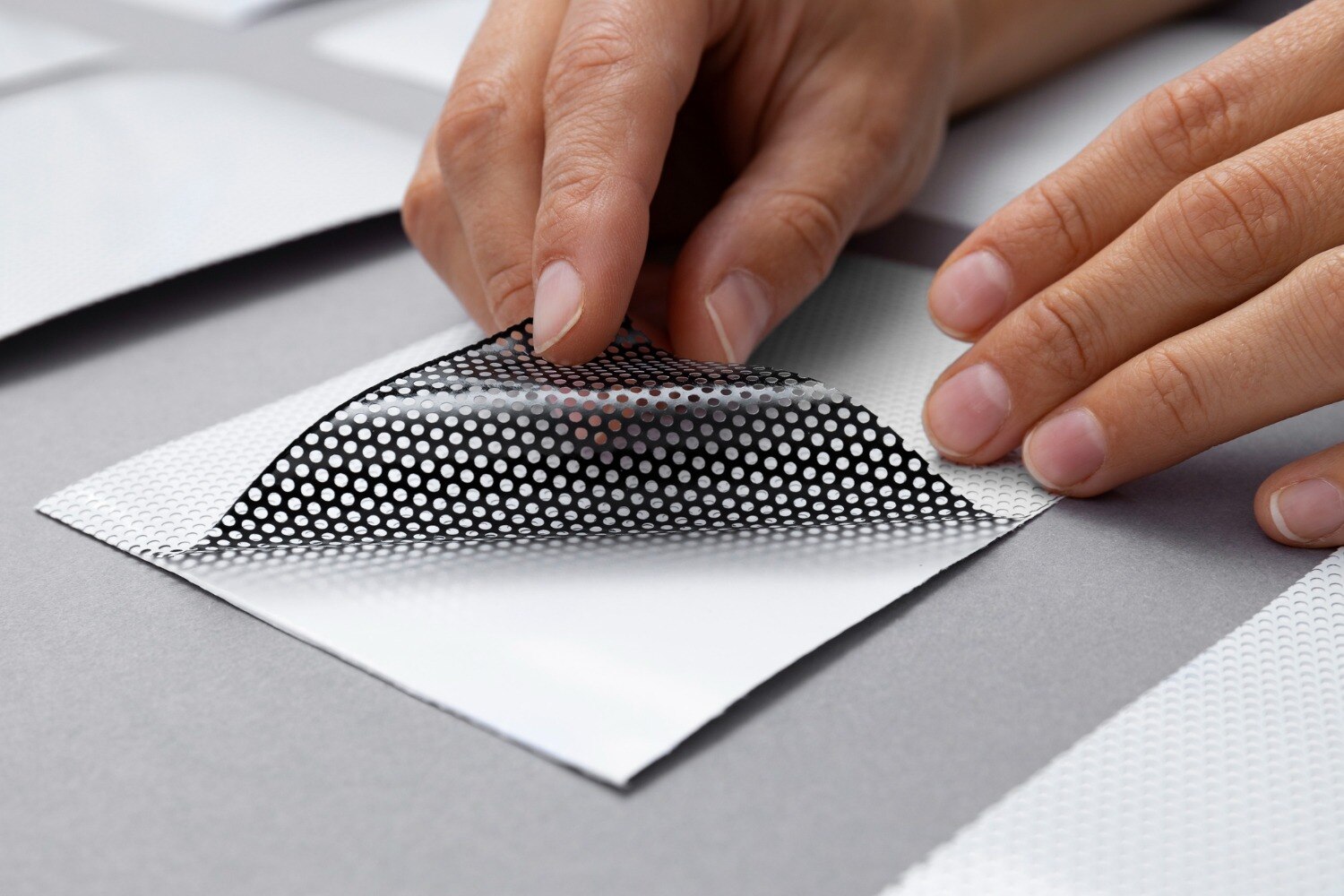
4. Align the label dry using a hinge or low-tack positioning method. Peel the liner back gradually, press with a firm squeegee from the centre outward, and overlap strokes to drive air toward the edges. This prevents bubbles and channels.
5. Treat clear film as unforgiving: trapped bubbles, adhesive haze, edge contamination, and defects beneath the substrate remain visible. Use rounded corners, full adhesive coverage, and a compatible adhesive thickness so large labels tolerate movement between polycarbonate, metal, and plastic during heating and cooling.
6. Test removal before committing. Permanent adhesive can pull paint, leave residue, or damage weak plastic; removable adhesive can fail under heat, humidity, cleaning, or textured contact. Install a small trial on the actual surface, then expose it to the venue’s cleaning and moisture conditions.
How to Approve a Retail Polycarbonate Sticker Before Full Production
Approve the actual construction, not a loose printed swatch. Ask for one production-representative sample made with the final film thickness, finish, ink system, white layer, adhesive, overlaminate, and die-cut shape, then apply it to the real retail substrate before approving custom polycarbonate stickers in Mumbai.
1. Run wet and dry cleaning on the applied sample using the named chemicals and contact times used in the store. Check lifting, whitening, ink transfer, edge contamination, and adhesive residue.
2. Expose it to condensation or water, then inspect the edges and transparent areas. Testing only loose film misses failures caused by powder coat, textured plastic, low-energy plastic, or fixture curvature.
3. Request an abrasion method and acceptance limit, such as a Taber-style test. Reject “scratch resistant” as an unsupported claim; define the permitted scratch depth, visible marking, or gloss change.
4. For outdoor labels, request accelerated UV data stating exposure duration, colour change, yellowing, gloss loss, ink system, and protective layer. Treat polycarbonate stickers durability in Mumbai as location-specific: set appearance limits and a replacement interval for each sheltered mall, street-facing, or vehicle application.
5. Use UL 969 as a reference for the finished marking-and-adhesive system, not automatic approval for every polycarbonate label. Verify the exact substrate and exposure covered.
Provide Shreeniwas Signs Pvt Ltd with the substrate, dimensions, artwork, cleaning regime, exposure, and test criteria so it can recommend a tested construction rather than quote a generic label.
Related product
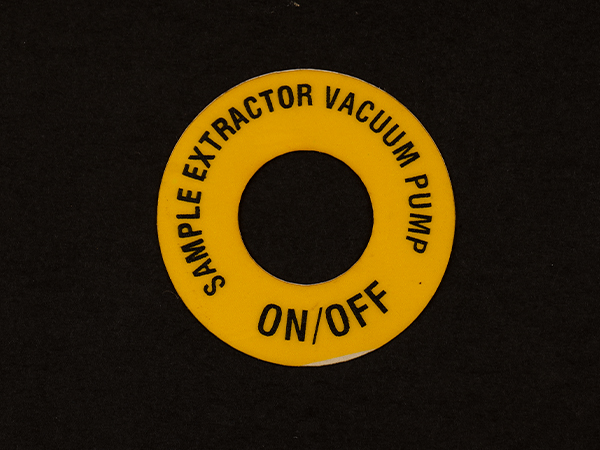 | Plastic Labels PVC & Polycarbonate Stickers are often used in various industries. View product → |
Frequently asked questions
Where do polycarbonate stickers work best in Mumbai retail?
Use them on store fixtures, kiosks, counters, equipment, display panels and other branded surfaces exposed to handling, wiping, merchandise contact or trolley impact.
What should you specify for custom polycarbonate stickers in Mumbai?
Specify the polycarbonate film, surface finish, adhesive type, print method, colour requirements and protective coating as one complete construction.
How can you reduce edge lift when applying polycarbonate labels?
Clean and dry the surface, remove dust and grease, apply the label without trapping contamination, and press the edges firmly so the adhesive bonds across the full perimeter.
Why approve a sample before full production?
A real-surface sample lets you check colour, legibility, finish, adhesion, edge bonding and resistance to the store’s cleaning and handling conditions before committing to a full run.