

Monsoon water, coastal salt, diesel residue, pressure washing and direct sunlight expose weak vehicle labels quickly. By the end, you will be able to select brass, 304 or 316 stainless steel—or a different label material—based on exposure, readability, tamper risk, service life and replacement effort.
Key takeaways
- Choose stainless steel for exposed fleet vehicles and lower maintenance.
- Use engraved or etched markings with high-contrast finishes for roadside readability.
- Specify the fixing method around vibration, heat, water and theft risk.
- Record plate text, serials and artwork so replacements match the original.
Which metal survives Mumbai vehicle exposure with less maintenance?
Stainless steel is normally the lower-maintenance choice for exposed fleet IDs, trailers, construction equipment and outdoor plant vehicles in Mumbai. For brass nameplates or stainless steel for vehicle identification in Mumbai, choose brass for appearance only when you accept scheduled upkeep.
| Exposure or factor | Brass | Stainless steel |
|---|---|---|
| Monsoon rain and humidity | Darkens; moisture accelerates uneven tarnish | Handles routine exposure with less change |
| Coastal chloride | Can stain and form green copper salts | 316/316L resists chloride pitting better |
| Roadside dust and diesel residue | Deposits show quickly; polishing is needed | Washes clean more consistently |
| Pressure washing | Can damage lacquer and expose tarnish | Usually tolerates it better |
| Traffic abrasion and scratches | Finish loses uniformity | Fine brushed finish hides marks |
| Weight | Similar at comparable thickness | Similar; thickness controls weight |
| Glare | Polished brass can reflect strongly | Mirror finish glares; No. 4 brushed reduces it |
| Expected maintenance | Regular polishing, aged finish or sound lacquer | Periodic washing and edge inspection |
| Appearance | Warm gold tone; patina develops | Stable neutral metallic appearance |
Choose 304/304L stainless for moderate exposure. Consider 316/316L near salt-heavy or marine conditions because its molybdenum content improves chloride-pitting resistance. Neither grade is corrosion-proof when water, dust or salt remains trapped at the edges.
Specify brass as deliberately aged, lacquered or regularly polished; do not assume a clear coat will survive scratched holes and perimeters. Trapped water, dissimilar-metal contact and incompatible fasteners can cause staining or galvanic attack, so isolate the joint and seal or drain the edge. This is the practical baseline for metal vehicle labels in Mumbai.
How do finish and marking method affect roadside readability?
A decorative branding plate sells appearance; an operational identification label must remain readable during a roadside check. A buyer searching “stainless steel nameplates vehicles in Mumbai” needs the second, not a reflective emblem.
| Finish | Roadside effect | Best use |
|---|---|---|
| Fine brushed or No. 4 stainless | Diffuses sunlight and hides handling scratches | Fleet IDs and equipment labels |
| Satin stainless | Lower glare with a softer appearance | General vehicle identification |
| Mirror-polished stainless | Direct Mumbai sunlight creates glare; scratches stand out | Decorative branding only |
| Painted metal | Strong colour contrast, but chips and fades expose the substrate | Temporary or colour-coded identification |
Engraving cuts characters into the plate; chemical etching creates a contrasting recessed pattern; embossing raises characters; printing adds colour; and dark infill makes engraved or etched characters easier to read.
Laser marking is not a complete specification: black-annealed laser marks on stainless provide strong contrast without deep cutting, but abrasion, polishing or aggressive cleaning can remove it. Specify engraved depth, etched contrast or a tested marking system when permanence matters.
At 1 metre, use large fleet ID text. At 5 metres, such as a yard entrance or roadside check, use larger high-contrast identification. A QR code must have a printed fallback.
- Fleet number
- Asset or registration reference
- QR code
- Emergency contact
Keep branding visually separate from safety information. Guidance on brass nameplates vehicle identification in Mumbai should reserve brass for decorative identity where patina and maintenance are acceptable.
Which vehicle applications need brass, stainless steel or another fixing method?
Use brass for a visible heritage or premium emblem when patina is acceptable and polishing or coating is planned. Use stainless steel for fleet asset numbers, delivery vehicles, emergency vehicles, trailers, construction equipment and outdoor plant vehicles.
Choose flexible labels for curved panels, short campaigns or frequent replacement, where rigid metal adds unnecessary drilling and weight.
| Application | Suitable choice | Main reason |
|---|---|---|
| Heritage or premium emblem | Brass | Gold colour and decorative character; maintenance controls patina |
| Fleet or emergency identification | Stainless steel | Stable appearance and lower maintenance during washing |
| Curved, temporary or frequently replaced label | Flexible vinyl or polycarbonate | Conforms to panels and avoids excessive rigid hardware |
Size the plate for readable text at the actual viewing distance, specify enough thickness to resist bending, use radiused corners and deburred edges, and place holes away from doors, hinges, fuel caps and panel seams. Leave clearance for opening, washing and panel movement.
Acrylic foam adhesive avoids holes but needs clean bond area and compression, especially on a curve; a thin rigid plate can lift at its corners. Bolts and rivets resist removal but add drilling, installation time and paint-damage risk. Use security rivets or hidden fasteners against tampering, plus tamper-evident adhesive and a duplicate internal label.
For metal vehicle labels in mumbai, remove wax, oil, dust and oxidation, then degrease. Let paint cure, avoid textured plastic, record application temperature and dwell time before washing, and inspect after pressure washing. These controls prevent common vehicle nameplate problems in mumbai: peeling, staining and detached plates.
How should a fleet keep labels legible, traceable and replaceable?
For vehicle nameplate problems in Mumbai, inspect every plate after the monsoon, repainting, pressure washing and collision repair. Record peeling adhesive, lifted corners, rust staining around fasteners, bent plates, tarnish, glare, unreadable text, paint failure and labels lost during washing.
- Clean brass according to its selected finish: use a soft cloth and mild detergent for lacquered or deliberately aged brass, then dry the perimeter. Do not use abrasive pads; they create bright patches and remove protective finishes.
- Inspect stainless for deposits trapped at the edge, under the plate or around fasteners. Avoid abrasive cleaners, polishing compounds and harsh methods that reduce printed contrast or damage laser-marked characters.
- Treat small text, mirror glare and shallow markings as replacement triggers, not cosmetic defects. Specify larger, high-contrast characters and a printed fallback beside any QR code.
- Fix lifted adhesive only after removing wax, oil, dust and oxidation; replace a bent or drilled plate rather than forcing it flat. Use radiused, deburred edges and seal exposed gaps.
- Keep registration marks, chassis or VIN stamping and other prescribed identifiers unchanged. A custom plate supplements Indian motor-vehicle identifiers unless an authority accepts it.
Maintain an asset register linking fleet ID, registration reference, QR record, installation date, material grade, marking method and replacement history.
For stainless steel nameplates vehicles in Mumbai, a manufacturer such as Shreeniwas Signs Pvt Ltd becomes useful when each vehicle needs measurement, controlled artwork, matching replacements and a documented plate specification rather than a generic decorative plate.
Related product
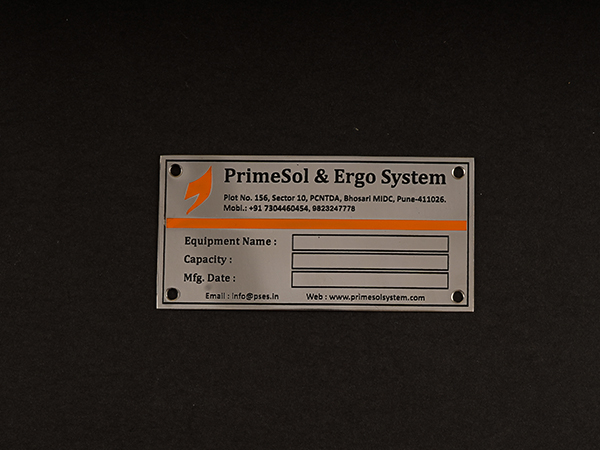 | Metal Labels In the most testing conditions, particularly overwhelming modern situations, where heat, moisture and erosion are available, Stainless Steel... View product → |
What should you specify before ordering vehicle identification plates?
Choose brass when gold colour, heritage character or a visible emblem matters more than stable appearance and low maintenance. Choose 304 stainless for ordinary exposed service, 316/316L for salt-heavy exposure, and neither metal when the label is temporary, flexible or frequently replaced.
That is the practical rule for brass nameplates or stainless steel for vehicle identification in Mumbai.
| Material | Weight and flexibility | Readability, cost and life | Drilling and replacement |
|---|---|---|---|
| 304/316 stainless | Light; rigid | High contrast; moderate cost; long exposed service with correct grade | Adhesive avoids holes; rivets resist tampering but slow replacement |
| Brass | Heavier; rigid | Gold appearance; higher upkeep; patina and readable marking depend on finish | Easy to machine or emboss; replacement needs polishing or matching |
| Anodized aluminium | Light; rigid | Clear marking; lower cost; finish can scratch | Easy drilling; quick replacement |
| Metalphoto | Light; rigid | Fine detail; higher cost; durable image | Usually adhesive or holes; replacement is straightforward |
| Polycarbonate/PVC | Very light; flexible options | Low cost; good short-to-medium-term graphics; can fade or crack | No drilling needed; easy replacement |
| Vinyl decal | Lightest; flexible | Lowest cost; readable short-term; quickest replacement | Adhesive only; little drilling risk |
Specify the following before approving the order:
- Request grade, thickness, finish, corner radius, deburred edges, marking process, contrast method, adhesive or fastener, isolation gasket, temperature range, application temperature, wash dwell time and outdoor-test evidence.
- Approve artwork showing 1-metre or 5-metre text, hole coordinates, curved-body fit, door and fuel-cap clearance, QR readability and statutory-marking separation.
- Budget vehicle-by-vehicle measurements, artwork approval, installation downtime, incorrect-hole rework and replacement logistics across Mumbai. Require complete-assembly testing—plate, fixing, substrate, edge seal and cleaning regime—using ASTM B117 or ISO 9227 only for comparison, not service-life prediction. This is the core of brass nameplates vehicle identification in Mumbai.
Frequently asked questions
Which metal survives Mumbai vehicle exposure with less maintenance?
Stainless steel is normally the lower-maintenance choice for vehicles exposed to Mumbai’s rain, humidity, road dirt and coastal air. Choose brass when its appearance justifies scheduled polishing or protective finishing.
How do finish and marking method affect roadside readability?
High contrast matters more than shine alone. Engraving, etching or other permanent marking paired with a contrasting background remains easier to read than shallow printing or reflective glare. Specify letter height, colour contrast and viewing distance.
Which vehicle applications need brass, stainless steel or another fixing method?
Use stainless steel for exposed fleet IDs, trailers, construction equipment and outdoor plant vehicles. Use brass for appearance-led applications with planned upkeep. Select screws, rivets, adhesive or a combined fixing based on vibration, surface condition, heat, water and tampering risk.
How should a fleet keep labels legible, traceable and replaceable?
Inspect plates during vehicle servicing, clean them without abrasive tools, and record each plate’s wording, serial number, material, finish, dimensions and fixing method. Keep approved artwork and replacement stock linked to the vehicle record.
What should you specify before ordering vehicle identification plates?
State the metal grade, thickness, dimensions, corner radius, finish, marking method, text size, contrast, serial format, mounting holes, adhesive requirement, operating exposure and replacement-record requirements.