
Choose the plate material from the equipment’s exposure, cleaning routine, contact with people and required appearance—not from the metal’s showroom finish. By comparing corrosion risk, grade, alloy, marking method, thickness and mounting, you can specify a plate that remains readable and presentable through Goa’s humidity, salt air and monsoon conditions.
Key takeaways
- Choose stainless steel for salt air, outdoor exposure and open-sided plants.
- Use 316 stainless steel where chlorides and salt deposits are persistent.
- Specify raised edges, sealed holes and durable marking for monsoon conditions.
- Select brass for appearance when corrosion exposure and abrasion are controlled.
Start with the equipment’s actual exposure
Salt deposited by sea air is the clearest reason to favour stainless steel for equipment installed outdoors, at ports, near beaches, or in open-sided plants in Goa. Monsoon humidity adds persistent moisture, while salt trapped around holes and edges can start localised corrosion.
Choose 316 stainless steel for exposed coastal equipment; 304 suits many sheltered or moderately exposed locations.
For brass nameplates or stainless steel industrial equipment in Goa, map the material to the actual service conditions:
| Environment | Starting choice | Why |
|---|---|---|
| Outdoor coastal equipment | 316 stainless steel | Better resistance to chloride-induced pitting and stable appearance |
| Indoor dry factory | Brass or 304 stainless steel | Low salt exposure makes appearance and marking the deciding factors |
| Chemical washdown area | 316 stainless steel | Detergents, chlorides and residue demand stronger corrosion resistance |
| Frequently handled or abraded equipment | Stainless steel | It resists fingerprints, routine cleaning and wear better than lacquered brass |
| Decorative indoor machinery | Brass | Warm colour and engraved contrast can matter more than low maintenance |
| High-temperature equipment | Metal plate with heat-rated marking | Adhesive, coating and marking limits often fail before the metal does |
Brass works best where a warm architectural finish justifies polishing or coating maintenance. Uncoated brass darkens and develops uneven fingerprints; clear lacquer protects the surface until ultraviolet light, solvents, abrasion, edges or mounting holes break that protection.
Treat industrial nameplates in Goa as identification components, not decoration. Record the equipment location, salt or chemical exposure, cleaning method, touch frequency and service temperature before choosing the material.
Compare corrosion, appearance and day-to-day wear
After installation, stainless steel usually keeps a more stable industrial appearance under repeated handling, salt deposits and detergent cleaning than brass. Brass suits equipment where a warm architectural colour or strong engraved contrast matters more than an unchanged surface.
Brass versus stainless steel nameplates differ most visibly as they age:
| Material | Corrosion and appearance | Repeated handling and cleaning |
|---|---|---|
| Brass | Uncoated brass oxidises, darkens and develops an uneven patina from fingerprints and moisture. Clear lacquer preserves the original colour but can wear through at edges, holes and rubbed areas. | Engraved recesses can retain useful contrast as the surface patinates. Abrasion, fingerprints and solvents can make a coated finish look patchy. |
| Stainless steel | A suitable grade resists routine outdoor exposure better, but salt, humidity and embedded carbon-steel particles can cause brown tea staining. The staining affects appearance before structural strength. | It tolerates handling, abrasion and detergents better than brass. Scratches remain visible, especially on polished surfaces, while a brushed finish hides fine marks more effectively. |
A decorative polished-brass finish is not proof of superior outdoor durability. Near Goa’s coast, uncoated brass needs acceptance of colour change or a coating-maintenance plan; lacquer failure leaves obvious spots rather than a uniform patina.
Stainless steel also needs care. Rinse salt deposits with fresh water, prevent stagnant moisture around mounting holes, and avoid iron-contaminated tools or abrasive cleaners. A brushed surface is not automatically more corrosion-resistant; alloy, cleanliness and geometry control the result.
Specify the right stainless-steel grade or brass finish
304 stainless steel suits indoor factories and sheltered equipment with moderate humidity. Specify 316 stainless steel for outdoor plant, coastal locations, salt-laden air, seawater proximity, or equipment washed with chloride-bearing chemicals; its molybdenum content improves resistance to chloride pitting.
Neither grade is immune to corrosion, so remove iron contamination, weld spatter and adhesive residue before service.
| Option | What it means | When it applies |
|---|---|---|
| 304 stainless steel | General-purpose corrosion resistance with a stable silver appearance | Indoor equipment, covered areas and moderate outdoor exposure |
| 316 stainless steel | Higher chloride-pitting resistance | Goa’s coastal plant, exposed equipment, salt deposits and chemical washdown |
| C26000 or C26800 brass, clear lacquer | Engraveable yellow brass with a barrier against fingerprints and tarnishing | Indoor equipment where a warm decorative finish matters |
| Unlacquered brass | Develops natural oxidation and patina | Heritage, architectural or low-maintenance appearance where colour change is acceptable |
| Nickel-plated brass | Brass base with a harder, silver-coloured surface | When brass construction is required but a cooler, more stable appearance is wanted |
Choose C26000 cartridge brass or C26800 yellow brass for engraved brass nameplates for industrial equipment in Goa. Use clear lacquer only when you can protect the coating from solvents, UV, abrasion and exposed hole edges; once it breaks, patchy darkening follows.
For stainless steel nameplates in Goa, choose a brushed or satin finish for lower glare, not because it improves corrosion resistance. Specify the alloy first, then control cleaning, grain direction and drainage so salt does not remain trapped.
Match the plate construction and marking to the job
Use 1.0 mm sheet for small, adhesive-backed plates and 1.5 mm for larger plates, plates with drilled holes, or equipment exposed to knocks. Specify rounded, deburred edges; a sharp cut edge can injure an operator and lift an adhesive film.
Your purchase drawing for industrial nameplates in Goa should state:
- Finished length, width, corner radius and thickness
- Two or four mounting holes, their diameter, centre spacing and countersink requirement
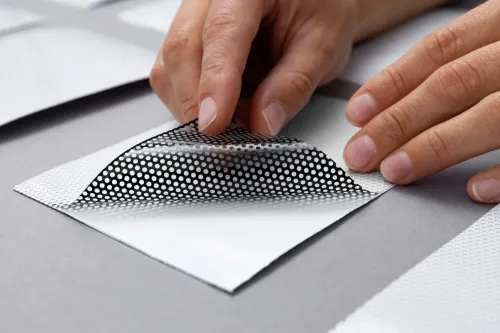
- A high-performance acrylic pressure-sensitive adhesive for smooth, clean metal or powder-coated surfaces
- The substrate cleaning method, minimum application temperature and required dwell time before handling
- Mechanical fasteners for safety-critical warnings, high-temperature equipment, textured coatings or areas washed with solvents
- Marking method: deep engraving, chemical etching, laser marking or printed under a clear protective layer
- Character height, line weight, colour contrast, barcode or QR-code size, quiet zone and verification proof
- Equipment tag, serial number, rating data, warning wording and revision level
For brass versus stainless steel nameplates, do not approve artwork alone: request a physical proof showing the finish, engraving contrast and smallest text. Brass needs protected edges and holes because lacquer fails there first; stainless steel needs clean fabrication and no iron-contaminated abrasives.
Give Shreeniwas Signs Pvt Ltd the equipment surface, cleaning chemicals, temperature range and mounting drawing before production. That information prevents a plate that looks correct but lifts, stains or becomes unreadable in service.
Related product
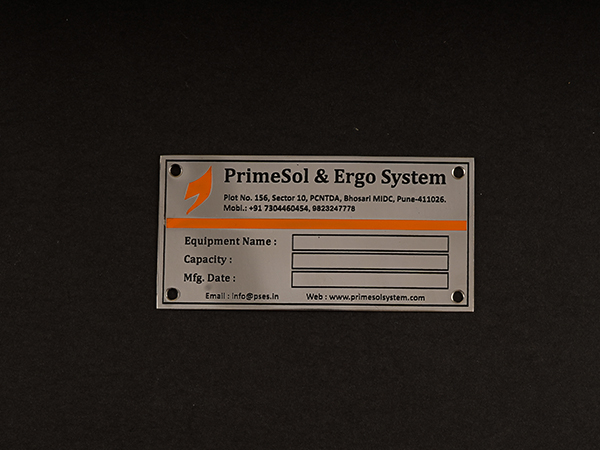 | Metal Labels In the most testing conditions, particularly overwhelming modern situations, where heat, moisture and erosion are available, Stainless Steel... View product → |
Make the decision with a specification checklist
Record these fields before requesting a quote; they turn “brass nameplates or stainless steel industrial equipment in Goa” into a controlled specification rather than a visual preference.
1. Equipment location and exposure: indoor factory, outdoor plant, coastal site, washdown zone, monsoon splash, salt deposits, dust, or chemical contact.
2. Service conditions: operating and cleaning temperatures, detergent or solvent used, expected service life, handling frequency, abrasion sources, and whether the plate is safety-critical.
3. Material decision: stainless steel grade 304 or 316, or the selected brass alloy. State whether you prioritise a stable silver appearance, warm patina, low maintenance, or engraved contrast.
4. Finish and protection: brushed or bright stainless finish; polished, satin, oxidised, or lacquered brass. For lacquer, record UV exposure, solvent contact, abrasion risk, and maintenance responsibility.
5. Plate construction: length, width, thickness, corner radius, edge treatment, grain direction, mounting-hole diameter and position, and any isolation washer or fastener requirement.
6. Marking data: equipment tag, serial number, rating, warning text, barcode or QR-code grade, revision, font size, colour, and reading distance.
7. Mounting method: substrate, surface texture, cleaning process, adhesive type, application temperature, dwell time, and mechanical retention requirement.
8. Proofing: require a signed artwork proof and one physical sample before production, especially for stainless steel nameplates in Goa where glare, salt staining, and small text can reduce readability.
Frequently asked questions
When is stainless steel better than brass for industrial equipment in Goa?
Choose stainless steel for equipment outdoors, near beaches or ports, and in open-sided plants exposed to salt air, monsoon humidity and trapped moisture.
Which stainless-steel grade suits coastal industrial equipment?
Specify 316 stainless steel where chloride exposure is persistent; use 304 only when salt contamination is controlled and the installation is sheltered.
When are brass nameplates suitable for industrial equipment in Goa?
Use brass when you want a traditional appearance and the plate is sheltered from salt deposits, standing water and heavy abrasion.
What should an industrial nameplate specification include?
Record the metal and grade, thickness, finish, dimensions, hole and edge details, marking method, text size, mounting method and required environmental exposure.