A control-panel sticker can fail through faded ink, lifted edges, trapped moisture or poor adhesion long before the enclosure itself fails. The right choice depends on the panel substrate, operator interface, cleaning routine and exposure—not on the word “industrial” or “polycarbonate” alone. By the end, you will be able to specify the label construction, test evidence and application process that fit your Goa installation.
Key takeaways
- Choose overlays for operator interfaces and decals for simple identification.
- Match adhesive to the enclosure surface, temperature and cleaning exposure.
- Specify legibility tests, adhesion evidence and artwork controls before production.
- Compare suppliers on repeatability, replacement effort and lifecycle performance.
Choose the label construction for the job, not the material name
A control-panel label must match the job it performs, not merely carry a material name. Choose a full overlay for operator-facing graphics, a decal for identification, and a mechanically fixed plate when adhesive failure would create a safety or traceability problem.
| Option | Best fit | Reject it when |
|---|---|---|
| Polycarbonate overlay | Printed legends, transparent display windows, membrane-switch cutouts and frequent key pressing | The panel has no interface graphics or the substrate is unstable |
| Printed PVC label | Ratings, terminal identification and indoor instructions on a sound, smooth panel | Exposure includes severe abrasion, solvents or outdoor UV |
| Vinyl decal | Simple equipment identification, warnings and replacement markings | Edges face repeated lifting, vandalism or harsh cleaning |
| Engraved metal plate | Permanent ratings, serial numbers and safety information | You need changing graphics, windows or a flush operator interface |
| Anodized aluminum | Durable outdoor nameplates with etched or printed detail | Chloride exposure or deep scratching threatens the surface |
| Stainless-steel plate | Coastal, high-abrasion or solvent-cleaning environments | Low weight, low cost or a flexible graphic is essential |
| Metalphoto | Photographic-quality, sealed identification for long-term traceability | The panel needs switches, windows or a conformable label |
A buyer comparing industrial stickers for control panel manufacturers in goa should request the complete construction: face-film thickness, ink position, laminate, adhesive, liner, temperature range, UV and chemical test evidence, and minimum application temperature.
Skip stickers where severe abrasion, repeated solvent cleaning, very high heat, vandalism or a permanent-marking specification demands engraved or mechanically fixed identification. Monsoon humidity, salt air and condensation can cause edge lifting, fading and corrosion beneath damaged labels. A sticker also cannot bond reliably to rust, oil, chalking paint or loose powder coating.
Treat a polycarbonate overlay as part of the control interface
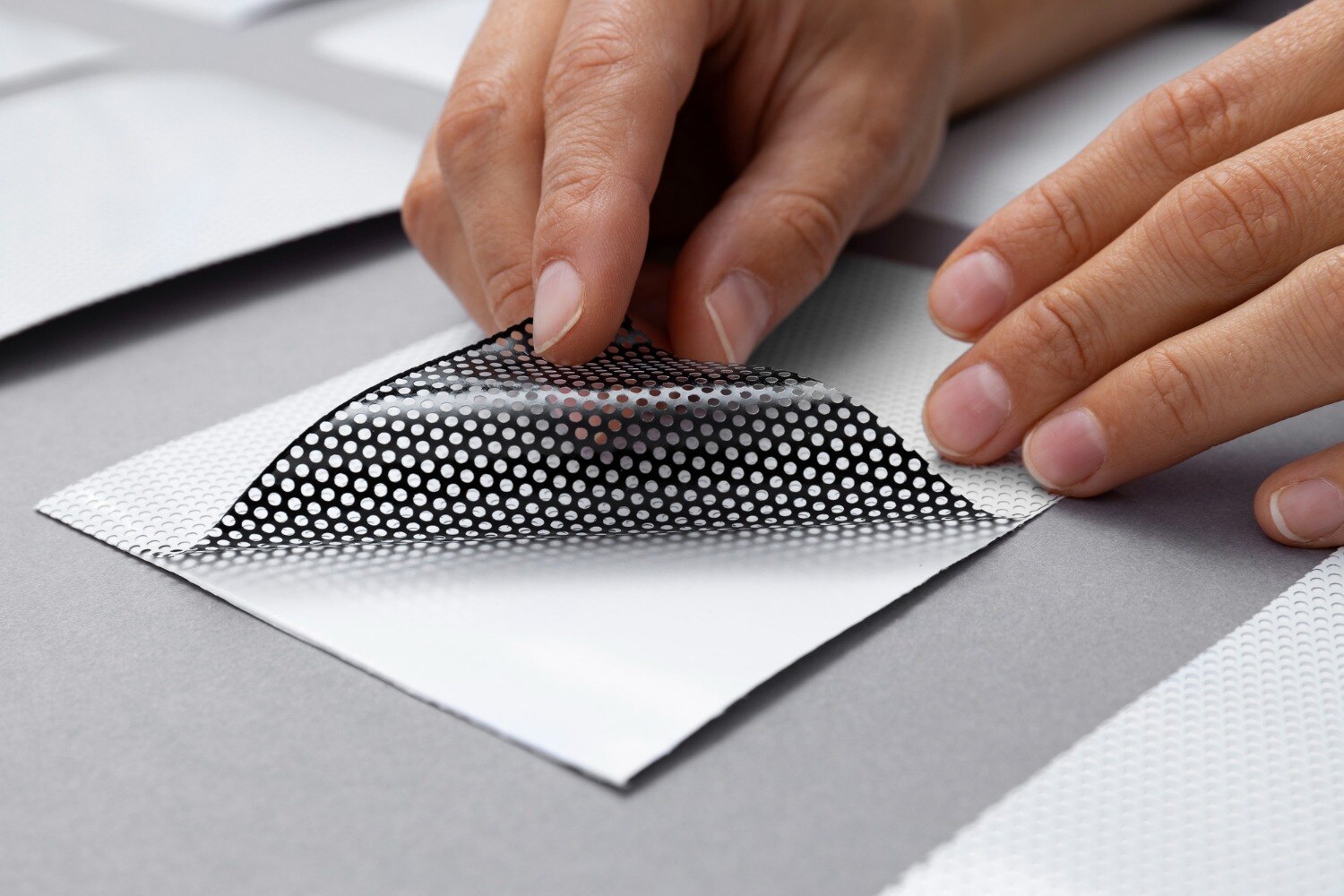
An ordinary panel label identifies a component; a full overlay becomes the operator’s interface. An overlay carries printed legends, scales and warnings, with transparent windows for displays, cutouts for membrane switches, and adhesive backing that bonds the complete graphic to the enclosure.
For polycarbonate stickers on control panels in Goa, assess the face film, ink system, protective laminate and adhesive as one construction. Polycarbonate offers impact resistance and a smooth printable face, but UV-sensitive ink, a weak laminate or humidity-sensitive adhesive can fail while the film still looks intact.
Specify the film thickness, print location, window clarity and adhesive type on the drawing.
Check performance against the actual installation rather than approving a “waterproof” claim:
- State indoor or outdoor exposure, expected service life and distance from the coast. Monsoon wetting, condensation, salt air, solar UV and dust drive edge lifting, fading and corrosion beneath damaged graphics.
- Test the complete printed overlay after exposure to isopropyl alcohol, alkaline cleaner, degreaser, cutting fluid and hydraulic oil, followed by rubbing and drying.
- Confirm the panel surface accepts the adhesive, and record the minimum application temperature. A cold, damp enclosure can trap moisture and prevent bonding.
- Inspect repeated operation around switches, keys and handles for abrasion, lifting and loss of legibility.
Keep protective-earth symbols, warning symbols, terminal numbers and ratings unobscured. Use an engraved or mechanically fixed plate when severe abrasion, vandalism, high heat or adhesive-independent permanent marking exceeds the overlay’s design.
Match the adhesive and application method to the enclosure
Adhesive choice starts with the enclosure, not the label artwork. Smooth, clean bare metal offers a stronger bond than textured paint, powder coating, brushed stainless steel, polypropylene or polyethylene; low-surface-energy plastics need an adhesive designed for that substrate.
Before approving control panel labels in Goa, check these application conditions:
- Identify the substrate, coating type, surface energy and minimum application temperature.
- Let paint or powder coat cure fully, then remove oil, dust, release agents and fingerprints with a compatible cleaner.
- Apply only to a dry surface. Monsoon humidity or condensation trapped at the bond line causes bubbles, edge lifting and early failure.
- Test the actual paint or powder-coat batch, not a smooth laboratory coupon, then allow the specified dwell time before washing, outdoor exposure or energising the panel.
Geometry determines whether the adhesive can maintain contact. Avoid placing a rigid sticker across sharp bends, deep recesses, exposed corners or narrow edges; these areas create lift points. Increase the bond area around cutouts for displays and membrane switches, and press the label firmly from the centre outward to exclude air.
Specify indoor or outdoor exposure, expected service life and distance from the coast. Salt-laden air, sunlight and repeated cleaning attack edges first, so seal vulnerable edges or use a mechanically fixed plate where the surface is rough, constantly wet or heavily handled. A “permanent” adhesive cannot compensate for poor preparation or an unsuitable enclosure.
Specify legibility, testing and evidence before approving production
Approve production only after the finished label proves readable, durable and dimensionally correct on the actual control-panel surface.
1. Check the drawing against the approved panel: text height, font, symbol orientation, colour reference, hole and window positions, corner radii, bleed, cut lines and tolerances. Fit a full-size proof to the enclosure and test every legend beside its switch, indicator or terminal.
2. Test readability at the real viewing distance and lighting, including glare from the laminate. Confirm identification remains clear after repeated handling, and check markings against IEC 60204-1, IEC 60445 and any customer-specific safety standard.
3. Expose complete printed-and-laminated samples—not bare film—to the plant’s actual agents: isopropyl alcohol, alkaline cleaner, degreaser, cutting fluid, hydraulic oil and plasticisers. Rub after exposure, allow the surface to dry, then inspect for fading, ink transfer, swelling, edge lift and loss of adhesion.
4. Define an abrasion method, load and cycle count, plus the pass condition. Request evidence for UV and weathering, operating-temperature range, minimum application temperature and expected service life under Goa’s humidity, monsoon wetting, coastal salt and sunlight.
5. Treat an IP claim carefully. IEC 60529 rates the enclosure assembly, not a sticker alone; verify that the label, adhesive, overlay cutouts and seals do not compromise the specified IP rating. Ask for the test report, material construction and production sample before signing off control panel labels in Goa.
Keep the approved drawing, colour reference, test results and signed sample with the purchase order.
Compare suppliers on repeatability and lifecycle effort
A low unit price is not a low lifecycle cost if colours drift, cutouts move, or a failed label takes a panel out of service. Brief industrial stickers manufacturers in Goa with one controlled drawing and a replacement rule, then compare approval effort, application labour, removal, and expected service life.
- Send the revision-controlled artwork, dimensions, tolerances, colour references, legends, symbols, cutouts, substrate, application temperature, exposure location, and required service life.
- State whether the panel is indoors, outdoors, near the coast, or exposed to monsoon wetting, UV, oils, solvents, and daily cleaning.
- Require a retained approval sample, batch identification, inspection record, and written rules for colour, print position, adhesive, laminate, and rejected pieces.
- Price one replacement label separately: include proofing, minimum order, freight, technician time, removal residue, surface preparation, and downtime.
- Ask Shreeniwas Signs Pvt Ltd to quote the approved construction and the replacement process separately, so a low first order does not conceal future effort.
| Option | Repeatability and lifecycle effort | Compare in the total cost |
|---|---|---|
| Printed vinyl or PVC | Fast replacement, but verify fading, edge lift, adhesive residue, and colour matching | Unit price plus replacement frequency and cleaning labour |
| Polycarbonate overlay | Controlled legends, windows, and cutouts reduce assembly errors; damaged overlays require accurate rework | Proofing, tooling, application time, and complete-overlay replacement |
| Engraved or anodized metal | Higher initial preparation, with permanent marking and less dependence on adhesive | Plate cost, fixing hardware, drilling, and technician time |
| Stainless steel or Metalphoto | Strong option for abrasion, solvents, and outdoor exposure; heavier and less quick to replace | Fabrication, fasteners, corrosion inspection, and removal access |
For industrial stickers for control panel manufacturers in Goa, approve a small pilot on the actual enclosure before committing to volume. Compare the same label after wetting, UV exposure, cleaning, rubbing, and removal; repeatability is proven by results, not by a sample sheet.
Related products
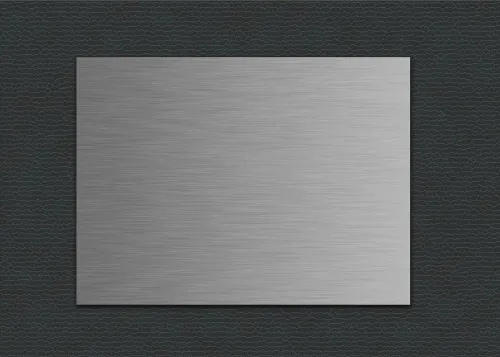
 | Metal Labels A Control Panel Nameplate a flat, regularly vertical, region mounted on machine where control or observing instruments information are shown They are... View product → |
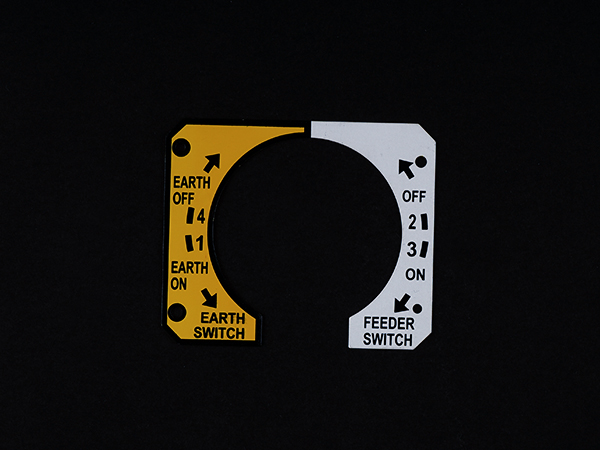
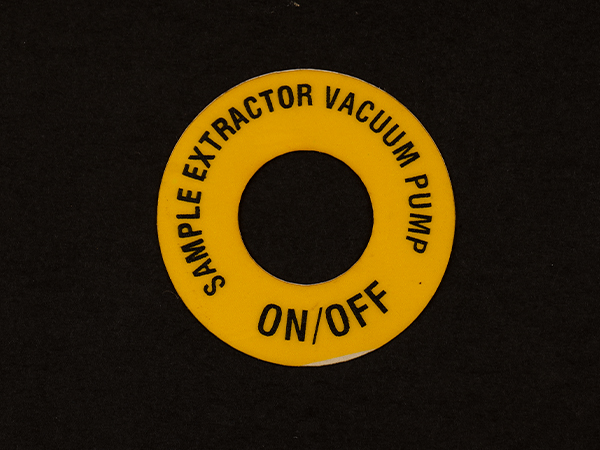 | Plastic Labels PVC & Polycarbonate Stickers are often used in various industries. View product → |
Frequently asked questions
When should you choose a full overlay instead of a decal?
Choose a full polycarbonate overlay for operator-facing graphics with buttons, windows, legends or repeated cleaning. Use a decal for straightforward equipment identification.
How do you match adhesive to a control-panel enclosure?
Confirm the enclosure surface, powder-coat finish, temperature range, moisture exposure and cleaning chemicals. Define the application temperature and require a clean, dry surface before bonding.
What should you specify before approving control-panel labels?
Specify dimensions, artwork revision, font size, contrast, material thickness, adhesive, operating conditions, abrasion resistance, adhesion testing and batch traceability.
How should you compare industrial sticker suppliers in Goa?
Compare sample consistency, colour and cut accuracy, adhesive performance, artwork revision control, inspection records, minimum quantities and the effort required to replace labels.
Related products
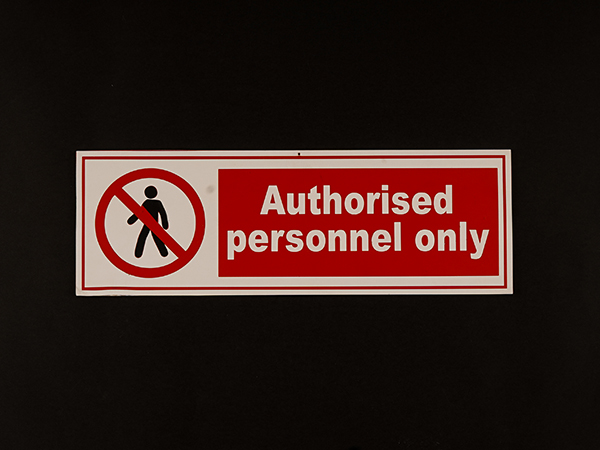 | Plastic Labels Vinyl Decals & Sticker is a kind of plastic that originates from characteristic substances, for example, salt and is viewed as an earth-accommodating... View product → |
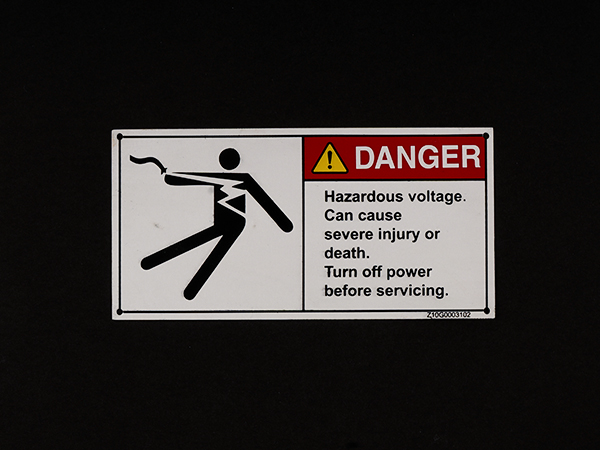 | Metal Labels Safety Nameplates, can view important operational and security information directly on a machine or device. View product → |
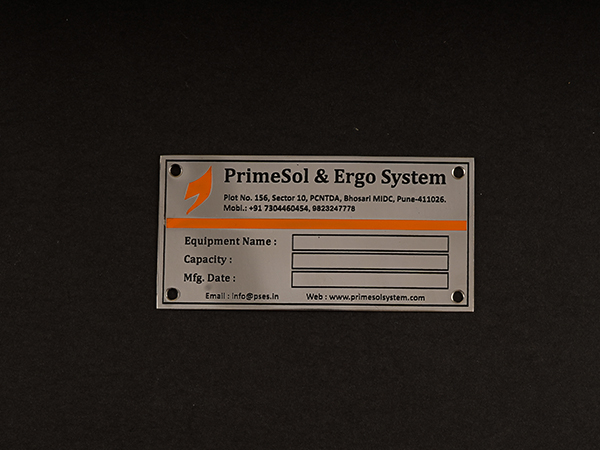 | Metal Labels In the most testing conditions, particularly overwhelming modern situations, where heat, moisture and erosion are available, Stainless Steel... View product → |
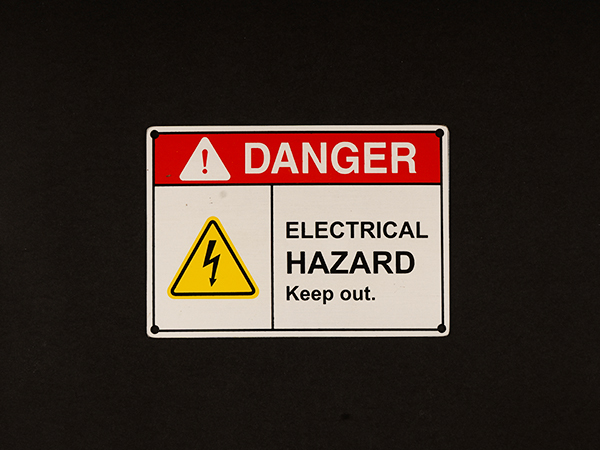 | Metal Labels Aluminum Nameplates are popularly known for their light weight and capacity to oppose corrosion.Its recognizable gleaming white shine offers... View product → |