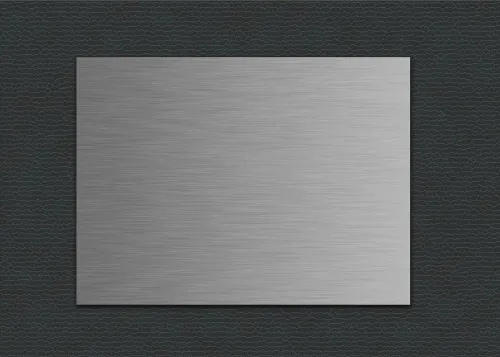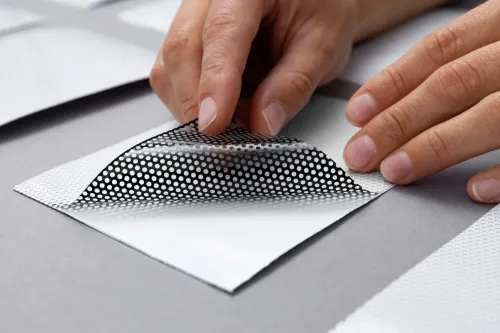

Brass is worthwhile on a Goa control panel when permanent identification, engraved lettering and a visible premium finish matter more than the lowest unit cost. By comparing the installation environment, competing materials, marking methods and mounting details, you can specify a plate that remains readable without creating corrosion or maintenance problems.
Key takeaways
- Choose brass for permanent identity, premium appearance and long-term service legibility.
- Use stainless steel or anodized aluminium when corrosion resistance or lower cost matters more.
- Specify engraved, etched or photo-marked text with a finish suited to exposure.
- Confirm dimensions, text, fixing method, artwork and environment before ordering custom brass labels.
When does brass make sense on a Goa control panel?
Brass nameplates are worth it for a control panel for equipment in Goa when the buyer values permanent identity, a premium appearance, and legibility after years of servicing or repainting. The decision rarely works on price alone: anodized aluminium and industrial polyester usually identify ordinary indoor panels for less.
The brass nameplate benefits matter most when:
- You need engraved information that remains after surface cleaning, repainting, or label replacement.
- The panel sits in an executive area, heritage-style installation, hospitality plant room, or other high-visibility location.
- The equipment will stay in service for many years, making replacement effort more important than the lowest initial cost.
- A covered workshop or indoor electrical room provides protection from direct rain and salt spray.
Uncoated brass will darken and develop patina. Goa’s humidity, monsoon wetting, and airborne chloride accelerate staining at scratches, drilled holes, and dissimilar-metal contact points, so exposed coastal equipment needs a stated alloy and finish; ask for dezincification-resistant brass where wet chloride exposure is expected.
Lacquer preserves the initial colour longer but can leave a visible failure edge after damage. Choose aluminium or polyester instead when minimum cost, low weight, strong-cleaner resistance, or a uniform modern appearance matters more than brass’s permanence and visual character. A decorative plate also does not replace mandatory electrical, circuit, conductor, or safety identification.
How does brass compare with aluminium, stainless steel, Metalphoto, PVC and polycarbonate?
Brass earns its extra cost when appearance and permanence matter more than minimum weight or purchase price. For brass equipment nameplates on a high-visibility panel, engraved lettering remains identifiable after repainting or service changes.
Goa’s humidity, monsoon water and coastal chloride expose scratches, holes and trapped moisture, so seal the edges and isolate brass from dissimilar metals with suitable washers.
Material | Corrosion resistance and service conditions | Weight, readability, appearance and replacement effort Brass | Good in sheltered indoor or covered areas; tarnishes and can suffer galvanic corrosion against steel or aluminium when wet. Heavy, premium-looking and permanently engravable; fewer replacements if protected.
Aluminium | Strong general choice for indoor and outdoor panels; anodizing improves corrosion resistance, though chloride can attack damaged areas. Light, crisp and modern; inexpensive to replace. Stainless steel | Strong and rigid, with good outdoor life; salt deposits and crevices can still cause staining or pitting. Heavier and costlier, but highly durable and professional-looking.
Metalphoto | Sealed anodized aluminium gives sharp, high-contrast graphics and strong chemical and UV resistance. Light, modern and long-lived; replacement is simpler than replacing engraved metal. PVC | Light and low-cost for indoor identification, but sunlight, heat and solvents can shorten its life. Easy to replace; printed text can fade or wear.
Polycarbonate | Tough and impact-resistant, suitable for protected outdoor use; verify UV and cleaner compatibility. Light, clear graphics are possible, but surface scratching and replacement remain concerns.
Choose anodized aluminium or Metalphoto for most economical modern panels. Choose stainless steel for exposed, washdown-prone equipment, and brass nameplates for control panels in Goa when a durable, distinctive finish justifies added cost and mounting care.
Which brass finish and marking method will stay readable?
Choose the marking before choosing the shine: deep engraving with a contrasting infill is the safest route when a control-panel label will be handled, wiped or exposed to oil.
| Finish and marking | Readability over time | Main failure |
|---|---|---|
| Natural brass, deep engraving and black infill | Patina changes the background, but recessed lettering remains visible | Tarnish, fingerprints and salt deposits stain the surface |
| Lacquered brass with engraving | Preserves the original colour longer and gives strong contrast | Scratches, drilling and outdoor exposure break the coating boundary |
| Printed brass | Allows coloured text, symbols and fine artwork | Cleaning, abrasion and coating damage can remove surface ink |
| Laser-marked brass | Clean appearance when the process is matched to the alloy and finish | The mark may be dark, pale or inconsistent between batches |
Specify natural, lacquered, waxed, plated or another coating; “polished brass” is not enough. A clear coating protects only until cutting, countersinking or drilling exposes bare metal, so order the plate fully machined and request cleaning instructions.
Keep text large enough to read at the normal viewing distance. Tiny lettering loses contrast first when patina, glare or fingerprints build up; specify the minimum character height, text colour and infill colour in the purchase drawing. Approve a finished sample under the panel’s lighting, especially for laser marking.
These brass nameplate benefits last only when the finish matches the environment. Brass equipment nameplates in salt-laden outdoor locations need stricter coating and cleaning control than labels inside a dry electrical room.
What should the plate say, and how should it attach to the panel?
A plate should identify the equipment without becoming part of the safety system. For brass nameplates on control panels in Goa, assign it a clear job: equipment tag, manufacturer, model, voltage, current, enclosure rating, warning text or service reference. Do not cover protective-earth points, ventilation slots, terminals, circuit labels or mandatory safety markings.
1. Confirm the content against the panel drawing and customer standard. Keep only information needed at the equipment, and verify ratings before engraving or printing.
2. Mark the location with the door closed and open. Leave the handle, push-buttons, selector switches, display, hinges, ventilation openings and removable covers fully accessible.
3. Choose mechanical fixing for dusty, textured or humid panels. Screws, rivets or studs need a hole pattern, internal-door clearance and sealing around each penetration; specify corrosion-resistant fasteners and compatible washers.
4. Use adhesive-only fixing when you cannot drill the enclosure. Degrease a smooth, dry surface, check compatibility with the powder coating, and test the adhesive through a wet-dry cycle before production.
5. Specify the plate’s dimensions, corner radius, hole centres, fastener size, coating and service location. For brass nameplates for control panels in Goa, state whether the panel is indoors, sheltered outdoors or exposed to rain and salt air.
A finished sample should confirm that the lettering remains readable without encroaching on controls or required markings. Adhesive failure or a misplaced hole can make an otherwise attractive plate a maintenance problem.
What should you confirm before ordering custom brass labels in Goa?
A purchase specification prevents a polished sample from hiding the wrong alloy, thickness or mounting pattern. It also answers whether “brass nameplates worth it control panel for equipment in Goa” is a sound decision rather than a price-driven assumption.
1. Approve the artwork at its actual size, not only on screen. Check every word, rating, symbol, logo, hole centre, edge clearance and mandatory safety marking. Confirm that the plate will not cover terminals, ventilation openings, protective-earth points or service access.
2. State the material specification in writing: brass alloy or corrosion requirement, sheet thickness, overall length and width, corner radius, lettering process, minimum character height, text colour or infill, and whether the plate is for an indoor electrical room, covered workshop, sheltered outdoor panel or salt-spray exposure.
3. Define the protection instead of accepting “polished brass.” Record whether the surface is natural, lacquered, waxed, plated or otherwise coated, and specify resistance to fingerprints, monsoon moisture, salt deposits and cleaning chemicals. Ask for the adhesive type, hole pattern, fastener material and cleaning instructions; drilling after coating can expose bare brass.
4. Require one finished sample in the final machined form. Inspect engraving or laser marking under the panel’s intended lighting, then check contrast, coating edges, scratches, burrs, hole alignment and fit. Laser marks can differ between alloys, so do not approve production from a digital proof alone.
For custom brass labels in Goa, Shreeniwas Signs Pvt Ltd can use this checklist to confirm the artwork and sample before production.
Related product
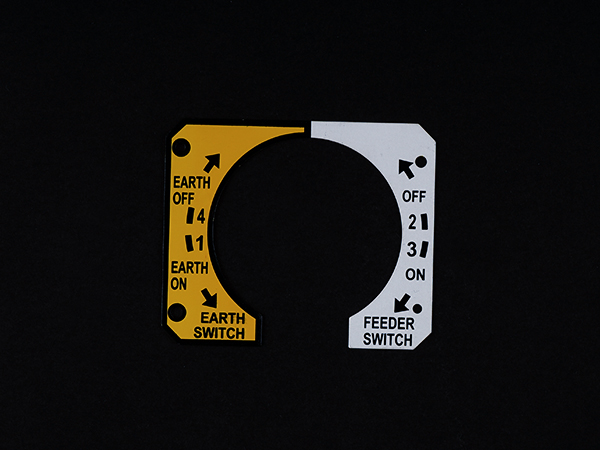 | Metal Labels A Control Panel Nameplate a flat, regularly vertical, region mounted on machine where control or observing instruments information are shown They are... View product → |
Frequently asked questions
When does brass make sense on a Goa control panel?
Brass suits panels needing permanent equipment identity, a premium appearance and readable information through years of servicing or repainting. Choose another material when low cost, light weight or high chemical resistance matters more.
How does brass compare with aluminium, stainless steel, Metalphoto, PVC and polycarbonate?
Anodized aluminium and industrial polyester suit many ordinary indoor panels at lower cost. Stainless steel offers stronger corrosion resistance, Metalphoto provides durable photographic anodized-aluminium marking, and PVC or polycarbonate suit lighter-duty labels. Brass provides distinctive appearance and durable identity but costs more and needs finish selection for Goa exposure.
Which brass finish and marking method will stay readable?
Select a finish that controls glare and protects the lettering, then match the marking method to the exposure and service life. Engraving, etching and photo-marking offer different balances of depth, contrast, detail and durability.
What should a brass control-panel nameplate say and how should it attach?
Include the equipment identity, tag number, ratings or key operating details required for service, plus any traceability information. Specify the plate size, hole pattern, adhesive or mechanical fasteners, surface condition and clearance around controls.
What should you confirm before ordering custom brass labels in Goa?
Confirm the final artwork, dimensions, material thickness, finish, marking method, text accuracy, mounting method, environmental exposure and delivery requirements before production.