
A control-equipment plate must do more than identify a cabinet: it must help an operator isolate power, trace a circuit, verify a rating, and restore the correct connection after maintenance. The right specification links readable information to the panel drawing, site conditions, mounting method, and replacement records.
Key takeaways
- Include asset identity, electrical ratings, warnings, and drawing references.
- Use contrast, legible lettering, and a measured layout that clears panel hardware.
- Specify corrosion-resistant aluminium, durable marking, and mounting suited to humidity.
- Verify every plate against drawings before handover and inspect it during maintenance.
What information must a control-equipment nameplate carry?
A control-equipment nameplate must identify the asset, state its electrical limits, and direct safe action. Operators use it during commissioning to match the panel with drawings; during isolation to confirm the correct equipment; during fault finding to trace circuits and terminals; and during inspection and maintenance to verify ratings, identity, and replacement parts.
Use this information hierarchy:
- Equipment tag or asset number
- Manufacturer and serial number
- Rated voltage, current, frequency, and phase
- Circuit, schematic, PLC I/O, and terminal references
- Switch and selector positions, including “ON”, “OFF”, “AUTO”, and “MANUAL”
- Emergency instructions, isolation points, and warning text
Keep control equipment labels legible at the installed viewing distance under cabinet lighting, glare, dust, oil, condensation, and repeated cleaning. IEC 60204-1 durability and legibility requirements, IEC 61439 assembly identification and rating information, plant electrical drawings, PLC I/O schedules, schematic references, and lockout/tagout procedures must agree.
An electrical panel nameplate identifies the assembly; a control-panel legend explains controls; a component marker identifies a device or terminal; a warning label communicates a hazard; a machine data plate states machine ratings; and a push-button or selector-switch label identifies one operator control. The plate identifies and warns.
It does not support the enclosure or replace the enclosure manufacturer’s rating plate, which can require manufacturer identity, rated voltage, current, and short-circuit withstand. Keep aluminium clear of exposed terminals and uninsulated buswork because it conducts electricity.
How do you design a plate that remains readable and fits the panel?
Approve artwork only after matching it to a panel fabrication drawing or a measured photograph. For aluminium nameplates in Mumbai, the image must show vents, handles, displays, controls, hinges, removable covers, cable entries, inspection windows, gasket lines, folded flanges and moving parts.
1. Mark the plate’s overall length and width, material thickness, corner radius, border, orientation and viewing distance. Dimension every hole location and diameter, then state mounting tolerances so holes do not collide with flanges, ducts or hinges.
2. Set the minimum text height, typeface, symbols, colour codes and arrow direction for the installed view. Keep control equipment labels clear of exposed terminals and uninsulated buswork: aluminium conducts electricity, so contact can create a fault path.
3. Submit an actual-size proof, not only a scaled PDF. View it under the cabinet’s lighting and check readability through glare, dust, oil, condensation and repeated wiping; small, low-contrast text that passes on screen can disappear in service.
4. Check the proof against the approved schedule before release. Verify spelling, units, voltage and current ratings, serial numbers, polarity symbols, warning wording, language, line breaks, revision status and the direction of every arrow.
Record the approved plate orientation and mounting surface on the panel drawing. If the plate crosses a removable cover, moving part or gasket line, relocate it rather than relying on adhesive or a smaller border.
Which aluminium construction and mounting method suits Mumbai conditions?
Choose 5052 aluminium for exposed panels where corrosion resistance matters; use 6061 when stiffness or machined fixing features matter. Specify thickness by span and fixing method: 0.5–0.8 mm suits bonded plates, while 1.0–1.5 mm resists flexing around rivets or screws. Seal cut edges and holes.
| Process | Small text | Colour, durability, lead time, tooling |
|---|---|---|
| Laser-marked or photo-anodized | Sharpest | Limited colours; strong solvent and abrasion resistance; moderate lead time; low tooling |
| Etched-and-filled | Sharp | Several fill colours; strong abrasion resistance; longer lead time; artwork or chemical tooling |
| Screen-printed | Good at larger sizes | Broad colours; ink depends on cleaner, oil, UV and overcoat; quick to moderate; screens required |
| Digitally printed coated sheet | Good, verify proof | Broad colour and gradients; coating governs solvents and abrasion; quick for short runs; minimal tooling |
For coastal salt, monsoon moisture, pollution, condensation, heat, UV, washdown, oils, cutting fluids and repeated cleaning, specify sealed anodizing or a tested industrial coating, plus a clear overlaminate only when its chemical compatibility is documented. Match ISO 12944 corrosivity to actual distance from the sea, shelter, pollutants, condensation and cleaning regime—not Mumbai’s location alone.
Use adhesive on clean, smooth powder-coated surfaces after degreasing and allow full bond build-up. Textured, oily, curved or removable surfaces need rivets, screws or captive fasteners; recessed plates protect edges. Use compatible fasteners and isolate aluminium from stainless steel or other dissimilar metals with washers or barriers.
Choose stainless steel for severe chemicals, polycarbonate for impact, PVC or vinyl for flexible temporary labels, and direct enclosure printing where replacement is unlikely. These choices define reliable custom aluminium labels and aluminium nameplates for control equipment in Mumbai.
How should the plate be installed, verified, and maintained?
Clean and degrease the substrate before installing control equipment labels. Confirm the surface temperature falls within the adhesive maker’s specified range, then allow the stated dwell time for bond build-up. Apply firm, even pressure across the entire plate. Do not bond over seams, textured peaks, hinges, gasket lines, or removable covers.
| Mounting method | Control | Use it when |
|---|---|---|
| Adhesive | Match surface, temperature, humidity, oil exposure, and dwell time | The surface is smooth, fixed, clean, and lightly handled |
| Rivets, screws, or captive fasteners | Provide holes and maintain enclosure clearance | The plate faces prying, high heat, frequent washdown, or chemical exposure |
Link every plate to the panel drawing revision, work order, asset register, and replacement record. At commissioning, compare the installed plate with the schematic, PLC I/O schedule, terminal plan, lockout/tagout procedure, and approved actual-size proof.
Set inspection frequency from cleaning and exposure, not from a generic weather-resistance claim. Use the named site cleaner in the maintenance instruction and record damage after cleaning, washdown, chemical contact, or enclosure work.
Replace a plate when text, symbols, ratings, serial numbers, or warning wording becomes illegible, detached, chemically attacked, or inconsistent with the current drawing.
ASTM B117 salt-spray hours compare coating and edge weaknesses; they do not convert into guaranteed outdoor service years for electrical panel nameplates in Mumbai. Require correlated field evidence for that decision.
What should you put in a purchase specification and supplier approval?
Make every quotation answer the same technical questions; “durable aluminium” is not a specification.
1. State the alloy, sheet thickness, surface treatment, anodizing or coating thickness, sealing method, marking process, minimum character size, colour system, protective overlaminate, edge treatment, hole diameter and hole tolerances.
2. Specify the fixing: acrylic adhesive, epoxy adhesive, rivets, screws, captive fasteners, or another named system. Require compatibility with the panel finish and isolation from dissimilar metals.
3. Define acceptance testing for the aluminium nameplates for control equipment in Mumbai: −20°C to 80°C, 95% relative humidity, UV-A 340 nm exposure, coastal salt air using ASTM B117, abrasion using ASTM D4060, and washdown with 70% isopropyl alcohol, neutral detergent, sodium hypochlorite solution, and 60°C water.
State the exposure duration, inspection method, and pass criteria.
4. Require an actual-size proof, not only a scaled PDF, and retain the signed sample approval record. Check character size, colour, symbols, line breaks, orientation, and revision before production.
5. Record minimum order quantity, quoted lead time, batch traceability, packaging that prevents scratches and bent edges, spare plates, replacement-batch colour matching, and revision-control rules.
6. Approve a manufacturer such as Shreeniwas Signs Pvt Ltd only when it documents the process, proofing, test results, traceability, and replacement support rather than offering an unqualified durability claim.
Related products
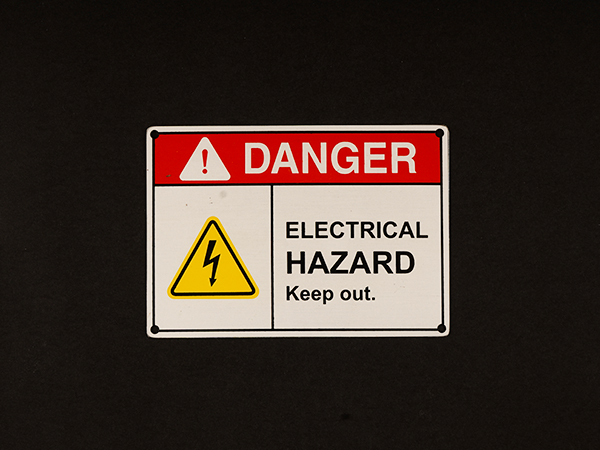 | Metal Labels Aluminum Nameplates are popularly known for their light weight and capacity to oppose corrosion.Its recognizable gleaming white shine offers... View product → |
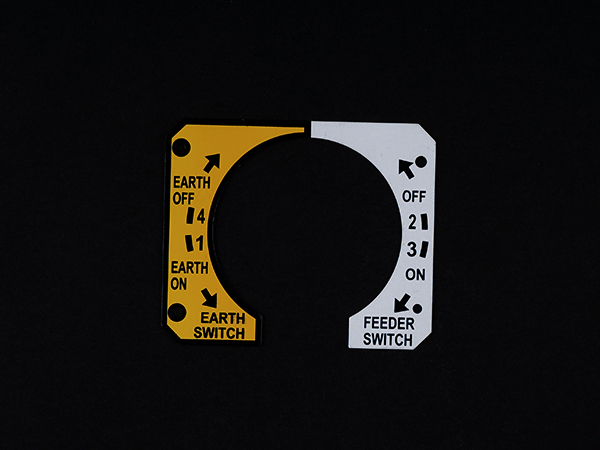 | Metal Labels A Control Panel Nameplate a flat, regularly vertical, region mounted on machine where control or observing instruments information are shown They are... View product → |
Frequently asked questions
What information must a control-equipment nameplate carry?
Carry the asset tag, equipment description, manufacturer details, model or serial number, electrical ratings, supply information, warnings, and drawing or circuit references required for safe operation and maintenance.
How do you design a plate that remains readable and fits the panel?
Measure the available mounting area, reserve clearance around screws and handles, choose a readable letter height and strong contrast, and check the final layout against the panel drawing before production.
Which aluminium construction and mounting method suits Mumbai conditions?
Select aluminium thickness, surface treatment, marking process, and adhesive or mechanical fixing for humidity, heat, cleaning chemicals, vibration, and the panel’s installation environment.
How should the plate be installed, verified, and maintained?
Prepare a clean mounting surface, align the plate, tighten fasteners without distortion, compare its details with approved drawings, and inspect readability, adhesion, corrosion, and missing information during maintenance.
What should you put in a purchase specification and supplier approval?
State the alloy or thickness, dimensions, artwork, text and symbols, marking durability, colour and finish, hole pattern or adhesive, environmental exposure, inspection criteria, samples, packaging, and document requirements.
Related products
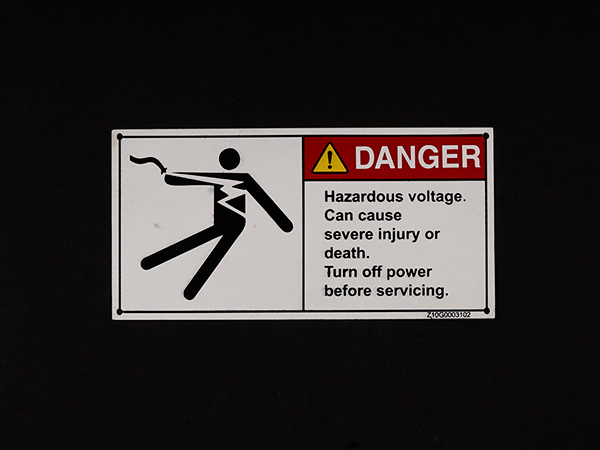 | Metal Labels Safety Nameplates, can view important operational and security information directly on a machine or device. View product → |
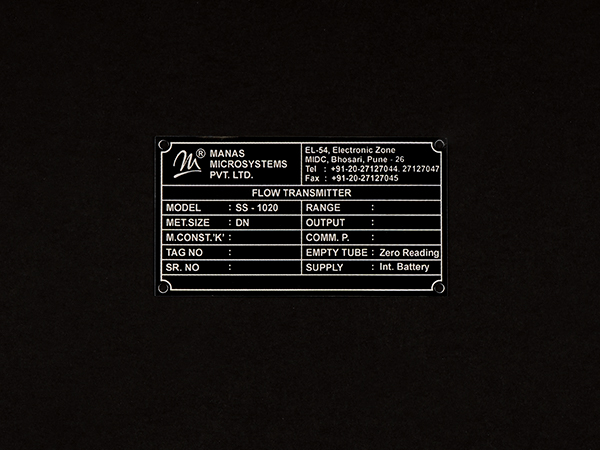 | Metal Labels Machine Specification Nameplate A Machine Specification Nameplate distinguishes and shows an item's name on gadget. View product → |
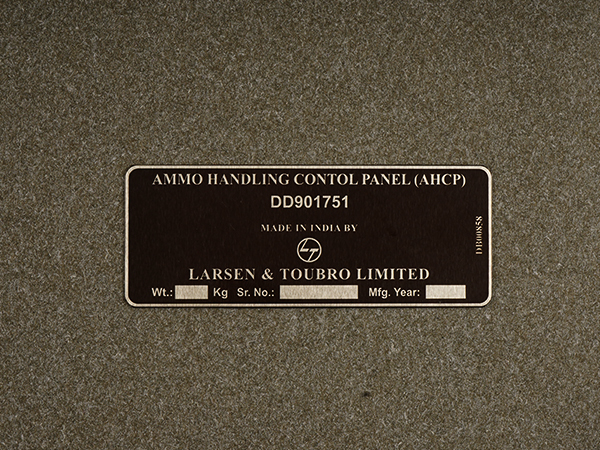 | Metal Labels Metalphoto Metalphoto is a specific kind of photosensitive anodized aluminum that is used to make durable, high-resolution nameplates, labels and control... |
 | Metal Labels In the most testing conditions, particularly overwhelming modern situations, where heat, moisture and erosion are available, Stainless Steel... View product → |