Salt deposits, monsoon water and trapped moisture can stain or pit a stainless steel nameplate even when the plate remains structurally sound. You will learn how to inspect, rinse, clean, dry and repair coastal-exposed plates, while choosing mounting details and materials that reduce repeat corrosion.
Key takeaways
- Inspect exposed plates every three months during and after the monsoon.
- Rinse salt deposits with clean water before wiping the surface.
- Remove tea staining with a stainless-steel-safe cleaner, not bleach or steel wool.
- Use compatible fasteners and drainage details to prevent trapped water corrosion.
Set a Goa inspection and salt-removal routine
Inspect exposed nameplates at least once every three months during and after Goa’s southwest monsoon. Rinse them whenever you see salt residue, dried water spots or brown staining; seafront plates need closer attention than sheltered, inland-facing plates.
For a practical routine to maintain stainless steel nameplates for coastal exposure in Goa:
- Check the plate face, engraved or printed areas, fixing holes, folded edges, spacers and gaps behind adhesive edges.
- Rinse with fresh water to dissolve and carry away chloride deposits before they concentrate as the water evaporates.
- Use a soft cloth or soft nylon brush for residue that remains after rinsing. Do not scrub dry salt across the surface.
- Rinse again so detergent or loosened salt does not dry on the plate.
- Dry with a clean microfiber cloth, wiping in the direction of a brushed finish rather than across it.
- Record the inspection date and photograph any brown marks, pits or rust streaks for comparison.
A seafront plate that stays visibly wet or salty needs a shorter interval than the usual six-to-twelve-month stainless-steel cleaning cycle.
Good stainless steel nameplates care in Goa means removing salt promptly, especially after storm spray, heavy rain or long periods of humidity; a sheltered plate can follow the quarterly check while exposed hardware may need monthly rinsing.
Clean salt, grime and tea staining without damaging the markings
Use fresh water first: it loosens salt without dragging crystals across the face. To clean metal nameplates in goa without scratching printed text, etched markings, overlays or clear finishes, follow with a dilute, neutral-pH household detergent and a clean microfiber cloth or soft nylon pad.
- Rinse away loose grit with fresh water.
- Wipe in the direction of the brushed grain, using light pressure.
- Work around letters, fixing holes, folded edges and adhesive gaps with a soft nylon brush.
- Rinse again until no detergent remains.
- Dry with a clean microfiber cloth; do not let salt-laden water evaporate on the plate.
| Method | Removes | Risk and control |
|---|---|---|
| Fresh water and microfiber cloth | Salt film, dust and loose grime | Lowest risk; rinse before wiping so crystals do not scratch |
| Dilute neutral-pH detergent and soft synthetic pad | Grease, bird droppings and stubborn coastal dirt | Keep pressure light; rinse thoroughly |
| Stainless-steel-safe cleaner | Brown tea-coloured staining on bare stainless steel | Test on a spare or hidden area; keep it off print, paint, overlays and clear coats |
Do not use steel wool, wire brushes, abrasive powder, bleach or sodium hypochlorite. Hydrochloric-acid cleaners can cause rapid chloride attack, while contaminated tools can embed iron particles and create fresh orange staining.
Treat printed, painted, anodized, chemically blackened and filled details as separate finishes. A cleaner that suits bare 316 stainless steel can dull or lift them, so test before site-wide cleaning. Stop polishing if staining remains after gentle washing; aggressive rubbing can remove contrast from engraved characters.
Recognise corrosion before it becomes a mounting or legibility failure
Orange rust is a warning, not merely dirt. Loose brown marks that wipe away can come from iron particles, carbon-steel fasteners or contaminated cleaning tools, but rust that returns points to a supply or assembly problem.
Tea staining appears as pale brown or amber film, especially beneath lettering, around washers and along folded edges. It usually signals chloride deposits and early surface attack; it is easier to remove before the stain becomes rough or begins lifting printed markings.
Use this stainless steel nameplates care in Goa triage:
1. Wipe a small stained area with a clean, damp microfiber cloth. If the colour disappears without a depression, treat it as surface contamination and continue gentle cleaning.
2. Run a fingertip across the plate, without scraping. Roughness, pin-sized cavities or dark spots that remain after rinsing indicate pits: localized metal loss that can spread under salt deposits.
3. Inspect fixing holes, corners, edges, spacers and adhesive gaps. Rust concentrated there reveals trapped brine or a crevice, not just a dirty face; it can enlarge holes, loosen fixings and undermine the mounting.
4. Photograph recurring stains and mark their locations. Escalate a plate when pits cluster around text, holes deform, an edge lifts, or corrosion returns after salt removal. Legibility and attachment are already at risk.
Choose compatible grades, fasteners and drainage details
316 stainless steel justifies its cost on seafront equipment, exposed façades, jetties and sites that receive wind-blown salt. Its molybdenum content improves resistance to chloride pitting and crevice corrosion compared with 304, but stagnant saltwater can still damage 316. Sheltered inland signs may not need the upgrade.
Grade selection must include every part touching the plate. A 304 plate fitted with carbon-steel screws can develop orange streaks that look like nameplate failure.
| Grade or part | Coastal risk | Practical choice |
|---|---|---|
| 304 stainless steel | Lower cost, greater pitting risk | Use in sheltered locations with regular rinsing |
| 316 or 316L stainless steel | Better chloride resistance, not corrosion-proof | Use for exposed coastal locations |
| Carbon-steel screws or washers | Rust staining and possible fastener failure | Reject for outdoor coastal mounting |
| 316 stainless fixings and washers | Better material compatibility | Match them to a 316 plate |
To maintain stainless steel nameplates for coastal exposure in Goa, specify deburred holes, close-fitting washers and no sharp crevices around folded edges. Use spacers that hold the plate clear of the wall, leave the lower edge open for drainage, and avoid adhesive gaps or horizontal ledges that trap saltwater.
Ask Shreeniwas Signs Pvt Ltd to document the plate, fastener and spacer grades when the assembly is ordered. Do not improvise with brass screws; for brass nameplates coastal maintenance in Goa, galvanic contact, tarnish and trapped moisture create a separate specification problem. Rinse any water trap before deposits harden.
Related product
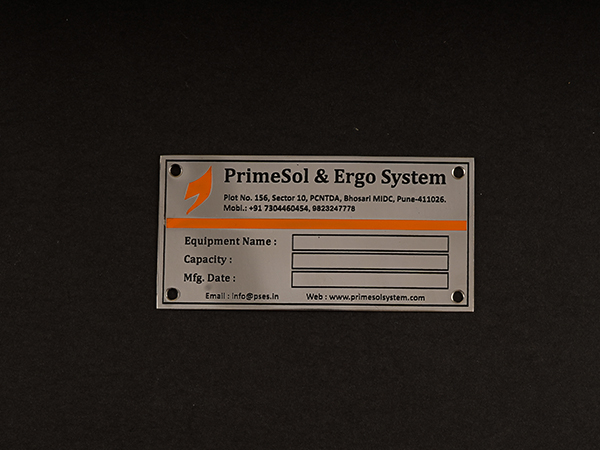 | Metal Labels In the most testing conditions, particularly overwhelming modern situations, where heat, moisture and erosion are available, Stainless Steel... View product → |
Use a final condition checklist and handle brass separately
Before you sign off, inspect the entire perimeter, not just the visible face. Look for lifted edges, open adhesive gaps, cracked sealant, trapped water behind spacers, corrosion around fixing holes, loose fasteners and sharp folds that hold salt.
- Confirm the plate sits flat without a continuous water trap behind it.
- Check every corner, folded edge, hole and spacer for orange staining, pits, green deposits or a damp salt line.
- Run a clean, dry cloth around the perimeter; staining or grit indicates deposits that need removal.
- Verify that printed text, etched characters, paint fills and protective coatings remain intact and legible.
- Replace or refit the plate when corrosion has enlarged a hole, weakened an edge or lifted the marking.
For brass nameplates coastal maintenance in Goa requires separate treatment. Bare brass will darken brown or develop a greenish patina in humid, chloride-filled air; that colour change is not automatically damage. Polish only when bright metal is required, because polishing removes material and can create a visibly bright ring around letters or edges.
Lacquered brass needs a soft damp cloth and mild detergent, not metal polish, solvent, abrasive pads or aggressive detergent. These products haze or strip the clear coat. If lacquer lifts, cracks or fails at an edge, remove the coating under controlled conditions, clean the brass and refinish it rather than spot-polishing it.
This approach helps you clean metal nameplates in Goa without trading coastal protection for a shinier but thinner surface.
Frequently asked questions
How often should you inspect stainless steel nameplates in Goa?
Inspect them at least once every three months during and after the southwest monsoon. Check seafront plates more closely than sheltered, inland-facing plates.
How do you clean metal nameplates in Goa without damaging markings?
Rinse away salt first, then use clean water, mild detergent and a soft cloth. Avoid abrasive pads, steel wool, bleach and harsh cleaners that can scratch or fade markings.
What are early signs of corrosion on a stainless steel nameplate?
Look for salt crust, dried water spots, brown tea staining, rust around fasteners, pitting and fading or lifting markings. Treat these signs before corrosion affects mounting or legibility.
How should brass nameplates be maintained after coastal exposure in Goa?
Clean brass separately from stainless steel, remove salt promptly and inspect for tarnish, green deposits and coating failure. Use a brass-appropriate cleaner and follow the finish supplier’s instructions.