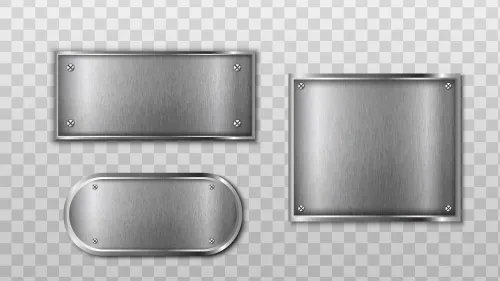

Industrial nameplates may appear like small components, but they carry important operational, branding, and compliance responsibilities. Whether used on machinery, electrical systems, automotive components, or industrial products, poorly manufactured nameplates can create maintenance issues, readability problems, and durability failures over time.
Businesses in Bengaluru increasingly look beyond pricing when selecting industrial nameplate manufacturers. Long-term performance, material quality, and manufacturing capability have become far more important decision-making factors.
One of the first things businesses should evaluate is material suitability. Different industries require different materials depending on environmental conditions. Common options include:
Stainless steel for corrosion resistance
- Aluminium for lightweight industrial applications
- Brass for premium identification
- Polycarbonate for interface graphics
- Vinyl for flexible labeling systems
- Choosing the wrong material can reduce product lifespan and affect readability in demanding environments.
Manufacturing precision is another critical factor. Industrial nameplates often include technical specifications, serial numbers, compliance details, safety instructions, or machine ratings. Inaccurate printing or engraving can create operational confusion and affect regulatory compliance.
Businesses should also evaluate:
- Print durability
- Engraving consistency
- Adhesive performance
- Surface finishing quality
- Edge cutting precision
- Resistance to chemicals and heat
- These factors directly affect long-term usability.
Customization capability has become increasingly important as industries adopt specialized production systems. Many manufacturers now require:
- Barcode integration
- QR code printing
- Variable serial numbering
- Multi-language labeling
- UV-resistant coatings
- Tamper-proof applications
Suppliers unable to support customization often struggle to meet evolving industrial requirements.
Production scalability is another important consideration. Some businesses need small custom batches, while others require large-volume industrial production with strict consistency standards. Evaluating manufacturing infrastructure helps businesses avoid supply issues later.
Bengaluru’s industrial ecosystem includes sectors such as automation, electronics, automotive manufacturing, electrical systems, medical devices, and heavy engineering. Each industry has unique labeling standards and environmental requirements, making technical expertise valuable when selecting suppliers.
Businesses should also review sample quality carefully before finalizing procurement decisions. Factors such as finishing consistency, readability, alignment accuracy, and material thickness often reveal manufacturing standards more clearly than brochures or catalogs.
Shreeniwas Signs Pvt Ltd manufactures industrial nameplates and identification systems for businesses across multiple sectors requiring durable and application-specific labeling solutions.
Companies evaluating manufacturing partners often prioritize technical capability, production consistency, and long-term material performance during supplier selection.