


Choose the plate material from the machine’s environment, attachment method and legibility requirements—not from appearance alone. By recording those conditions and specifying the finish, marking, dimensions and inspection checks, you can select a plate that remains readable through Bengaluru weather, cleaning and routine handling.
Key takeaways
- Choose aluminium to reduce weight; choose brass for rigidity and a heavier premium plate.
- Record heat, moisture, chemicals, abrasion and mounting limits before selecting material.
- Specify plate size, text height, contrast, serial data and viewing distance before production.
- Match engraving, anodising or printing to the equipment label’s main failure risk.
When brass beats aluminium—and when it does not
The choice between brass nameplates or aluminium nameplates for equipment labels in Bengaluru depends on mass, rigidity, finish and abuse—not appearance alone. Aluminium is about 2.7 g/cm³; cartridge brass is about 8.5 g/cm³, so an aluminium plate weighs roughly one-third as much at the same volume.
| Option | Physical and visual advantage | Choose it when |
|---|---|---|
| Brass | Rigid, heavy, traditionally premium; supports engraved detail and developing patina | Brass nameplates for equipment in Bengaluru suit robust machinery where weight and changing colour are acceptable |
| Aluminium | Light, easier to handle, lower cost; suits anodising and laser marking | Aluminium nameplates for equipment in Bengaluru suit thin enclosures, hinged guards and large plates |
Specify clear lacquer for brass when its bright finish must remain unchanged. Fingerprints, scratches, drilled edges and uncoated backs still create maintenance points. Reject brass when weight, cost or patina is unacceptable.
Do not treat bare aluminium as automatically outdoor-proof. Alkaline cleaners, chlorides and trapped moisture can stain or pit it, so specify the surface treatment and cleaning exposure. Reject aluminium where repeated impact, severe abrasion or a rigid heavy plate is required.
Choose brass nameplates for equipment in Bengaluru when rigidity, engraved detail, premium appearance or intentional patina matters more than easy handling.
Record the machine environment before specifying the plate
Specify material, coating and attachment from the machine environment, not from appearance alone. For equipment identification plates in Bengaluru, record:
- Indoor or outdoor location, Bengaluru monsoon rain and humidity, direct sunlight and temperature range
- Vibration, abrasion, oil or coolant contact, cleaning chemicals, and salt exposure during coastal transport or storage
| Outdoor exposure | Record separately | Why it matters |
|---|---|---|
| UV | Direct sunlight and exposure duration | Fading is different from corrosion |
| Rain | Water, humidity and drainage | Trapped moisture attacks edges and joints |
| Cleaning | Chemical name, concentration and frequency | Cleaners can stain or pit aluminium |
| Abrasion | Contact, tools and wash-down method | Scrubbing can remove markings |
An ISO 9227 salt-spray result does not predict years of Bengaluru sunlight or monsoon exposure. Treat it as laboratory corrosion evidence, not an outdoor-life guarantee.
Check dissimilar-metal contact. Moisture between aluminium and copper, brass or copper-containing terminals can create galvanic corrosion; request sealed edges, a barrier coating, nonconductive washers and drainage from wet joints.
Aluminium expands at about 23 × 10⁻⁶/K; common brass expands at about 19–21 × 10⁻⁶/K. Use flexible adhesive or mechanical fixing for large aluminium nameplates for equipment in Bengaluru exposed to hot sun and cool nights.
The plate supplements the operating manual, statutory safety signs, lockout/tagout controls and formal asset record. IEC 60204-1 guides machine marking and warnings; it does not mandate brass or aluminium.
Specify dimensions, information and readability before production
A marked drawing or photograph prevents a plate that looks right but misses the machine. For equipment identification plates in Bengaluru, specify the operator’s viewing position and the substrate finish before requesting a quote.
1. Show width, height, corner radius, thickness, orientation, hole diameter and centre-to-centre spacing. State adhesive or screw fixing, countersinking, edge treatment and the mounting surface.
2. Provide the exact copy: asset ID, manufacturer, model, serial number, year, rated voltage, current, power, weight, warning symbols, QR code or Data Matrix, and emergency contact details. Preserve manufacturer rating values and units without abbreviation or alteration.
3. Set character height from viewing distance. Reserve larger text for the asset ID and safety instruction; use smaller serial and rating text only if it remains readable from the normal working position. Approve a physical sample at that distance under actual lighting, specifying font, colour, finish and contrast.
For brass nameplates or aluminium nameplates for equipment labels in Bengaluru, define each code’s symbol size, quiet zone, verification grade, contrast and damage tolerance. Verify it after finishing, including any overlaminate, on the real mounting surface. Add a warning symbol or exact wording only after checking the machine risk assessment and applicable safety requirement.
Match the marking method and alternative material to the failure risk
Permanent contrast depends on the marking process, not the metal alone. Engraving and chemical etching leave recessed characters; add black infill, paint fill or a contrasting anodised layer, or glare can hide them.
| Option | What it provides | When it applies |
|---|---|---|
| Engraving or etching | Recessed, durable detail | Add contrasting fill for readability |
| Screen printing | Economical colour graphics | Repeated batches and non-critical wear |
| Embossing | Tactile characters without ink | Handling where visual contrast may fail |
| Anodised aluminium | Dyed, sealed oxide surface | Specify alloy, ISO 7599 film class or thickness, colour, sealing and whether marking cuts through the dye |
| Laser-marked aluminium | Light characters exposed beneath a dark anodic layer | Approve a sample under actual lighting and viewing distance |
Laser marking raw bright aluminium does not guarantee black-on-silver contrast. For brass nameplates for equipment in Bengaluru, choose stainless steel instead when chemicals, impact or heat exceed brass’s practical limits.
- Choose anodised or Metalphoto aluminium for low-mass coded graphics, engraved plastic for electrical isolation and indoor panels, and vinyl decals for temporary identification.
- Treat decorative brass differently from an equipment plate: verify cleaning, handling and service-life performance.
- For exported equipment, request brass composition and restricted-substance declarations covering lead in free-machining alloys, inks, coatings and adhesives.
Aluminium nameplates for equipment in Bengaluru suit durable coded identification when weight and readable graphics matter.
Install, inspect and order equipment plates in Bengaluru
Clean the substrate before fixing equipment identification plates in Bengaluru: remove oil, dust, rust, powder-coating overspray and condensation using the adhesive supplier’s stated method. Check its minimum application temperature, apply the specified pressure, and wait through the full cure or dwell time before washing or loading the machine.
Contamination causes peeling more often than the choice of brass or aluminium.
| Fixing choice | What to specify | Main failure to prevent |
|---|---|---|
| Brass nameplates or aluminium nameplates for equipment labels in Bengaluru | Screw size matched to the hole and substrate, washers, deburred edges, and countersinking only where the drawing requires it | Loose fasteners, sharp edges or cracked plates |
| Adhesive | Substrate finish, cleaning method, application temperature, pressure and cure time | Poor wet-out and early detachment |
Ask each Bengaluru supplier for:
- Material grade, thickness and dimensional tolerances
- Hole-location tolerance and delivery location
- Artwork proof, serial-number proof and physical sample approval
- Packaging that prevents scratches, bending and moisture damage
A prototype consumes approval time; serialised plates need controlled data and proofing. Repeated batches save setup effort but require a retained approved sample. Evaluate Shreeniwas Signs Pvt Ltd against this specification, not appearance alone.
Before acceptance, measure material, thickness, dimensions and holes; verify every serial number, rating and code; inspect adhesion, colour, contrast, burrs and scratches; and test the plate against its oil, coolant and cleaning agent. Reject peeling, glare, UV-faded copy, wrong holes, sharp edges or plates fixed to contaminated surfaces.
Keep every plate away from moving parts, hot surfaces and service access.
Related products
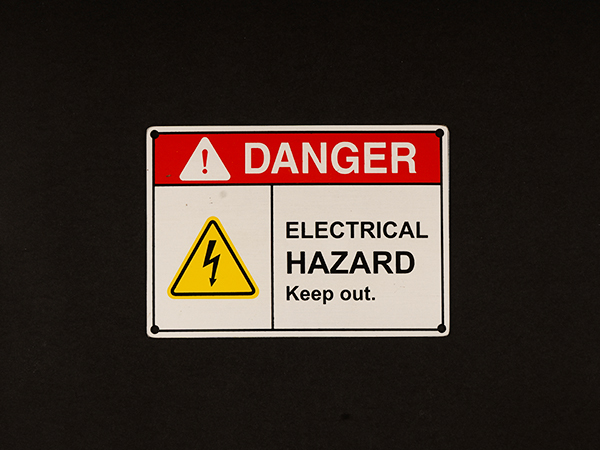 | Metal Labels Aluminum Nameplates are popularly known for their light weight and capacity to oppose corrosion.Its recognizable gleaming white shine offers... View product → |
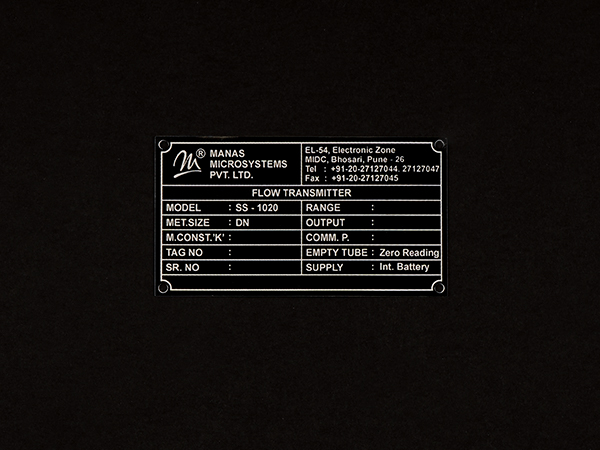 | Metal Labels Machine Specification Nameplate A Machine Specification Nameplate distinguishes and shows an item's name on gadget. View product → |
Frequently asked questions
When does brass beat aluminium for equipment nameplates?
Brass suits applications that need greater rigidity, mass or a distinctive durable finish. Aluminium is the better choice when low weight matters.
What machine conditions should you record before ordering an equipment plate?
Record operating temperature, moisture exposure, chemicals, abrasion, sunlight, cleaning methods, vibration and the available mounting surface.
What information should you specify before production?
Specify the plate dimensions, material, thickness, hole positions, text and serial data, text height, contrast, viewing distance and fixing method.
How do you choose a marking method for an equipment identification plate?
Choose engraving, anodised marking, printing or another method according to the main failure risk, such as abrasion, chemicals, heat or ultraviolet exposure.
Related products
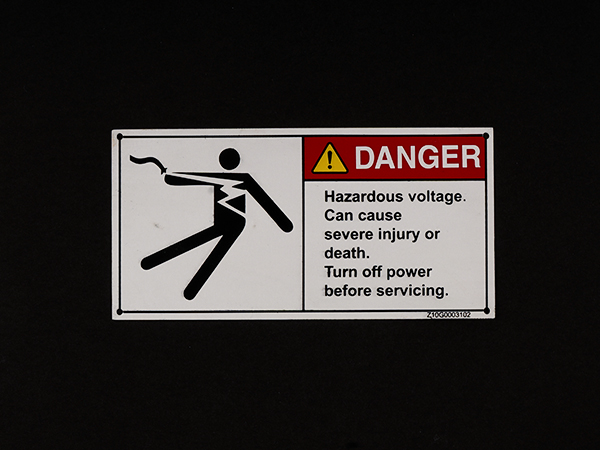 | Metal Labels Safety Nameplates, can view important operational and security information directly on a machine or device. View product → |
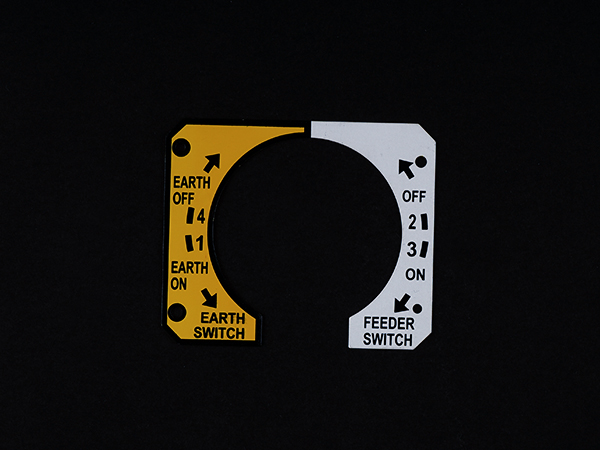 | Metal Labels A Control Panel Nameplate a flat, regularly vertical, region mounted on machine where control or observing instruments information are shown They are... View product → |
 | Metal Labels Shreeniwas Signs offers a wide choice of standard Custom Scales and dials. We have multiple variety of dial sizes to our customers. View product → |
 | Plastic Labels Vinyl Decals & Sticker is a kind of plastic that originates from characteristic substances, for example, salt and is viewed as an earth-accommodating... View product → |