
The right identification method depends on whether the graphic must become part of a moulded plastic surface or remain a replaceable information component. By comparing construction, geometry, durability, tooling, changeability, attachment and total cost, you can select the option that fits your product and production volume.
Key takeaways
- Choose in-mold decoration for graphics integrated into injection-molded plastic housings.
- Choose aluminium nameplates for durable identification on equipment and finished products.
- Test adhesion, abrasion, chemicals, heat and moisture before approving either method.
- Compare tooling, minimum quantities, lead time and installation labour—not unit price alone.
How in-mold decoration differs from in-mold labelling
In mold decoration places a printed polymer film inside the mold before plastic injection. The film is registered, heated or vacuum-formed to the cavity, and then bonded to the molded part as the plastic fills behind it. The graphic becomes part of the housing’s surface rather than a sticker added afterward.
Thermoforming can stretch fine text, logos, and registration marks. Deep draws, sharp radii, and undercuts raise the risk of wrinkles, ink cracking, bridging, or incomplete seating.
| Option | What happens | Practical distinction |
|---|---|---|
| In-mold decoration | A decorated film is formed to the cavity and back-injected into the plastic part. | Suits integrated graphics, curved housings, and seamless surfaces. |
| In-mold labelling | A preprinted label is placed in the mold and attached to the molded part during the cycle. | The label remains a distinct label layer; it is not automatically the same process as three-dimensional decoration. |
| Separate nameplate | A finished aluminium plate is engraved, printed, etched, or marked, then attached after molding. | You can replace it and add serial numbers, revision codes, or other variable data. |
In-mold labelling works well when a flat label must be bonded during molding, especially on packaging and straightforward surfaces. In mold decoration demands compatible film, ink, mold registration features, and process development, so fixed artwork in substantial production volumes makes the strongest case.
A separate nameplate or product identification labels are more practical when artwork changes frequently, every unit needs traceability, or field replacement matters. Conventional IMD artwork is commonly fixed in the film and tied to mold-specific geometry.
Construction, appearance and durability: a direct comparison
For a thin, seamless plastic housing, in mold decoration usually looks more integrated; aluminium nameplates provide easier replacement and variable identification. The construction determines the result, not the label name alone.
| Option | In-mold decoration | Aluminium nameplates |
|---|---|---|
| Thickness | Printed film becomes part of the molded plastic surface; added thickness is low and follows the housing | Separate metal plate adds a visible layer, with thickness selected for rigidity, edges and attachment |
| Weight | Adds little weight because the film is light | Heavier than film, although thin aluminium keeps the increase modest |
| Appearance | Seamless graphics, curved coverage, selective masking and backlighting are possible | Crisp metallic finish, engraved or etched detail, and a deliberate plate edge are visible |
| Wear resistance | Depends on film, ink, texture and protective surface; damaged graphics are difficult to repair | Depends on anodizing, coating or engraving; a robust construction can resist handling, solvents and weather |
| Replacement | Usually requires replacing the molded housing or accepting a permanent graphic change | Remove and replace the plate if the attachment method allows access without damaging the product |
“In mold decoration” is not automatically more durable than aluminium. Compare the actual film-and-ink system with the aluminium construction: sealed anodized, coated, engraved and subsurface-marked surfaces perform differently.
Use ASTM D3359 cross-hatch or tape adhesion testing to compare coatings, but do not treat it as complete qualification for product identification labels. Add abrasion, solvent, humidity, thermal-cycle and outdoor-exposure tests where service conditions demand them.
Aluminium nameplates also suit serial numbers, revision codes and changing artwork because engraving or digital marking supports variable data. Fixed IMD graphics favour stable designs; a molded housing plus replaceable label reduces disruption when identification changes.
When each method fits the product and production plan
Choose in mold decoration when the plastic part’s shape, graphics and identification content will remain stable across a substantial production run. It suits curved housings, seamless control panels and products where a separate label’s raised edge would collect dirt, catch during handling or weaken the appearance.
| Option | Best fit | Production condition |
|---|---|---|
| In mold decoration | Integrated graphics on a plastic housing | High volume, stable artwork, repeatable geometry |
| Aluminium nameplates | Product identification, warnings or branding added separately | Low or mixed volume, frequent revisions, variable serial numbers |
| Aluminium equipment nameplates | Industrial assets needing durable, replaceable identification | Field service, traceability, or replacement without changing the housing |
Select aluminium nameplates when serial numbers, revision codes, barcodes or customer-specific artwork change often. Engraving, marking or digital printing allows variable data without redesigning the molded decoration system. A separate plate also lets you replace damaged identification while keeping the main product intact.
Use in mold decoration only when the film, ink, mold registration and forming process justify the repeat volume. A design change can affect film artwork, tooling and process approval, so it becomes burdensome when engineering revisions are frequent.
For an aluminium equipment nameplates specification, evaluate the complete construction—not aluminium alone—because adhesive, ink, clearcoat or laminate can set the usable temperature and environmental limit.
Attachment, environmental testing and identification performance
Specify the complete construction, not merely “anodized aluminium.” Aluminium nameplates may be sealed anodized, screen- or digitally printed with a coating, etched, engraved, or photo-anodized; each has different graphic durability.
Ask for these construction details:
- Aluminium grade and thickness
- Graphic process, ink or coating, and clearcoat or laminate
- Adhesive type, application temperature, dwell time, and surface preparation
- Rated temperature range for the complete assembly
The adhesive, ink, laminate, or clearcoat usually sets the operating limit before the aluminium does. Test adhesion on the actual substrate: bare aluminium, anodized aluminium, powder coat, oily sheet, and textured paint do not behave alike.
Include peel or shear loading, humidity, and replacement after removal; a label that bonds well in the lab can fail on a dusty enclosure.
Validate durability with separate, defined tests. ASTM D3359 cross-hatch and tape testing compares coating adhesion, but it does not prove resistance to chemicals, abrasion, humidity, thermal cycling, or sunlight. Request the exposure chemicals and concentrations, abrasion method and cycles, temperature cycle, and pass/fail photographs.
For outdoor use, request the ISO 4892 method, cycle, irradiance or dose, evaluation criteria, and failure images; accelerated hours do not convert reliably into outdoor years.
Scan barcodes after abrasion, chemical exposure, glare, and temperature cycling at the intended scanner distance and angle. Record decode rate and quiet-zone damage. For field replacement, retain the substrate and mounting-hole or label-position drawing, specify serialisation or engraving, and verify that replacement product identification labels match the original barcode data and legibility.
Tooling, quantities, lead time and total cost
For low volumes, frequent artwork revisions, or unique serial numbers, aluminium nameplates usually have the lower total cost. In mold decoration becomes financially stronger when one plastic housing design runs at high volume with stable artwork and no separate replacement label.
| Option | Tooling and quantity | Changes, serialisation and lead time | Replacement cost |
|---|---|---|---|
| In-mold decoration | Film and mould preparation increase upfront cost; minimum production quantities are usually higher because setup waste must be spread across the run. | Fixed artwork suits repeat production, but a logo or warning change can require new film and mould work. Variable serial numbers add process complexity. | A damaged decorated housing normally needs part replacement, not a quick label change. |
| Aluminium nameplates | Artwork setup is simpler, and quantities can be ordered in smaller batches. Tooling depends on the marking, shape and fixing method rather than the moulded housing. | Engraving, laser marking or digital printing supports serialisation and late engineering changes. Lead time is often easier to control for repeat labels. | Replace the plate instead of the entire enclosure; keep a spare batch for field service. |
Compare the complete quote, not the piece price. Include artwork revisions, sample approval, serial-number data handling, minimum order quantity, freight, application labour and the cost of inventory held for obsolete designs.
Ask Shreeniwas Signs Pvt Ltd to quote aluminium equipment nameplates in both fixed-artwork and variable-data versions, with the substrate, coating, adhesive or fasteners, marking method and replacement quantity stated. If solvents, heat or peel loads threaten adhesive life, specify rivets or screws early; drilling and sealing changes affect installation cost.
Related products
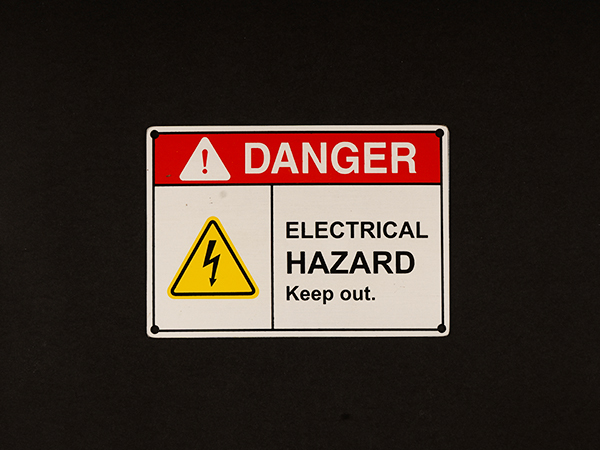 | Metal Labels Aluminum Nameplates are popularly known for their light weight and capacity to oppose corrosion.Its recognizable gleaming white shine offers... View product → |
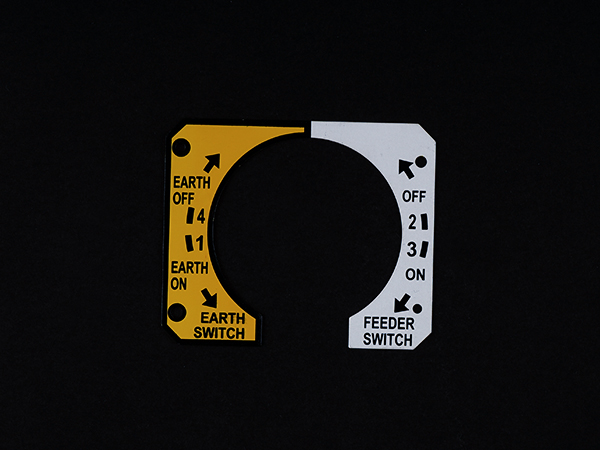 | Metal Labels A Control Panel Nameplate a flat, regularly vertical, region mounted on machine where control or observing instruments information are shown They are... View product → |
Frequently asked questions
How does in-mold decoration differ from in-mold labelling?
In-mold decoration uses a printed polymer film that becomes part of the molded surface. In-mold labelling places a pre-printed label in the mold, where it bonds to the plastic during injection; the processes and suitable label constructions differ.
Which is more durable: in-mold decoration or aluminium nameplates?
Durability depends on the film, ink, coating, aluminium grade, adhesive or fasteners, and exposure conditions. In-mold decoration protects graphics within a molded plastic surface, while aluminium nameplates provide a rigid identification plate that can resist demanding equipment environments when specified and attached correctly.
When should you choose aluminium equipment nameplates?
Choose aluminium equipment nameplates when you need a separate rigid plate, serial numbers, rating information, asset identification or attachment to metal and other finished surfaces. They also suit products that are not injection-molded.
What should you compare before selecting a product identification label method?
Compare tooling cost, order quantity, artwork changes, lead time, installation steps and total cost. Test the chosen construction for abrasion, chemicals, temperature, moisture, UV exposure and adhesion in the actual use environment.
Related products
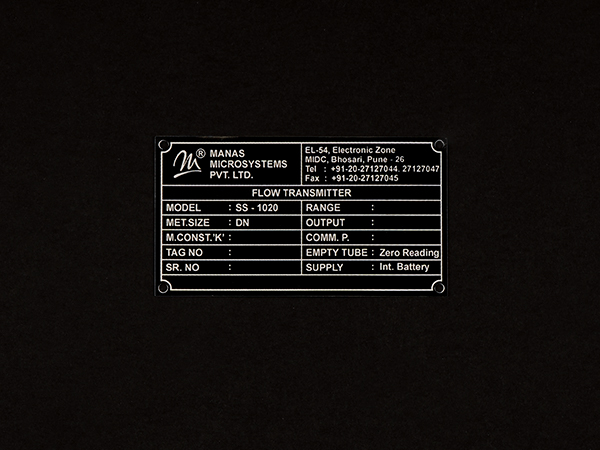 | Metal Labels Machine Specification Nameplate A Machine Specification Nameplate distinguishes and shows an item's name on gadget. View product → |
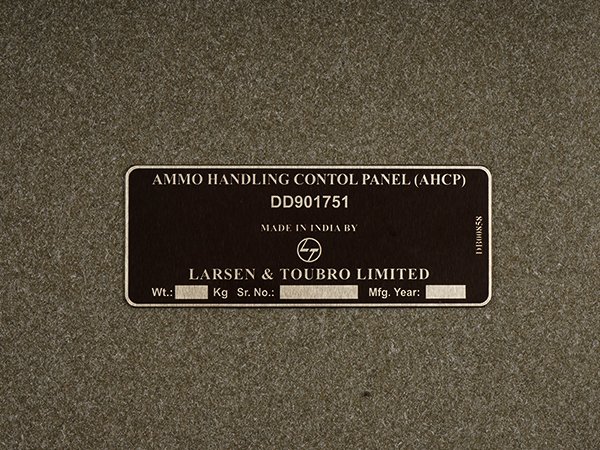 | Metal Labels Metalphoto Metalphoto is a specific kind of photosensitive anodized aluminum that is used to make durable, high-resolution nameplates, labels and control... |
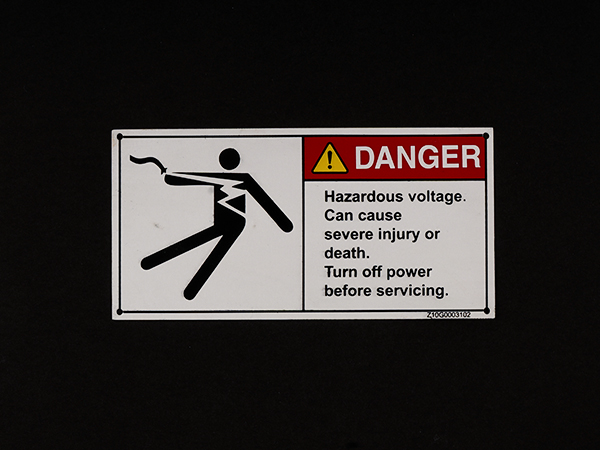 | Metal Labels Safety Nameplates, can view important operational and security information directly on a machine or device. View product → |
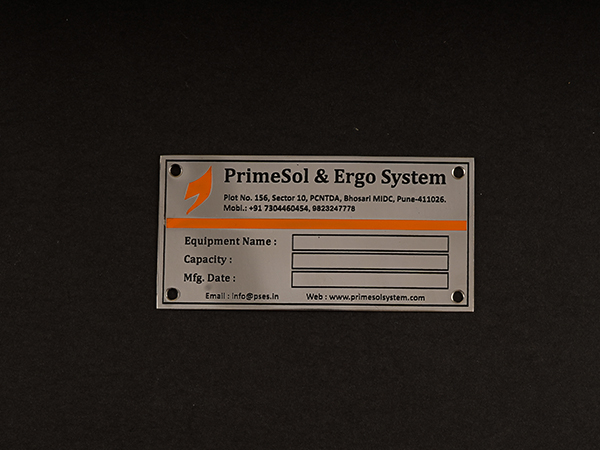 | Metal Labels In the most testing conditions, particularly overwhelming modern situations, where heat, moisture and erosion are available, Stainless Steel... View product → |