

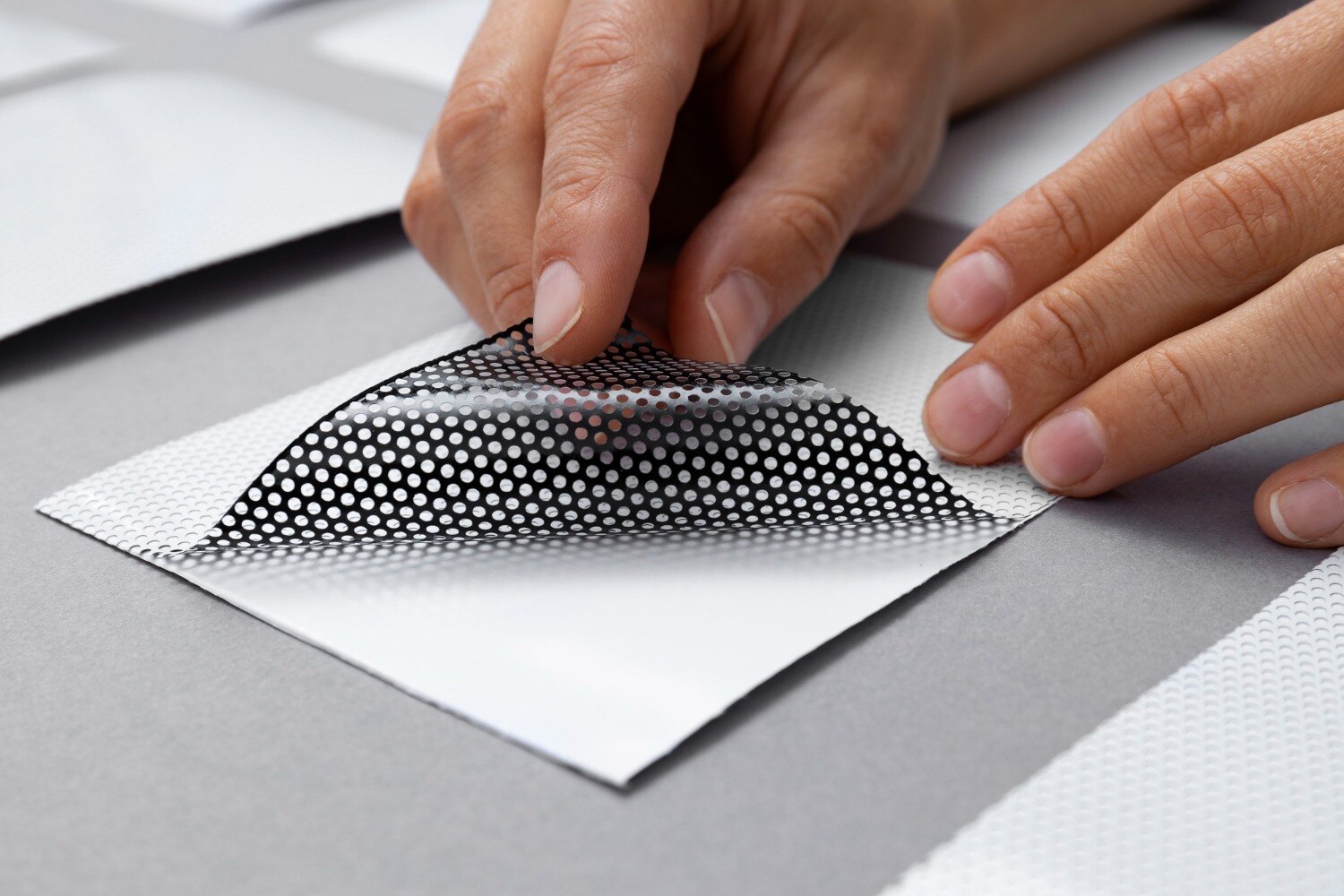
Bengaluru rain exposes labels to repeated wetting, drying, humidity, condensation, mud and wet handling—not one uninterrupted downpour. By the end, you will know when polycarbonate is suitable, how to prevent edge lifting, what adhesive and surface preparation to specify, and which performance evidence to request before buying.
Key takeaways
- Specify UV protection, sealed edges and a tested outdoor adhesive.
- Clean and dry the mounting surface before applying labels.
- Match adhesive strength to metal, painted surfaces, plastic or powder coating.
- Choose polycarbonate when graphics face abrasion, water and repeated cleaning.
What Bengaluru’s monsoon does to business labels
Bengaluru’s southwest monsoon gives labels repeated rain, high humidity, condensation, splashing water, mud deposits, wet wiping and intermittent strong sunlight—not constant rainfall. Polycarbonate stickers offer a practical advantage when their protected graphic stays readable through these wet–dry cycles, but “polycarbonate” alone does not guarantee outdoor performance.
The face film is only one part of the weather barrier. Water can reach the printed layer or substrate through a weak adhesive bond or unsealed edge, especially after repeated drying. A canopy shelters a label from direct rain, while labels on vehicles, kiosks, electrical cabinets and exposed equipment face harsher splash and sunlight.
For buyers searching “polycarbonate stickers for benefits monsoon in bengaluru,” check the complete construction:
- Use UV-protected film, outdoor-rated ink and an adhesive rated for the planned exposure.
- Ask whether graphics are reverse-printed behind the transparent face, or protected by a compatible clear overlaminate or hardcoat.
- Confirm edge sealing where water can collect or enter.
- Separate sheltered outdoor requirements from direct rain-and-sun exposure.
- Request performance data for the film, ink, adhesive and laminate together.
Standard indoor polycarbonate can discolor, embrittle or lose graphic quality in prolonged sunlight. Treat “waterproof” as an incomplete claim until the supplier states the exposure conditions, test method and limits for the finished label.
How water reaches the label—and why edges lift
Rain resistance belongs to the face, edges and adhesive layer—not the polycarbonate film alone. A properly bonded, edge-sealed construction keeps water away from the graphics and substrate; poor bonding can still fail beneath an intact film.
| Area | Protection | Typical failure |
|---|---|---|
| Face | Polycarbonate film shields printed graphics | Scratching or chemical attack damages readability |
| Edges | Rounded, sealed edges block water entry | A lifted corner admits rain |
| Adhesive layer | Full wet-out bonds the label to the surface | Contamination creates channels beneath it |
The common monsoon sequence is predictable: dust, oil, silicone, release agent, loose powder or condensation prevents adhesive wet-out. Water enters at a corner, wet–dry cycling expands the lifted area, and handling peels the edge farther. That is the practical concern behind searches for polycarbonate stickers rain in bengaluru.
Control the installation:
- Clean with a method compatible with the substrate, removing oil, silicone, release agents and loose powder.
- Apply only to a dry surface; do not install immediately before rain or while condensation is present.
- Use firm, uniform pressure and allow the specified dwell period.
- Keep labels off seams, rivets, recesses and moving panel joints.
- Specify rounded corners, adequate edge clearance and a die-cut shape that avoids sharp stress concentrations.
A label can remain legible while an enclosure leaks around its door, cable gland or seam. Under IEC 60529, an IP rating applies to the complete enclosure assembly, not automatically to its sticker; an IP-rated enclosure can still carry a label with lifting edges.
How to match adhesive and label construction to the mounting surface
Name the actual coating and texture before choosing an adhesive. Smooth painted metal, powder-coated panels, low-surface-energy plastic housings, glass and rough or lightly textured panels need different wet-out and bond behaviour.
| Surface | Adhesive and construction focus | Main risk |
|---|---|---|
| Smooth painted metal | Use an adhesive tested on the named paint system; clean and dry it fully | Oil or weak paint causes lifting |
| Powder-coated panel | Test on the actual powder coat, including its texture | Texture reduces contact area |
| Plastic housing | Confirm compatibility with low-surface-energy plastic and mould-release residue | Poor wet-out and plasticiser migration |
| Glass | Use an adhesive suited to clean, smooth glass and condensation exposure | Water or condensation at application |
| Rough panel | Choose a conformable adhesive and allow adequate margin | Air gaps leave paths for water |
Request wet-adhesion or peel results on the actual substrate after the stated dwell period. For pressure-sensitive adhesives, ask for peel or loop-tack data; ASTM D3359 is a coating-adhesion reference, not proof of label-bond durability. High initial tack does not prove long-term rain performance.
Reverse printing places graphics behind a transparent polycarbonate face, protecting them from wiping, rain abrasion and direct contact. For opaque labels, specify a compatible clear protective overlaminate or hardcoat, and require confirmation that ink, laminate, film and adhesive work together.
Use rounded corners, adequate margins and edge sealing where appropriate. Test the finished construction, not the resin alone. ASTM G154 can compare accelerated UV exposure, but it cannot promise an exact outdoor service life for weather resistant polycarbonate stickers.
When polycarbonate is better—or the wrong choice—in wet outdoor service
Polycarbonate is the stronger choice for impact-prone equipment, control panels and variable graphics where a smooth, protected face must withstand rain, sunlight, wiping and occasional knocks. Reverse-printed graphics sit behind the film, but polycarbonate still scratches and can suffer chemical attack.
| Option | What it means | When it applies |
|---|---|---|
| Polycarbonate | Impact-resistant face with protected variable graphics | Equipment, kiosks and panels exposed to handling and impact |
| PVC or vinyl | Lower-commitment graphic material | Short-term use, after checking UV ageing, shrinkage and edge lift |
| Aluminium | Rigid, abrasion-resistant identification | When stiffness matters and added weight or thickness is acceptable |
| Stainless steel | Rigid, highly abrasion-resistant identification | Harsh handling where fabrication cost and weight are justified |
| Metalphoto | Sealed anodized-aluminium image | Demanding identification requiring a sealed, durable graphic |
| Polyester | Dimensionally stable, chemical-resistant film | When lower cost or chemical resistance outweighs polycarbonate’s impact advantage |
Choose another construction or run testing when the label faces:
- High operating temperatures or continuous immersion
- Aggressive solvents or severe abrasion
- A rough, contaminated surface that prevents reliable bonding
Clean polycarbonate with mild detergent and a soft cloth. Do not use untested ketones, aromatic solvent blends or aggressive cleaners; they can stress-crack the film or attack the ink, laminate and adhesive. Before selecting the film, provide the operating-temperature range, chemical list and required service life.
Judge the complete construction—not a “waterproof” claim—against the actual rain, sunlight, abrasion and impact exposure.
What to put in a purchase specification for Bengaluru business labels
Specify performance, not just “monsoon-proof” or “polycarbonate.” Your purchase document should identify the complete construction and the conditions it must survive.
- Substrate and coating; film thickness; print method; UV protection; ink type; surface finish; adhesive suited to the named substrate; corner radius; die-cut shape; and edge-sealing requirement.
- Colour contrast; equipment ID; serial number; QR code; warning text; and the viewing or legibility distance.
- Exposure condition: sheltered outdoor use, or direct rain and sunlight; minimum outdoor duration; acceptable colour change; legibility requirement; adhesive failure mode; operating-temperature range; and test method.
- Sample requirement: apply samples to the actual powder-coated panel, plastic housing or painted metal, then inspect them after the specified adhesive dwell period and exposure period.
Do not accept ASTM B117 salt-fog data as proof of printed-label colour retention or monsoon adhesion. ASTM B117 mainly supports controlled corrosion testing for metal assemblies; it does not reproduce Bengaluru rain, sunlight or wet–dry label cycling.
A Bengaluru buyer comparing polycarbonate business labels in Bengaluru should request results for the film, ink, adhesive and laminate together. Shreeniwas Signs Pvt Ltd can use that discussion to match artwork, substrate, adhesive, finish and application conditions rather than treating “polycarbonate” as the specification. Record the complete construction, test method, acceptance limits and known exclusions.
Without those limits, competing quotations are not genuinely comparable.
Related product
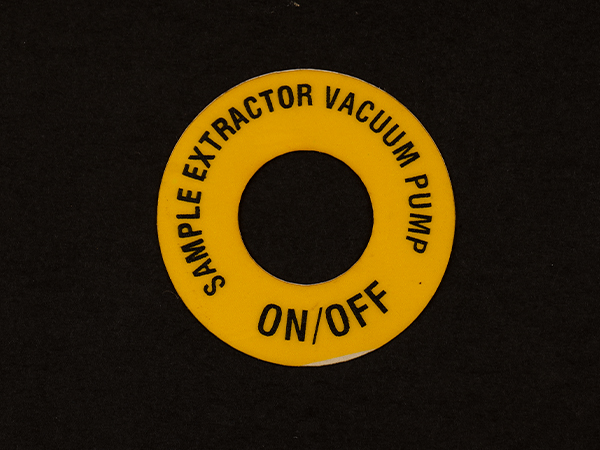 | Plastic Labels PVC & Polycarbonate Stickers are often used in various industries. View product → |
Frequently asked questions
How does Bengaluru monsoon weather damage business labels?
Rain, condensation, splashing, wet wiping, mud and intermittent sunlight can fade graphics, weaken adhesive and lift label edges.
Why do polycarbonate label edges lift in wet weather?
Water enters through exposed edges, scratches, surface contamination or poor bonding, then weakens the adhesive during wet–dry cycles.
Which adhesive should you use for wet outdoor labels?
Match the adhesive to the surface material, texture, coating, temperature range and exposure. Test adhesion on the actual cleaned surface.
When are polycarbonate stickers the wrong choice?
Use another construction when the surface is heavily textured, contaminated, continuously submerged or too flexible for the label to conform.
What should a Bengaluru label purchase specification include?
State the polycarbonate thickness, print and protective layers, UV resistance, adhesive type, surface, operating temperatures, edge sealing and validation test.