


An industrial nameplate is only as reliable as the drawing, material, marking method, adhesive, and inspection standard behind it. By following the production sequence and specifying each decision clearly, you can compare suppliers, approve samples faster, and avoid plates that peel, fade, misalign, or fail to scan.
Key takeaways
- Submit an approved drawing with artwork before requesting a production quote.
- Specify alloy, sheet thickness, tolerances, holes, and print clearances on the drawing.
- Choose marking methods according to durability, fine detail, and variable data needs.
- Approve a first article before releasing repeat nameplate production.
Start with the drawing, alloy, and sheet specification
Before a manufacturer can quote and produce an aluminium nameplate, submit an approved manufacturing drawing alongside the artwork. Artwork alone leaves border bleed, hole-to-print clearance, and small-text legibility unresolved.
- State the aluminium alloy and temper, such as the supplier’s specified sheet grade, plus the sheet thickness. A practical starting range is 0.5–1.5 mm for adhesive-backed labels; choose thicker stock for rigid plates, countersunk holes, impact exposure, or deep embossing.
- Give the finished visible-area dimensions, overall blank size, corner radius, and edge profile.
- Dimension every hole, slot, countersink, and hole-to-edge distance from fixed datums.
- Define the surface: mill, brushed, anodised, or painted aluminium, including the required colour and gloss.
- Supply vector logo files, exact text, minimum character height, print colours or colour references, and the marking method if already chosen.
- Specify barcode or QR-code content, grade or verification requirement, serial-number data, and any variable fields.
- State the adhesive, mechanical fixing method, mounting surface, and inspection criteria for dimensions, colour, adhesion, and legibility.
For custom aluminium nameplates in Bengaluru, identify whether the supplier has access to cutting, deburring, anodising, printing, laser marking, and finishing facilities. The core of how aluminium nameplates are made in Bengaluru uses the same sheet-conversion processes found elsewhere; the drawing and an approval sample made from the actual alloy and finish control the result.
The aluminium nameplate production steps from sheet to finished plate
A manufacturer turns aluminium sheet into an equipment nameplate through a controlled sequence of cutting, edge finishing, surface preparation, marking, protection, mounting, and inspection. The aluminium nameplate production steps begin with the approved drawing, material specification, and artwork—not with the printing machine.
1. Inspect the incoming sheet for alloy, thickness, flatness, scratches, and surface contamination. Adhesive-backed plates commonly use about 0.5–1.5 mm sheet; rigid plates require thicker stock.
2. Cut the sheet by shearing, CNC routing, punching, or laser cutting. The selected method controls the corner radius, hole accuracy, cutout shape, and production quantity.
3. Deburr every cut edge and hole, then brush, tumble, or otherwise smooth the perimeter. A sharp edge can injure an installer or lift an adhesive-backed plate.
4. Clean and prepare the surface by degreasing, abrading, anodising, or applying a suitable primer. Surface preparation determines whether ink and adhesive bond properly.
5. Apply the specified graphic using screen printing, digital printing, laser marking, engraving, chemical etching, or photo-anodising. Variable serial numbers, barcodes, and QR codes are added during this stage.
6. Add protection through clear coating, paint, anodic sealing, or a sealed photo-anodised layer. The finish must match exposure to oil, coolant, sunlight, abrasion, and cleaning chemicals.
7. Laminate the specified adhesive, or install rivets, screws, studs, or other hardware. Keep the bond area clean and apply pressure across the entire plate.
8. Inspect dimensions, hole positions, colour, print registration, barcode readability, legibility, adhesion, and edge condition before packing.
The aluminium nameplate manufacturing process in Bengaluru follows these same production families; local capability depends on access to cutting, printing, anodising, etching, laser, and finishing operations.
Choose the marking method for durability, detail, and variable data
Choose the marking process by asking what must survive: abrasion, chemicals, sunlight, or data changes between plates. The aluminium nameplate production steps may use one method alone or combine printing with a protective finish.
| Method | Strengths | Choose it when |
|---|---|---|
| Screen printing | Opaque solid colours, logos, and economical repeat runs | You need bold artwork, colour matching, and the same design across many plates; it is weaker for fine photographic detail and changing serial numbers. |
| Digital printing | Full-colour graphics, gradients, photographs, and variable data | Artwork includes different names, QR codes, or serial numbers in small batches; specify a protective overcoat for abrasion and chemical exposure. |
| Laser marking | Permanent, precise text, barcodes, and serial numbers without ink | Data changes plate by plate or you need high legibility; approve a sample on the actual alloy and finish because contrast depends on coating, power, focus, and cleaning. |
| Chemical etching | Recessed fine detail that can be ink-filled | You need durable small text, symbols, or graduated scales; chemical handling and setup make it less attractive for one-off variable plates. |
| Engraving | Physical grooves with tactile permanence | Plates face severe abrasion, or raised readability matters; it is slower and less suitable for complex colour artwork. |
| Metalphoto or photo-anodised aluminium | Sealed image beneath an anodic layer, with fine detail and strong outdoor resistance | You need long-term identification, dense text, barcodes, or photographic detail under UV and handling; compare its cost and lead time with printed aluminium. |
Do not approve laser contrast or colour from a photograph. Inspect a production sample for legibility, edge sharpness, barcode scanning, and resistance to the chemicals used on the equipment.
Match the finish and mounting system to the equipment environment
For custom aluminium nameplates in Bengaluru, specify the surface finish, fixing method, and application conditions together. A durable mark still fails when an adhesive-backed plate is applied to an oily, rough enclosure or a hot panel.
State the visible-face finish precisely: mill finish, brushed aluminium, anodised aluminium, or painted aluminium. Add the colour, gloss level, protective clear coat, and whether scratches or ageing are acceptable. A finish that looks right on a sample can produce different laser contrast or adhesion on production stock.
Select pressure-sensitive adhesive against the actual substrate, not a clean laboratory panel. Confirm compatibility with powder-coat texture, bare metal, paint, oil, coolant, cleaning chemicals, and the service-temperature range. Record surface preparation, including degreasing, drying, application pressure, and required dwell time before washdown or loading.
Use mechanical fixing when vibration, impact, repeated panel access, or contaminated surfaces could lift the plate. Specify hole diameter and position, rivet or screw type, countersinking, and edge clearance; adhesive plus rivets gives extra retention without relying on one bond.
Apply the plate only to a clean, dry, sound surface within the adhesive supplier’s application-temperature range. For equipment exposed to outdoor moisture, UV, steam, chemicals, or abrasive cleaning, state those exposures on the drawing and approve a production sample after the complete finish and mounting system are tested.
Control samples, repeat production, and first-article quality
A small batch is a chance to prove the drawing; a repeat order is a test of process control. In the aluminium nameplate manufacturing process in Bengaluru, approve one first article before releasing the full quantity, then keep that signed plate and inspection record as the production reference.
| Stage | Small-batch order | Repeat production |
|---|---|---|
| Purpose | Validate dimensions, artwork, finish, and fixing | Reproduce the approved first article |
| Risk | Setup changes can expose drawing errors | Tool wear, colour drift, and registration shift can accumulate |
| Approval | Inspect every plate or a high sampling fraction | Inspect setup samples, then use an agreed sampling plan |
| Change control | Correct the drawing before production | Require written approval for any material, artwork, or process change |
Before accepting production plates, inspect:
- Outside dimensions, corner radius, thickness, flatness, burrs, and edge injuries.
- Hole diameter and position from drawing datums; a correctly sized plate can still have misplaced holes.
- Border, logo, text, barcode, and serial-number registration separately from cut dimensions.
- Smallest text, barcode scan, contrast, colour reference, and marking continuity under normal viewing light.
- Scratches, pinholes, coating skips, fingerprints, exposed metal, and trapped dust beneath the adhesive liner.
- Adhesive coverage, liner placement, release quality, and any lifting at corners.
Ask Shreeniwas Signs Pvt Ltd to record these results against the approved first article rather than relying on artwork alone. Brass nameplates in Bengaluru require the same dimensional and graphic checks, even though their finish and material choice differ.
Related products
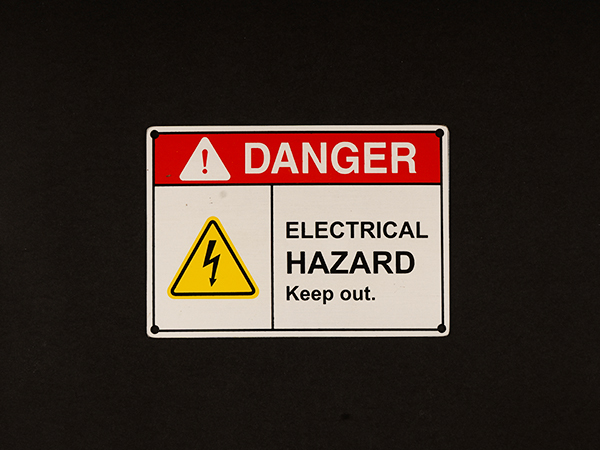 | Metal Labels Aluminum Nameplates are popularly known for their light weight and capacity to oppose corrosion.Its recognizable gleaming white shine offers... View product → |
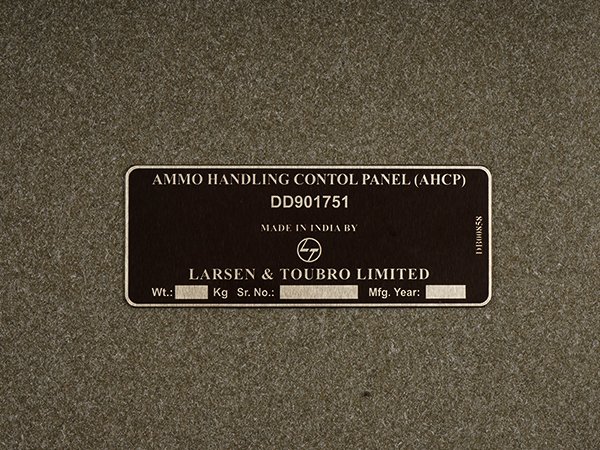
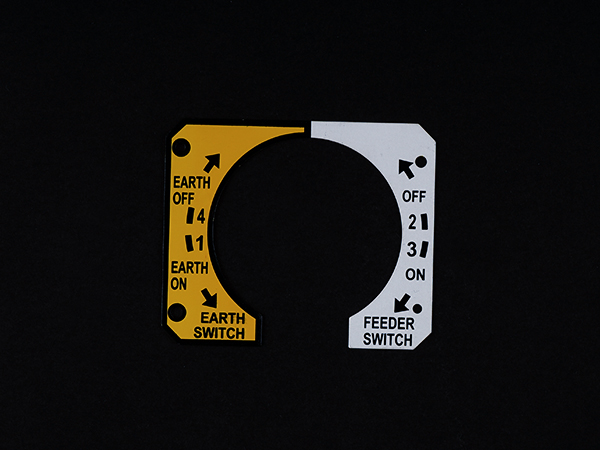 | Metal Labels A Control Panel Nameplate a flat, regularly vertical, region mounted on machine where control or observing instruments information are shown They are... View product → |
Frequently asked questions
What information should an aluminium nameplate drawing include?
Include the alloy, sheet thickness, finished dimensions, corner radius, tolerances, hole locations, hole diameters, border, artwork, text size, print clearances, and mounting instructions.
What are the main aluminium nameplate production steps?
Production usually covers sheet preparation, cutting or punching, deburring, cleaning, marking or printing, protective finishing, inspection, and fitting adhesive or hardware.
How do you choose a marking method for an industrial aluminium nameplate?
Compare the required service life, detail size, exposure, colour needs, serialisation, barcode requirements, and variable-data volume before selecting engraving, etching, screen printing, digital printing, or another process.
How should you select a finish and mounting system?
Match the finish and mounting method to heat, moisture, chemicals, abrasion, ultraviolet exposure, surface curvature, and the equipment's cleaning routine.
Why is first-article approval important for repeat nameplates?
A first article confirms dimensions, hole positions, artwork, legibility, finish, adhesive or hardware, and variable data before the supplier repeats the order.
Related products
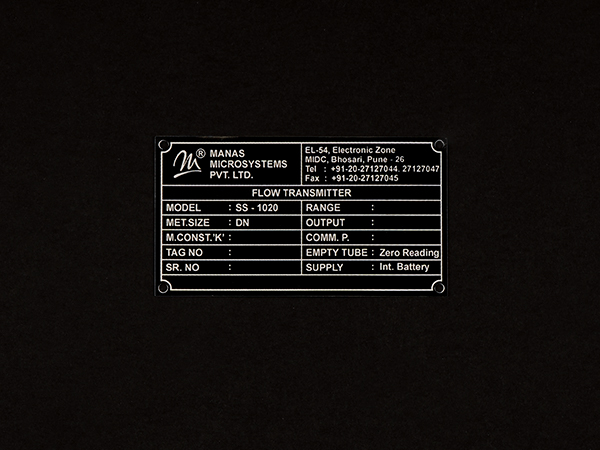 | Metal Labels Machine Specification Nameplate A Machine Specification Nameplate distinguishes and shows an item's name on gadget. View product → |
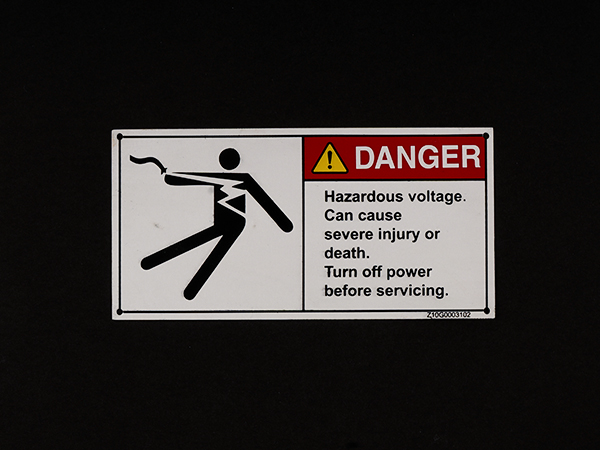 | Metal Labels Safety Nameplates, can view important operational and security information directly on a machine or device. View product → |
 | Metal Labels Metalphoto Metalphoto is a specific kind of photosensitive anodized aluminum that is used to make durable, high-resolution nameplates, labels and control... |