

Vehicle label fading is only one possible failure: ultraviolet exposure can change colour, while heat, monsoon moisture, detergents, abrasion and poor attachment can cause lifting, cracking or loss of contrast. You will be able to match aluminium, in-mold decoration and other label constructions to the vehicle location, compare evidence from suppliers, and specify an installation and ageing test that reflects Bengaluru conditions.
Key takeaways
- Identify ultraviolet fading before choosing a label construction.
- Use aluminium nameplates for durable, replaceable vehicle identification.
- Choose in-mold decoration for graphics integrated into moulded plastic parts.
- Demand UV, abrasion, chemical and colour-retention test evidence.
Which vehicle-label failure are you trying to prevent?
Fading is a colour change, not a loose edge. The right vehicle label fading solutions depend on whether ultraviolet exposure destroyed the graphic, or another force damaged the label. Compare aluminium nameplates or in mold decoration for vehicle label fading only after identifying the failure.
| Failure | Field clue | Main cause |
|---|---|---|
| Fading | Colour shifts evenly; shape remains intact | Ultraviolet light, heat, or a failed ink, dye, paint, or clearcoat |
| Adhesive lifting or edge delamination | Corner or perimeter separates | Moisture, salt, contamination, low bond area, or pressure washing |
| Blistering | Raised bubbles under the surface | Heat, trapped moisture, fuel, or solvent |
| Cracking or chalking | Splits, powder, or a dull surface | Thermal cycling, UV, or brittle coating |
| Staining or corrosion | Local marks, pits, or discolouration | Oils, detergents, road salt, galvanic contact, or moisture |
| Abrasion or impact | Scratches, chips, or missing characters | Hand contact, stone impact, tools, or washing |
| Loss of contrast | Characters remain but cannot be read | Print degradation, glare, or surface staining |
For diagnosis, photograph the complete part and a close-up. Record vehicle location, orientation, exposure duration, and cleaning products; compare protected and exposed areas, then identify whether the print, clearcoat, adhesive, aluminium substrate, or plastic failed.
Bare, anodized, painted, and digitally printed aluminium have different UV performance. Sealed dyed anodizing can still lose colour. Specify ΔE colour change, retained gloss, barcode grade, minimum contrast, and permitted edge lift—not “UV resistant”—as acceptance criteria.
How do aluminium nameplates and in-mold decoration protect graphics?
In-mold labelling (IML) places a preprinted label in the mould before plastic injection, integrating it with the vehicle component. In-mold decoration can instead use a decorated carrier or transfer film during molding, so “in mold decoration vehicle labels” must be specified by process and construction, not treated as IML.
Reverse printing places the graphic behind protective film or molded resin. That barrier resists abrasion and chemicals, but the film, ink and resin must remain optically stable under ultraviolet exposure or the protected image can still fade.
| Option | Attachment or protection | Main risk |
|---|---|---|
| IML | Graphic integrates with molded plastic | Wrinkling, silvering, trapped air, read-through, colour variation or incomplete bonding |
| In-mold decoration | Carrier or transfer film forms the decorative surface | Film shrinkage, ink incompatibility, poor venting or resin-flow defects |
| Aluminium vehicle nameplates | Separate part fixed with adhesive, rivets, screws or clips | Edge lifting, corrosion, impact or cleaner damage |
Pressure-sensitive adhesive hides hardware, but requires a clean surface, adequate bond area, suitable application temperature and full dwell or cure time. Rivets and screws resist peeling, yet add holes, assembly work and water-ingress paths; clips need compatible geometry.
Use this selection procedure:
- Choose IML for stable graphics on high-volume molded plastic parts, then validate placement, film shrinkage, mould temperature, venting and resin flow.
- Choose aluminium for rigid, tactile identification or replaceable parts, and inspect tight curves for edge lift and dissimilar-metal contact for galvanic corrosion.
- Test complete assemblies for abrasion, detergents, road salt, oils, fuel, UV and impact; do not approve either construction from a flat coupon alone.
Which construction fits each vehicle location and production volume?
High-volume molded plastic trim with stable artwork favours in-mold decoration vehicle labels: the graphic is integrated during molding, removing a later placement operation. The trade-off is tooling investment, mould compatibility, controlled placement, film shrinkage, resin flow, venting and process validation; mould redesign, late artwork changes, repair and replacement become difficult.
| Option | Best fit | Main trade-off |
|---|---|---|
| In-mold decoration | High-volume plastic trim with fixed graphics | Lowers assembly labour but makes artwork changes and replacement difficult |
| Aluminium | Rigid metal panels, accessible curves, premium tactile identification, low volumes, spares and serial or batch data | Adds surface preparation, installation labour and spare-label stock |
| Polycarbonate, PVC or vinyl | Flexible, thin, impact-sensitive or short-run applications | Check chemical, UV, abrasion and edge-lift performance |
| Stainless steel or Metalphoto | Severe chemical exposure or high-resolution variable information | Adds cost, weight or forming constraints |
Choose attachment as carefully as the aluminium face: adhesive hides hardware but depends on clean surfaces, bond area and temperature; rivets and screws resist peeling yet create holes and water-ingress paths; clips require matching geometry. An automotive label comparison in Bengaluru must include monsoon wet-dry cycling, dust, heat and local washing practices.
- Dashboards and controls: hand abrasion, skin oils, cleaners and barcode readability.
- Door jambs: repeated contact and water ingress.
- Engine compartments: temperature, oil, fuel, detergent and steam cleaning.
- Exterior panels: UV, rain, dust, stone impact and pressure washing.
For accessible curves, replacement parts and variable data, aluminium vehicle nameplates usually offer the more adaptable route; for integrated, repeatable plastic production, IML earns its tooling only at sufficient volume.
What evidence proves a label will keep its colour and information?
Specify complete production assemblies, not flat label coupons. Include the actual adhesive, aluminium or plastic substrate, clearcoat, curvature, edge radius and mounting geometry; a flat sample can hide edge lifting, stress cracking and poor adhesion.
- Select the weathering method by location: use xenon-arc exposure under SAE J2527 for suitable exterior applications, or fluorescent-UV exposure under SAE J2020 or ASTM G154 where that method matches the installed part.
- Require the report to state lamp spectrum, irradiance, black-panel temperature, humidity, specimen orientation, condensation or water-spray cycles and thermal cycling. Exposure hours are meaningless without these conditions.
- Add detergent wash, pressure-wash, abrasion, solvent, fuel, oil and humidity tests wherever the vehicle encounters those stresses. Test the assembly in its actual mounting position.
- Set numerical pass criteria: maximum ΔE, minimum gloss retention, barcode verification grade, character legibility, minimum contrast, adhesion after exposure and maximum edge lift.
- Request samples using chemically etched or laser-marked characters, UV-stable pigmented coatings, sealed anodizing, UV-resistant inks, protective overlaminates and clear coats when each construction is proposed.
Accelerated weathering compares constructions; it does not directly promise a service life. A sealed dyed anodized surface can still fade, so protect safety information separately from decorative colour.
For vehicle label fading solutions, define minimum font height, durable symbols, serialisation and batch traceability. Use the same assembly and reporting format for an automotive label comparison in Bengaluru, including monsoon wet-dry cycles and local washing practices.
How should you install, maintain and cost the chosen label in Bengaluru?
Choose aluminium nameplates or in mold decoration for vehicle label fading by comparing whole-life effort, not the first unit price. For an automotive label comparison in Bengaluru, include monsoon moisture, dust, heat, pressure washing and local cleaning practices.
| Option | Installation and sourcing burden | Cost risks |
|---|---|---|
| Aluminium | Separate application; supports serialisation and replacement | Adhesive preparation, labour, spares and rework |
| IML | Mould trial, placement control and resin-film compatibility | Tooling, mould downtime, minimum quantities and difficult artwork changes |
For aluminium, install in this order:
- Inspect the panel and edge radius; remove dust and wax.
- Degrease with a cleaner compatible with the paint, plastic and adhesive.
- Confirm substrate surface energy, then apply within the adhesive’s specified temperature range.
- Press evenly across the complete bond area, allow the stated dwell or cure time, and keep the vehicle away from washing until the bond develops.
- Check bubbles, wrinkles, contamination, misalignment and edge lift.
For IML, approve mould trials and first-off parts, inspect placement, and verify resin-film compatibility. Keep a replacement plan: the integrated graphic is difficult to change after molding. Compare application labour, rejected parts, spare inventory and replacement frequency alongside tooling and artwork-change costs.
Define limits for pressure washing, solvents, waxes, polishing compounds and steam. If fading appears, quarantine the batch, photograph the label, record its location and wash history, and compare print against substrate before changing construction. Shreeniwas Signs Pvt Ltd can compare constructions, produce variable identification and validate a finished label against its mounting location.
Related products
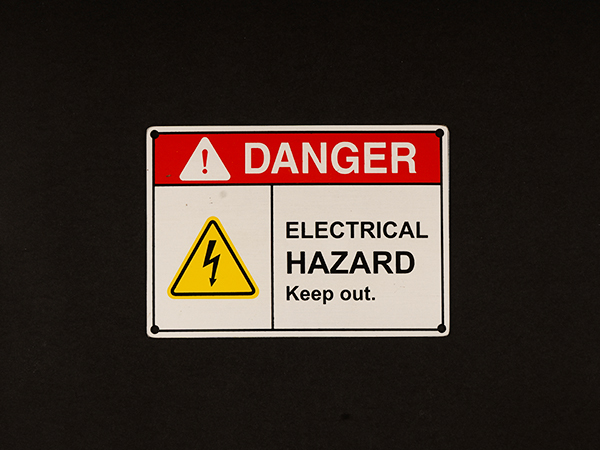 | Metal Labels Aluminum Nameplates are popularly known for their light weight and capacity to oppose corrosion.Its recognizable gleaming white shine offers... View product → |
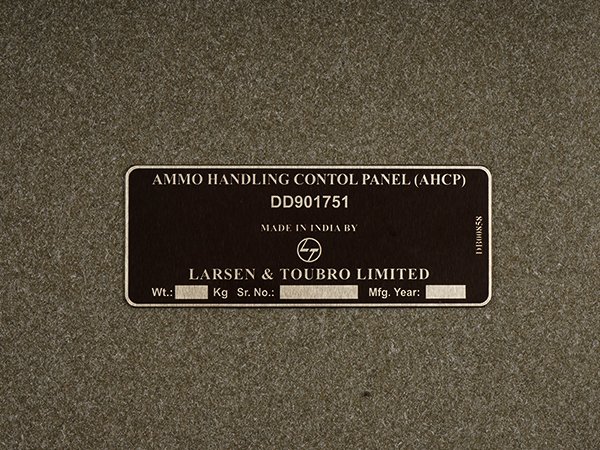 | Metal Labels Metalphoto Metalphoto is a specific kind of photosensitive anodized aluminum that is used to make durable, high-resolution nameplates, labels and control... |
Frequently asked questions
Which vehicle-label failure are you trying to prevent?
Confirm whether ultraviolet exposure changed the graphic, or whether abrasion, chemicals, heat, moisture, impact or adhesive failure caused the damage.
How do aluminium nameplates and in-mold decoration protect graphics?
Aluminium nameplates use a finished metal face with printed or anodised graphics, while in-mold decoration places the graphic within a moulded plastic component during production.
Which construction fits each vehicle location and production volume?
Compare surface exposure, part material, replacement needs, tooling cost and production quantity before choosing an aluminium nameplate or in-mold decoration.
What evidence proves a label will keep its colour and information?
Request test results covering UV exposure, abrasion, chemicals, temperature, adhesion and colour change, along with the artwork and material specification.
How should you install, maintain and cost the chosen label in Bengaluru?
Prepare the surface, follow the specified application conditions, inspect for lifting or fading, and compare unit cost with tooling, replacement labour and production volume.
Related products
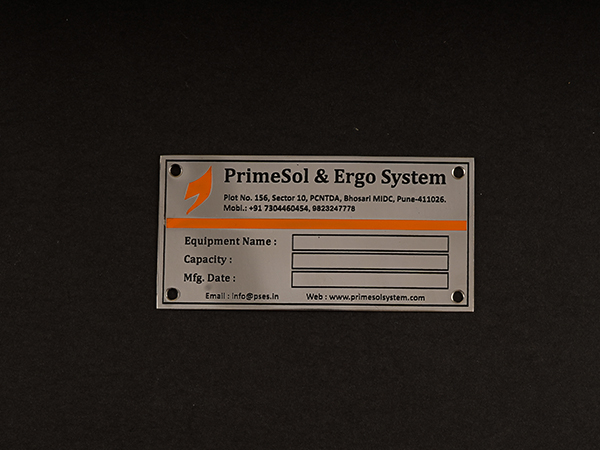 | Metal Labels In the most testing conditions, particularly overwhelming modern situations, where heat, moisture and erosion are available, Stainless Steel... View product → |
 | Plastic Labels Vinyl Decals & Sticker is a kind of plastic that originates from characteristic substances, for example, salt and is viewed as an earth-accommodating... View product → |
 | Plastic Labels PVC & Polycarbonate Stickers are often used in various industries. View product → |