

Choose the plate material from the panel’s exposure, marking life and mounting conditions—not from appearance alone. By comparing brass with 304 and 316 stainless steel, then checking the marking process, fit and attachment method, you can specify or replace a control-panel nameplate without creating a corrosion, legibility or maintenance problem.
Key takeaways
- Choose stainless steel when moisture, chemicals or abrasion threaten legibility.
- Choose brass for dry indoor panels when appearance or engraved lettering matters.
- Specify the grade, marking method, text size and plate dimensions separately.
- Measure the old plate and mounting holes before ordering a replacement.
Use exposure, not appearance, as the first material decision
Choose brass for an indoor, dry electrical room when a warm metallic appearance, traditional engraved lettering or a match with brass hardware matters. Choose stainless steel when exposure threatens legibility or service life.
| Option | Strength | Best fit |
|---|---|---|
| Brass | Warm appearance; traditional engraving | Dry indoor rooms with low chemical exposure |
| 304 stainless steel | Durable baseline for marked plates | Indoor panels, oil contact, routine cleaning |
| 316 or 316L stainless steel | Better resistance to chlorides and pitting | Outdoor, coastal, salt-contaminated or chemical areas |
Brass is the wrong choice for salt, acidic cleaners, ammonia, chloride deposits, persistent condensation, outdoor rain or continuous wetting. Bare brass tarnishes and darkens; lacquer slows that change, but scratches, solvents and abrasion make the coating the service-life limit.
Stainless steel is safer for washdown areas, outdoor panels, frequent cleaning and corrosive industrial atmospheres. Compare grounding needs, machining, reading distance and expected identification life, not appearance alone. A brass plate fixed to a stainless enclosure also needs an interface review: moisture between dissimilar metals can cause galvanic corrosion.
Isolate the metals with suitable washers, gaskets or coatings, and provide drainage so water cannot remain at the joint.
For stainless steel nameplates or brass nameplates for control panels in Pune, specify indoor or outdoor location, direct sun, monsoon water, condensation, operating temperature, cleaning chemicals, chloride contamination, abrasion and cleaning frequency. A short ASTM B117 salt-spray result does not predict field life.
Select the stainless grade and marking layer separately
Treat 304 stainless steel as the baseline for engraved, etched or laser-marked control-panel plates. Specify 316 or 316L when chloride exposure, coastal air, salt deposits or chemical contact makes pitting and crevice corrosion a serious concern. Its molybdenum improves resistance, but 316 is not immune and costs more.
| Marking method | Main strength | Main risk |
|---|---|---|
| Deep engraving | Excellent abrasion resistance; readable after surface wear | Shallow characters lose contrast |
| Chemical etching with paint fill | Sharp detail and strong contrast | Solvents or poor edge sealing can remove the fill |
| Laser marking | Precise text, codes and logos | Readability depends on marking energy and contrast |
| Screen printing or superficial ink | Low-cost colour and graphics | Ink can fail before a deeply engraved brass plate under abrasion or solvent exposure |
| Laminated overlay | Flexible variable information | Film edges can lift from heat, moisture or rough handling |
Finish also affects maintenance. Brushed or directional stainless surfaces retain fingerprints and process residue; a smooth, properly cleaned surface is easier to maintain. Do not let chloride-containing cleaners or deposits dry on the plate.
Control character height, stroke width, contrast, engraving depth or marking energy, edge sealing and protection around holes.
For stainless steel nameplates for control panels in Pune and metal nameplates for automation panels in Pune, request UL 969 evidence for the complete construction: substrate, adhesive or attachment, printing and intended use—not a claim about stainless steel alone.
Specify the plate so operators can read and identify it correctly
A replacement plate must reproduce the function, not just the outline. For metal nameplates for automation panels in Pune, send the panel face dimensions, plate thickness, corner radius, hole or cut-out locations, screw-centre distances, text height, logo artwork, colour, reading distance and original artwork orientation.
Provide the identification and safety data:
- Equipment tag, circuit or device designation, voltage and current warnings, terminal or component references, revision status, batch or serial fields, and required warning symbols.
- Confirmation that the plate will not cover ventilation openings, hinges, door seals, inspection windows, earthing points, emergency stops, selector switches or operating instructions.
- Machine-documentation wording and the applicable electrical or machinery safety labels. A decorative plate cannot replace a required warning label.
- Cleaning agents, UV exposure, operating heat, abrasion and solvent contact, so the marking method matches the service.
| Marking method | Main risk | Check before approval |
|---|---|---|
| Deep engraving | Low contrast after dirt fills the groove | Confirm readable stroke width and depth |
| Etching with dark paint fill | Paint can wash from characters | Check that the fill remains after cleaning |
| Printed or coated marking | Ink or coating can fade or abrade | Confirm UV, solvent and temperature resistance |
| Laser marking | Contrast can weaken on the wrong finish | Specify marking energy and surface finish |
Request a proof at actual size, not only a digital preview. Check minimum text height at normal reading distance, contrast against the panel colour, hole-edge protection and whether dark paint remains inside etched characters after cleaning.
Measure the old plate before you replace a damaged control-panel label
A replacement will fit only when you measure the old plate and its surrounding clearance, not just the visible rectangle. Record overall length, width, thickness and corner radius before removing it.
- Measure every screw-centre distance, hole diameter, countersink depth and offset from each panel edge.
- Photograph the plate in place, showing cable entries, switches, emergency stops, selector clearances, door seals, hinges and nearby labels.
- Check whether the mounting surface is flat or curved, and whether it is powder-coated, textured, oily, dusty or contaminated.
- Confirm that the new plate will not cover ventilation openings, inspection windows, earthing points or operating instructions.
| Attachment | Best fit | Main risk |
|---|---|---|
| Adhesive-backed plate | Clean, flat panel with controlled application temperature | Oil, dust, condensation, rough powder coating or low temperature can cause lifting |
| Rivets | Outdoor, vibrating or regularly washed panel with approved access | Drilling can compromise enclosure ingress protection |
| Screws | Removable plate on a vibrating or frequently cleaned panel | Incorrect countersinks or edge offsets can obstruct doors and seals |
Reproduce the functional information, not only the outline. Verify the equipment tag, circuit or device designation, warning wording, voltage and current values, symbols, terminal references, revision, orientation and serial or batch fields. Ask for an actual-size proof.
If you need to replace damaged control panel nameplates in pune, choose adhesive only after confirming the substrate, cleaning process and application temperature; obtain panel-builder approval before drilling.
Match the mounting hardware to cleaning, vibration and moisture
Stainless screws usually give the longest practical service life when you need removal, the panel vibrates or operators wash it repeatedly. Specify countersunk holes when a flush face must not catch clothing or collect residue.
| Option | What it means | When it applies |
|---|---|---|
| Stainless screws | Removable, serviceable fixing | Vibration, repeated washdown or future plate replacement |
| Rivets | Permanent, tamper-resistant fixing | Confirm rear access, rivet material and enclosure requirements first |
| Industrial adhesive | No drilling and no new enclosure penetrations | Clean, flat surfaces where drilling is unacceptable |
| Standoffs | Visible gap behind the plate | Replacement access matters and deliberate drainage is possible |
Rivets are a poor choice if you cannot reach the rear side or if drilling could compromise the enclosure’s ingress protection. Obtain panel-builder approval before adding holes.
Adhesive fails when oil, dust, condensation, rough powder coating or low temperature prevents proper bonding. Degrease the surface, let it dry, control condensation and follow the adhesive manufacturer’s preparation and temperature limits.
Standoffs simplify replacement but trap water behind the plate, so provide a drainage path. Do not fasten brass nameplates for control panels in Pune directly to a stainless panel without reviewing galvanic corrosion. Isolate the metals with suitable washers, gaskets or coatings, and stop water remaining at the joint.
When comparing stainless steel nameplates for control panels in Pune, ask the supplier to document the grade, finish, marking process, attachment method and exposure assumptions. Shreeniwas Signs Pvt Ltd can make a plate to the measured hole pattern, artwork and identification fields rather than a generic size.
Related products
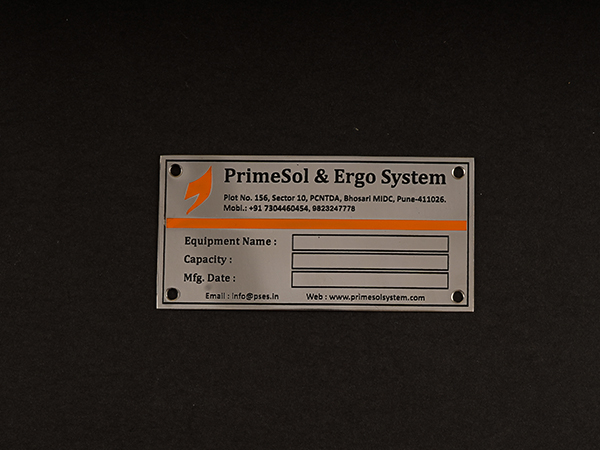 | Metal Labels In the most testing conditions, particularly overwhelming modern situations, where heat, moisture and erosion are available, Stainless Steel... View product → |
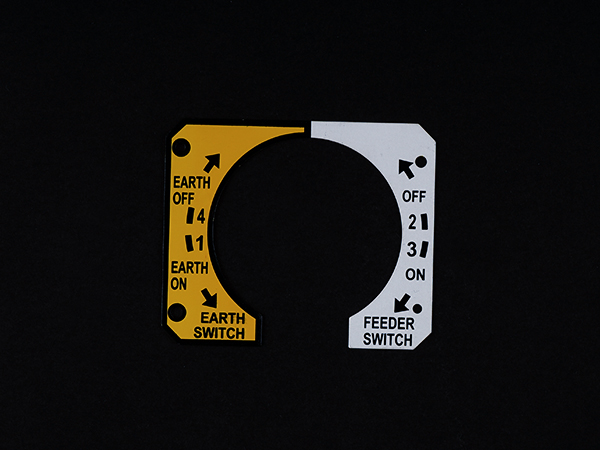 | Metal Labels A Control Panel Nameplate a flat, regularly vertical, region mounted on machine where control or observing instruments information are shown They are... View product → |
Frequently asked questions
Should I choose stainless steel or brass for a control-panel nameplate?
Choose stainless steel when moisture, chemicals, cleaning or abrasion threaten service life. Choose brass for a dry indoor electrical room when appearance, traditional engraving or brass hardware matters.
How do I specify a metal nameplate for an automation panel?
Specify the stainless steel grade or brass, marking method, text size, plate dimensions, hole pattern and required contrast so operators can read and identify it correctly.
What should I measure before replacing a damaged control-panel nameplate?
Measure the old plate’s width, height, corner radius, thickness, hole diameter, hole-centre spacing and position relative to switches or indicators.
How should I mount a control-panel nameplate?
Match screws, rivets, adhesive or other mounting hardware to the panel’s vibration, cleaning process and moisture exposure. Keep fasteners clear of wiring and controls.