


A worn button legend does not automatically require a new control-panel overlay or a replacement enclosure door. By auditing the panel, recording critical dimensions, selecting the right brass construction and checking the installation against safety, chemical and sealing requirements, you can decide whether individual replacement plates are a sound repair.
Key takeaways
- Measure the plate footprint, holes and text area before ordering replacements.
- Match the brass alloy and marking method to cleaners, heat and abrasion.
- Confirm attachment clearance so the new plate cannot obstruct buttons or enclosure seals.
- Order spares using the final drawing, quantity and machine identification.
Decide Which Panel Labels Need Replacing and Measure Them Correctly
An individual brass plate is suitable when its footprint, fixing points and text area fit the existing panel without covering adjacent buttons or restricting operation. Replace it if the legend is faded, a symbol is missing, the overlay is cracked or loose, characters are illegible, or a machine modification has changed the function.
Create one replacement schedule for every affected legend. Record:
- Label reference number, exact wording, symbol, panel position, quantity and revision level.
- Overall width and height, corner radius, thickness, hole diameter, hole-to-hole centres and hole edge distances.
- Text baseline, font size, button diameter, and clearance from switches, lamps and selector knobs.
- Left-to-right sequence, orientation, colour coding and mounting direction.
Measure the existing plate, not the panel model number. Add nearby door seals, ventilation slots, indicator lights and emergency-stop access to a dimensioned drawing. An incorrectly placed hole or oversized border can make a replacement unusable.
| Replacement format | Choose it when | Main limitation |
|---|---|---|
| Individual brass plate | One or several worn legends need durable, separate replacement | Matching old holes and spacing takes careful measurement |
| Grouped control-panel plate | Several adjacent labels share one mounting area or revision | One damaged section can require replacing the group |
| Complete graphic overlay | Wording, layout or many functions have changed | Higher installation effort and greater risk around seals and controls |
| Engraved strip, printed metal label or sticker | A narrow text run, colour graphic or temporary low-cost repair is needed | Material and marking may not suit cleaning or wear |
For replacement brass nameplates and control panel nameplates in Pune, approve full-size artwork showing hole centres, orientation, text height, punctuation, units and language—not a low-resolution photograph.
Choose Brass Alloy, Marking Method and the Right Replacement Format
Specify the alloy, temper and thickness, not simply “brass.” C26000 (70/30 cartridge brass) suits sheet forming and engraving; exposed service may need a harder or more corrosion-resistant grade. Temper affects bending, engraving depth and drilled-hole quality.
For custom brass control labels, choose the marking process against cleaning frequency, artwork detail, colour, character size and future revisions:
| Method | Strength | Limitation |
|---|---|---|
| Engraving | Physical depth survives repeated cleaning | Fine characters need adequate depth and contrast |
| Paint-filled engraving | Deep lettering with strong colour contrast | Fill can chip or collect residue |
| Chemical etching | Shallow recessed fine artwork and efficient batch production | Contrast depends on accurate colour filling and cleaning |
| Screen printing | Economical colour and repeated artwork | Needs a protective clear coat or evaluated marking system |
| Digital printing | Efficient multilingual wording and colour changes | Requires a tested protective marking system |
| Laser marking | Precise symbols, small text and variable data | Verify contrast, depth and readability on the selected alloy and finish |
Review small-character legibility, symbol detail, colour contrast and the cost of revising artwork. Preserve the visual hierarchy: emergency-stop identification, warnings and ordinary push-button legends must not look equivalent. Check IEC 60204-1 for control-device identification, ISO 7010 for safety symbols and ISO 13850 for the red actuator on a yellow background.
Approve a full-size proof showing text height, punctuation, units, language, symbol artwork, hole locations, orientation and revision date. Apply the same specification to industrial control panel labels so replacements remain recognisable after installation.
Check Chemical Exposure, Cleaning and Attachment Before You Specify Brass
Specify brass for industrial control panel labels only after checking the panel’s actual atmosphere, cleaning routine and mounting surface. Natural brass darkens and develops patina from air, moisture and handling. Clear lacquer preserves brightness, but scratches or aggressive cleaners can damage the coating and leave an uneven repair problem.
Review exposure to coolant, oil, solvents, condensation, salt air, abrasive dust, high temperature, ammonia-containing atmospheres, washdown chemicals and food-processing cleaners. Brass is a poor default for electrical-arc areas, aggressive chemical cleaning or outdoor service unless the alloy and finish have been qualified; ammonia exposure can promote stress-corrosion cracking in susceptible copper alloys.
Mounting choice changes the repair risk:
| Option | Strength | Use when |
|---|---|---|
| Industrial acrylic adhesive | Clean appearance; no holes | Surface is clean, dry, smooth and flat |
| Rivets or screws | Reliable mechanical retention | Vibration, washing, solvents or repainting are expected |
| Countersunk holes | Flush fastener head | Operators need an unobstructed face |
| Studs and standoffs | Spaced, serviceable mounting | Heat, uneven surfaces or repeated removal requires clearance |
Adhesive will not rescue powder-coat dust, oil, silicone polish, loose paint, heavy texture or panel curvature. 3M 467MP has a published approximate service range of −40 to 149 °C, but application conditions and final bond development still require checking.
If drilling is necessary for replacement brass nameplates, specify sealing and review the enclosure’s IEC 60529 IP claim. A modified door is not automatically equivalent to the tested configuration.
Remove and Install the Replacement Without Creating a Safety or Enclosure Problem
1. Isolate the panel under the site’s lockout procedure before touching a label. Photograph the wiring, controls and existing sequence, then mark each plate’s position so the replacement cannot shift left, right or upside down.
2. Remove the old plate without cutting into the enclosure or control surface. Warm adhesive only within the panel finish’s permitted temperature, lift it with a plastic scraper, and shield membrane switches, powder coating, paint and wiring from solvent, heat and debris.
3. Dry-fit the replacement before bonding or fastening it. Check button travel, selector-knob rotation, lamp visibility, emergency-stop reach, ventilation clearance, door movement and gasket compression; a plate that blocks movement or pinches a gasket creates a new fault.
4. Keep every IP enclosure seal uncovered, and do not drill new holes without an approved sealing method. Drilling changes the tested enclosure configuration, so confirm whether the modified door can still support its IEC 60529 ingress-protection claim.
5. Compare the installed plate with the approved schedule before fixing it permanently. Verify wording, symbol orientation, colour coding and the left-to-right control sequence, then review the markings against IEC 60204-1, ISO 7010 and ISO 13850. A brass legend cannot replace the red emergency-stop actuator, yellow background or required accessibility.
6. Record the installed revision, rejected plates and every field deviation. This discipline matters when ordering control panel nameplates in Pune or replacing industrial control panel labels: the next order must not reproduce an obsolete design.
Compare Total Repair Effort, Order the Right Quantity and Manage Spares
Brass is worth choosing when you need a visible, durable plate and the panel is not exposed to aggressive cleaners, ammonia-containing atmospheres or persistent moisture. Compare the complete repair effort, not only the purchase price.
| Option | Service life and readability | Appearance, attachment and repair effort |
|---|---|---|
| Brass | Durable and highly legible; develops patina unless lacquered; moderate weight; engraves well; adhesive, screws or rivets; easy to replace individually | Suitable for stable wording and visible plates; damaged lacquer complicates refinishing |
| Aluminium | Light, readable and corrosion-resistant; lower mass reduces door load; adhesive or fasteners | Efficient for routine repairs and moderate exposure; less substantial appearance |
| Stainless steel | Very durable, heavier and highly corrosion-resistant; opaque; adhesive or mechanical fixing | Best for washdown, solvents and harsh exposure; drilling or removal takes more effort |
| Metalphoto | Sealed photographic anodised aluminium; sharp detail, long service life and strong chemical resistance | Good for permanent graphics; replace the whole plate when artwork changes |
| Polycarbonate | Light, transparent or coloured; readable with printed layers but scratches more easily | Best for transparent overlays; simple to cut and replace |
| Industrial sticker | Lowest cost and fastest installation; limited life under abrasion, heat and chemicals | Best for frequent revisions or low-wear repairs; no drilling or plate handling |
- Alloy and thickness, finish, dimensions, quantity, fixing method, artwork, delivery location, operating environment and permanence test
- A full-size proof showing hole centres, orientation, text height, punctuation, units and language
Treat UL 969 as an evaluated marking-system reference, not automatic certification. For brass nameplates for replacement control panels in Pune or control panel nameplates in Pune, ask Shreeniwas Signs Pvt Ltd or another supplier for a physical sample, protected packaging and written inspection criteria.
Order extras for high-wear buttons, retain the revision code, store plates apart from moisture and abrasives, and clean them with a soft cloth only after checking the solvent, pad and polish. Specify custom brass control labels only when those maintenance limits suit the panel.
Related product
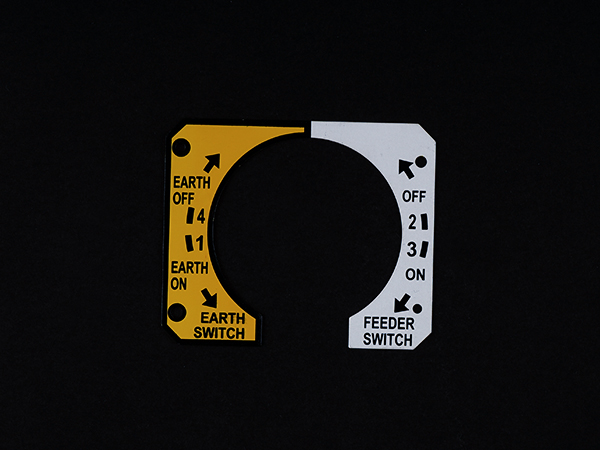 | Metal Labels A Control Panel Nameplate a flat, regularly vertical, region mounted on machine where control or observing instruments information are shown They are... View product → |
Frequently asked questions
How do you measure a control panel nameplate for replacement?
Record the plate’s length, width, thickness, fixing-hole diameter, hole spacing, corner radius and usable text area. Check clearance around buttons, switches and enclosure edges.
When should you choose brass for a replacement control label?
Choose brass when you need a rigid, durable label that suits the panel appearance and marking requirements. Confirm the alloy and finish withstand the site’s cleaners, chemicals, heat and abrasion.
What should you check before attaching a brass control panel label?
Check the attachment method, surface condition, fixing clearance, button travel, enclosure seals and access for future maintenance. Do not cover safety instructions, terminals or moving controls.
How many replacement brass nameplates should you order?
Order the confirmed quantity for the repair plus documented spares for foreseeable damage, future machine modifications and maintenance replacements. Keep the drawing and text revision with the spares.