

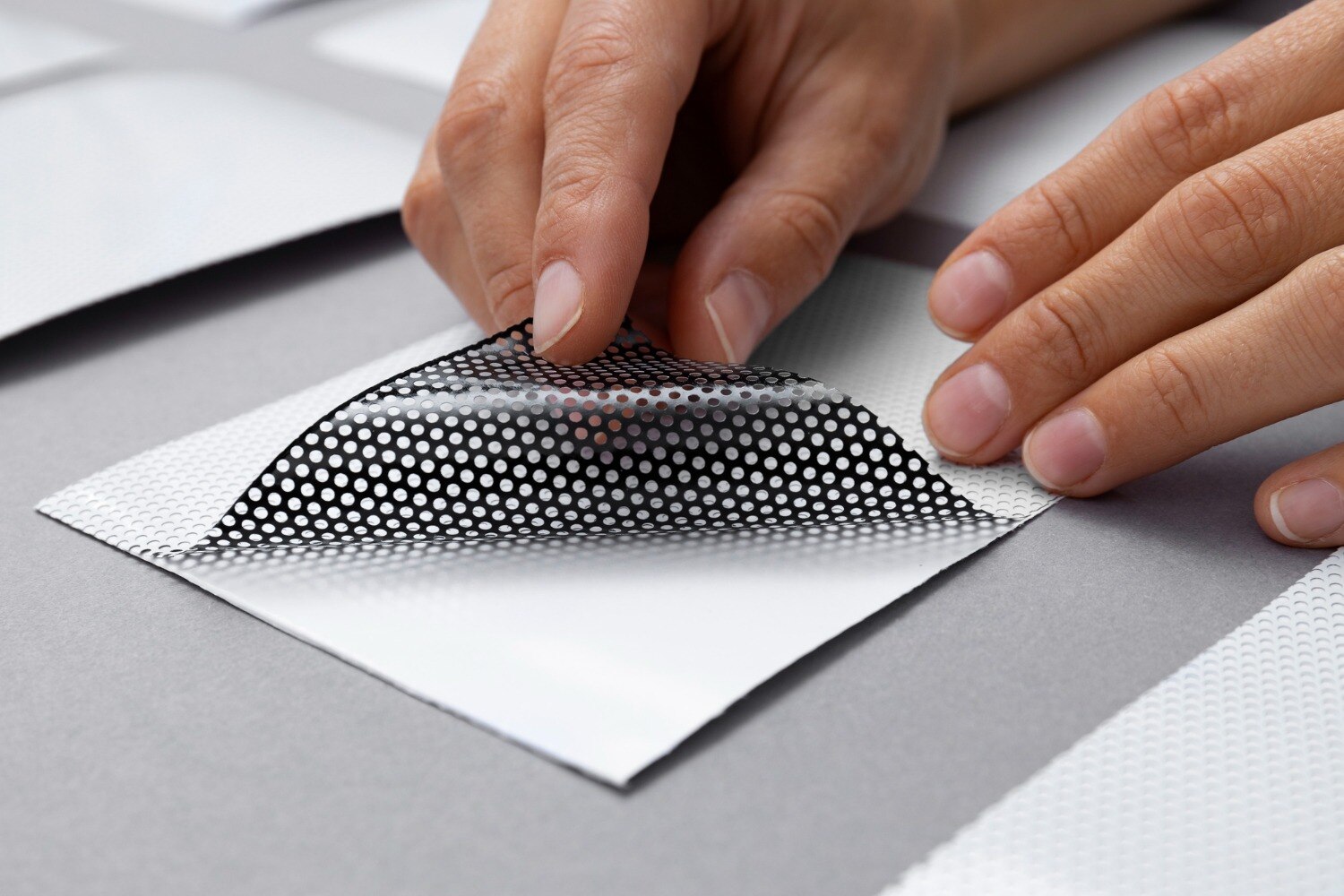
A society label must remain readable through monsoon moisture, dust, sunlight, cleaning, and daily contact, but “polycarbonate” alone does not guarantee that result. You will be able to match each label location with the right material, adhesive, construction, and expected service life before approving a common specification.
Key takeaways
- Choose polycarbonate for clean, wipeable labels exposed to moderate abrasion.
- Test adhesive on painted walls, metal, glass, tile, and textured surfaces.
- Specify UV resistance, print protection, thickness, corners, and installation conditions.
- Choose aluminium, acrylic, vinyl, or laminated films when polycarbonate is unsuitable.
Which society labels are a good fit for polycarbonate stickers?
Polycarbonate is a good fit for apartment-number plates, parking-bay labels, visitor-parking signs, fire-equipment labels, lift instructions, electrical-room warnings, CCTV notices, waste-segregation labels, and amenity-room identification when clean graphics, wiping, moderate abrasion resistance, and a multi-year appearance matter.
| Location | Exposure | Fit |
|---|---|---|
| Indoor lobby or amenity room | Little UV or rain; routine wiping | Strong fit for flat numbers, room names, lift instructions, and CCTV notices |
| Covered parking or entrance | Dust, cleaning, and indirect sunlight | Good fit for parking bays, visitor parking, fire equipment, and electrical warnings |
| Exposed gate or compound wall | Monsoon water, sunlight, heat, and contact | Specify carefully; aluminium or rigid signage may be better for large boards |
| Vehicle or waste bin | Heat, movement, repeated contact, and contamination | Use only for suitably prepared surfaces; replacement or rigid options may win |
The central question, “are polycarbonate stickers worth it for housing societies in Pune,” has a conditional answer: choose the face finish and printed appearance when they justify the added specification, not because “polycarbonate” sounds durable.
A covered lobby label faces a very different failure risk from a gate plate, compound-wall sign, vehicle decal, or bin label.
Use polycarbonate stickers for societies in Pune when you need:
- Crisp colour and small text to remain presentable for several years
- Frequent wiping without quickly damaging the printed face
- Moderate scratch resistance on flat, smooth surfaces
- A clean, consistent appearance across many society labels
For a short-term notice on a sheltered wall, laminated vinyl may be enough. Polycarbonate is an option, not a universal answer.
What makes a polycarbonate label survive Pune’s outdoor conditions?
A durable label starts with its construction, not the word polycarbonate. Specify a printed polycarbonate face film, usually reverse-side or second-surface printed, laminated with pressure-sensitive adhesive. The graphics stay behind the film, but survival still depends on the exposed film, ink system, adhesive bond, substrate preparation, and edge sealing.
| Construction | Protects against | Does not prove |
|---|---|---|
| Hard coat | Scratches, abrasion and detergent wiping | Long-term sunlight resistance |
| Weatherable grade or UV-stabilised film | UV-driven yellowing and embrittlement | A sound adhesive bond |
| Outdoor-rated ink | Fading and loss of contrast | Protection from poor surface preparation |
Direct UV on gates, southwest monsoon rain, exterior dust, hot walls or vehicle panels, hard-water marks, detergent wiping and chemical splashes all shorten service life. Standard polycarbonate is not automatically long-life outdoors. For durable society labels in pune, ask for film thickness, surface finish, UV requirement, outdoor-rated ink, adhesive type and actual weathering evidence.
Specify rounded corners and controlled dimensions. Polycarbonate expands roughly 65–70 × 10⁻⁶/°C, compared with about 23 × 10⁻⁶/°C for aluminium and 11–13 × 10⁻⁶/°C for steel; a large label rigidly bonded to metal can develop edge stress, curl or adhesive fatigue during heating and cooling.
Smaller labels, a compliant adhesive and sealed edges reduce that movement. Do not treat “polycarbonate sticker, outdoor quality” as a complete specification.
Will the adhesive hold on your society’s actual surface?
Resolve surface compatibility before comparing materials: polycarbonate is the face film, while the adhesive is a separate backing. Acrylic pressure-sensitive adhesive is usually preferred for long-term outdoor weathering; high-tack systems help on some low-energy surfaces but can make removal difficult.
| Surface | Likely result | Key trade-off |
|---|---|---|
| Walls | Good on smooth painted walls | Textured plaster or chalking paint causes edge lifting |
| Glass | Strong initial bond | Removal can leave residue on glass doors |
| Painted metal | Suitable when paint is sound | Loose paint fails before the adhesive |
| Lift panels | Good on clean, flat panels | Check finish and clean-removal needs |
| Vehicle windshields | Suitable for flat areas | Heat, washing, and curved edges increase stress |
| Gates | Good with rounded corners | Dust and repeated contact attack exposed edges |
| Bins | Works only after degreasing | Oil, detergent, and grime create incomplete contact |
| Powder-coated surfaces | Often bonds well | Powder residue or low surface energy can reduce adhesion |
Apply only to a smooth, clean, dry, sound surface free from dust, oil, silicone, loose paint, powder, and condensation. Do not apply labels during wet weather or immediately after it; trapped moisture reduces contact. Rough concrete, damp walls, textured plaster, chalking paint, and contaminated bins leave air gaps, so corners lift during cleaning.
Choose clean removal when a notice or parking label will be replaced; test painted surfaces and glass for residue. Choose permanent bond when replacement is unlikely. For parking reassignment or vandalism, specify tamper evidence separately: destructible film, void adhesive, or serial numbering. Ordinary polycarbonate does not prove removal.
When should you choose another property label material?
Choose another material when the society’s failure risk is poor adhesion, insufficient stiffness, vandalism, or frequent replacement—not merely a desire for a cheaper sticker. Property sticker options in Pune differ sharply by location and expected life.
| Option | Best location | Main trade-off |
|---|---|---|
| Laminated vinyl decal | Sheltered, short-term notices | Lowest cost; replace more often |
| Printed PVC | Basic indoor identification | Practical appearance; limited rigidity |
| Polycarbonate sticker | Flat numbers, equipment instructions, parking identifiers | Clean printed face; unsuitable for rough or very large surfaces |
| Acrylic sign | Lobby and entrance presentation | Rigid, polished appearance; can crack under impact |
| Aluminium nameplate | Larger outdoor boards | Handles exposure and mechanical fixing better than an adhesive label |
| Stainless-steel plate | High-contact or premium areas | Strong, durable finish; higher cost |
| Painted or engraved board | Permanent directional information | Long service life; changes are difficult |
Use laminated vinyl for a covered notice changed every few months, or printed PVC for a dry indoor room label. Choose acrylic for a rigid presentation, aluminium for a larger exposed board, and stainless steel where hands, cleaning, and vandalism are the main threats.
Polycarbonate is the wrong choice on highly textured walls, rough concrete, oily or powdery surfaces, very large signs, or locations needing vandal-resistant fasteners. A large entrance board or exposed directional sign needs stiffness and mechanical fixing; a flat number or parking identifier benefits from a clean printed face.
Match the material to the failure you need to prevent: peeling, impact, fading, poor appearance, or costly replacement.
What should a society specify, sample-test, and approve?
Approve a polycarbonate label only against a written construction and site-test specification. “Outdoor quality” does not define the film, ink, adhesive, or failure you are trying to prevent.
- State the film thickness, exposed surface finish, and hard-coat requirement. Specify second-surface printing so the graphics sit behind the face film.
- Require UV-stabilised film or an outdoor-rated ink system, and request weathering evidence for the intended exposure.
- Name the adhesive type, intended substrate, and application-temperature range. Identify whether the surface is painted wall, powder-coated metal, glass, lift panel, gate, or plastic bin.
- Record label length, width, and thickness; specify a rounded-corner radius and sealed, trimmed, or otherwise protected edges.
- Choose clean removal for temporary notices, or destructive removal, void adhesive, destructible film, or serial numbering where tampering matters.
- For electrical rooms, lift machinery areas, generator rooms, and other fire-controlled spaces, state the required UL 94 classification and the supplier’s exact film grade. Polycarbonate alone is not a fire rating.
- Approve one sample applied to the actual wall, gate, lift panel, glass, or bin. Inspect it after wet cleaning, repeated wiping, sunlight, and monsoon exposure.
- Use ASTM D3359 for adhesion comparison, but do not treat a pass on a clean laboratory panel as proof on dusty, damp, chalking, or textured paint.
A Pune society can ask Shreeniwas Signs Pvt Ltd to produce a location-specific sample and document its construction before ordering a batch.
Related product
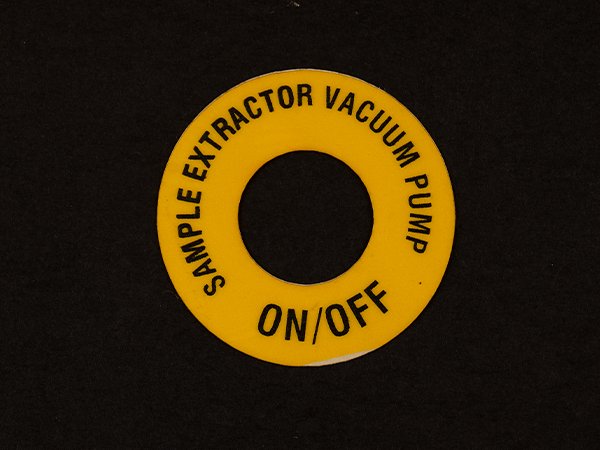 | Plastic Labels PVC & Polycarbonate Stickers are often used in various industries. View product → |
Frequently asked questions
Which housing-society labels are a good fit for polycarbonate stickers?
Use polycarbonate for apartment numbers, parking-bay labels, visitor-parking signs, fire-equipment labels, lift instructions, electrical-room warnings, CCTV notices, waste-segregation labels, and amenity-room identification.
What makes a polycarbonate label survive Pune’s outdoor conditions?
Specify UV-resistant graphics, a protective surface, suitable thickness, sealed or well-finished edges, and artwork that remains legible after sun, monsoon rain, cleaning, and moderate abrasion.
Will the adhesive hold on a housing society’s actual surface?
Test the chosen adhesive on the exact painted wall, powder-coated metal, glass, tile, plastic, or textured surface after cleaning and drying it. Check adhesion after exposure to heat, rain, and routine wiping.
When should a society choose another property-label material?
Choose another material when you need a rigid sign, heavy impact resistance, very low-cost short-term identification, strong chemical resistance, or reliable adhesion on a surface unsuitable for the selected polycarbonate adhesive.
What should a society specify, sample-test, and approve?
Specify dimensions, thickness, colours, typography, print method, UV protection, adhesive, edge finish, hole positions, cleaning exposure, and installation conditions. Approve a production sample after testing it on the actual surface.